
Seeing the MSIL/Agent.BLN detection usually means that your system is in big danger. This computer virus can correctly be named as ransomware – type of malware which encrypts your files and asks you to pay for their decryption. Stopping it requires some peculiar steps that must be taken as soon as possible.
MSIL/Agent.BLN detection is a virus detection you can spectate in your system. It generally appears after the preliminary procedures on your PC – opening the dubious email, clicking the advertisement in the Internet or mounting the program from untrustworthy sources. From the second it shows up, you have a short time to do something about it until it starts its malicious action. And be sure – it is better not to await these destructive actions.
What is MSIL/Agent.BLN virus?
MSIL/Agent.BLN Summary
In total, MSIL/Agent.BLN ransomware actions in the infected computer are next:
- SetUnhandledExceptionFilter detected (possible anti-debug);
- Behavioural detection: Executable code extraction – unpacking;
- Yara rule detections observed from a process memory dump/dropped files/CAPE;
- Creates RWX memory;
- Guard pages use detected – possible anti-debugging.;
- Dynamic (imported) function loading detected;
- Starts servers listening on 127.0.0.1:0, 0.0.0.0:6740;
- CAPE extracted potentially suspicious content;
- Authenticode signature is invalid;
- Encrypting the files located on the victim’s drives — so the victim cannot use these files;
- Blocking the launching of .exe files of anti-malware programs
- Blocking the launching of installation files of security tools
Ransomware has actually been a horror story for the last 4 years. It is challenging to realize a more hazardous virus for both individual users and businesses. The algorithms used in MSIL/Agent.BLN (usually, RHA-1028 or AES-256) are not hackable – with minor exclusions. To hack it with a brute force, you need more time than our galaxy actually exists, and possibly will exist. But that malware does not do all these unpleasant things without delay – it may take up to a few hours to cipher all of your files. Hence, seeing the MSIL/Agent.BLN detection is a clear signal that you should begin the clearing process.
Where did I get the MSIL/Agent.BLN?
Common ways of MSIL/Agent.BLN spreading are basic for all other ransomware examples. Those are one-day landing websites where victims are offered to download the free app, so-called bait e-mails and hacktools. Bait e-mails are a pretty modern method in malware spreading – you receive the email that imitates some regular notifications about deliveries or bank service conditions shifts. Inside of the e-mail, there is a corrupted MS Office file, or a web link which opens the exploit landing site.
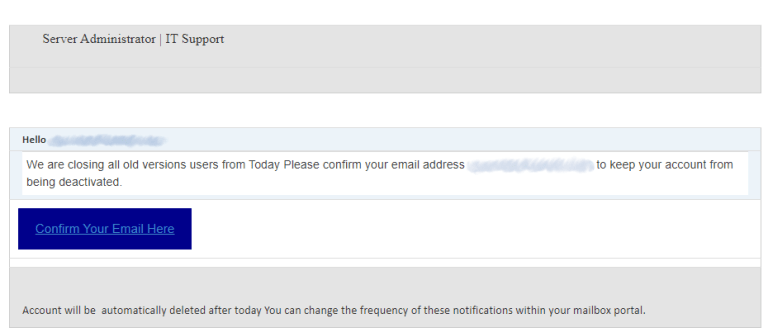
Malicious email message. This one tricks you to open the phishing website.
Preventing it looks quite easy, but still needs a lot of attention. Malware can hide in different places, and it is much better to stop it even before it gets into your system than to rely on an anti-malware program. Simple cybersecurity awareness is just an essential item in the modern world, even if your interaction with a PC stays on YouTube videos. That may save you a great deal of money and time which you would certainly spend while trying to find a fixing guide.
MSIL/Agent.BLN malware technical details
File Info:
name: 82E34F21D80C6410FA34.mlwpath: /opt/CAPEv2/storage/binaries/b4e37cc4014731c8b4779942076ad4ddfbfc6fad3c139e8ee0725369cdc2d943crc32: 8C6B7417md5: 82e34f21d80c6410fa340baa73733164sha1: 92e07b1349083778e125fe1b9163e668c20eeffasha256: b4e37cc4014731c8b4779942076ad4ddfbfc6fad3c139e8ee0725369cdc2d943sha512: 7d1e7526ad2421512dc4bf5059e7bd47b7fa33957a87cfa56f124d742ed0ec4f339e8c9e80141987cd82b620c19c55d75d72ec3477c92c7a5eb772a70317d42fssdeep: 49152:virehRqJ1Fs2mWLEUZk/oscdEMrAy+MMZFEIlsNr8W9wf+gf/sBCABTL3aWsXDeo:vie7lpMEExr8EwQB1BnaWsze7Mtype: PE32 executable (GUI) Intel 80386, for MS Windowstlsh: T17696D40363009606CC7B32F9709695B462A59FCC99259E7EE87835989DF5283FE01FCEsha3_384: 94fab1a43081605030457cae0a7f42572c6281a96d09080472ee7e6e0f260477a510b4adb64a00a9ba33dbed1e287d3cep_bytes: ff250020400000000000000000000000timestamp: 2017-02-02 08:48:56Version Info:
Translation: 0x0000 0x04b0FileDescription: SpyByte_PalFileVersion: 1.0.0.0InternalName: SpyByte_Pal.exeLegalCopyright: Copyright © 2016OriginalFilename: SpyByte_Pal.exeProductName: SpyByte_PalProductVersion: 1.0.0.0Assembly Version: 1.0.0.0
MSIL/Agent.BLN also known as:
| Lionic | Trojan.Win32.Crypmodadv.4!c |
| Elastic | malicious (high confidence) |
| DrWeb | BackDoor.SpyBotNET.21 |
| MicroWorld-eScan | Gen:Variant.MSILHeracles.11976 |
| FireEye | Generic.mg.82e34f21d80c6410 |
| McAfee | Artemis!82E34F21D80C |
| Cylance | Unsafe |
| K7AntiVirus | Trojan ( 004d8f0f1 ) |
| Alibaba | Virus:Win32/Neshta.288 |
| K7GW | Trojan ( 004d8f0f1 ) |
| Cybereason | malicious.1d80c6 |
| BitDefenderTheta | Gen:NN.ZemsilF.34062.@p0@a48MnSj |
| Symantec | ML.Attribute.HighConfidence |
| ESET-NOD32 | a variant of MSIL/Agent.BLN |
| APEX | Malicious |
| Paloalto | generic.ml |
| ClamAV | Win.Malware.Razy-7561030-0 |
| Kaspersky | Trojan-Ransom.Win32.Crypmodadv.xez |
| BitDefender | Gen:Variant.MSILHeracles.11976 |
| NANO-Antivirus | Trojan.Win32.Poweliks.ffqjme |
| Avast | MSIL:Ransom-BB [Trj] |
| Tencent | Win32.Trojan.Crypmodadv.Ebqp |
| Ad-Aware | Gen:Variant.MSILHeracles.11976 |
| Emsisoft | Gen:Variant.MSILHeracles.11976 (B) |
| Comodo | Malware@#26hn6uo0f1efe |
| VIPRE | Trojan.Win32.Generic!BT |
| TrendMicro | Ransom_Crypmodadv.R002C0DG721 |
| McAfee-GW-Edition | Artemis!Trojan |
| Sophos | Mal/Generic-S |
| Ikarus | Worm.MSIL.Bladabindi |
| GData | Gen:Variant.MSILHeracles.11976 |
| Avira | TR/FileCoder.nzaml |
| MAX | malware (ai score=96) |
| Antiy-AVL | Trojan/Generic.ASMalwS.30F25BB |
| Arcabit | Trojan.MSILHeracles.D2EC8 |
| Microsoft | Backdoor:MSIL/Bladabindi |
| Cynet | Malicious (score: 99) |
| VBA32 | Hoax.Crypmodadv |
| ALYac | Gen:Variant.MSILHeracles.11976 |
| Malwarebytes | Malware.AI.4023067198 |
| TrendMicro-HouseCall | Ransom_Crypmodadv.R002C0DG721 |
| SentinelOne | Static AI – Suspicious PE |
| eGambit | Unsafe.AI_Score_79% |
| Fortinet | W32/Crypmodadv.XEZ!tr |
| AVG | MSIL:Ransom-BB [Trj] |
| Panda | Trj/GdSda.A |
| CrowdStrike | win/malicious_confidence_60% (W) |


Leave a Comment