
GoStealer is a malware developed in Golang. It infiltrates systems through deceptive emails and advertisements. It also spreads via downloads from untrusted sources, including P2P networks and dubious websites.
Once inside, it stealthily extracts sensitive data from browsers like Firefox and Chrome, posing severe risks of identity theft and unauthorized account access. Its use of advanced evasion techniques, like DLL Unhooking, makes it a sophisticated and dangerous cybersecurity threat.
GoStealer Overview
GoStealer, developed using the Golang programming language, functions as a threat designed to steal information. It covertly extracts sensitive data upon implantation, significantly endangering the security and privacy of individuals and organizations it affects. Immediate removal of this threat from infected systems is crucial.
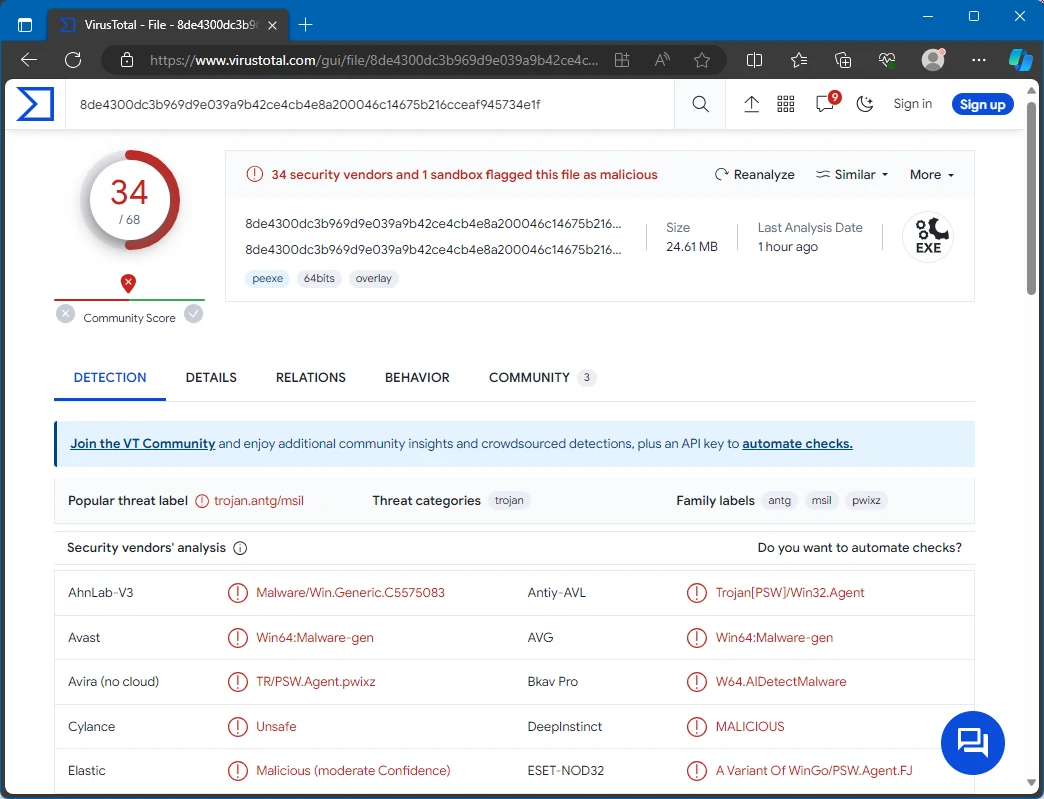
GoStealer on VirusTotal
| Name | GoStealer |
| Threat Type | Information Stealer |
| Detection | Trojan:Win32/Znyonm (Microsoft) |
| Damage | Stolen passwords, identity theft, hijacked personal accounts, monetary loss. |
| Similar Behavitor | S1deload Stealer, WhiskerSpy |
Technical Analysis
The stealthy extraction of login credentials from popular browsers like Firefox and Chrome by GoStealer poses a significant threat to users. This raises serious concerns about identity theft and misuse of personal information, putting individuals at risk of unauthorized access to their private accounts. Such breaches compromise personal data security and expose users to financial dangers. Cybercriminals can exploit these compromised credentials for fraudulent activities and unauthorized financial transactions.
Spreading Methods
Cyber attackers often infiltrate computers with GoStealer by sending emails containing attachments or links. When a user opens these attachments or clicks on these links, it triggers the download and execution of the malware on their system. Malicious advertisements, known as malvertisements, are another common way for users to download malware onto their computers accidentally.
Malware can also enter systems by downloading infected software or files from untrustworthy sources, like P2P networks or third-party downloaders. Users may unknowingly install malicious programs while downloading cracked software, unofficial applications, or files from dubious websites. Moreover, cybercriminals exploit vulnerabilities in outdated software to deliver malware, capitalizing on the lack of recent security updates.
How To Remove Malware
While removing the threat manually is possible, I advise against it. The malware, striving for persistence, replicates itself extensively, making it extremely challenging to locate and eliminate all its components. Consequently, manual removal tends to be time-consuming and often ineffective.


Leave a Comment