
The Cavallososo virus falls under the Ze ransomware family. Ransomware of such sort encrypts all user’s data on the PC (images, text files, excel tables, audio files, videos, etc) and appends its own extension to every file, creating the !!! ALL YOUR FILES ARE ENCRYPTED !!!.TXT files in every folder which contains the encrypted files.
Cavallososo virus: what is known so far?
☝️ A scientifically accurate designation for the Cavallososo would be “a Ze family ransomware infection”.
The scheme of renaming is the following: Cavallososo.[victim_ID]. In the process of encryption, a file named, for instance, “report.docx” will be renamed to “report.docx.Cavallososo.id-3197fvoAI78w1”.
In every folder that contains the encoded files, a !!! ALL YOUR FILES ARE ENCRYPTED !!!.TXT file will be found. It is a ransom money memo. Therein you can find information about the ways of paying the ransom and some other information. The ransom note usually contains a description of how to purchase the decryption tool from the tamperers. That is how they do it.
Cavallososo summary:
| Name | Cavallososo Virus |
| Ransomware family1 | Ze ransomware |
| Extension | .Cavallososo.[victim_ID] |
| Ransomware note | !!! ALL YOUR FILES ARE ENCRYPTED !!!.TXT |
| Detection | VirTool:Win32/VBInject!S, Ransom:MSIL/Crylocker.PAA!MTB, TrojanSpy:MSIL/Reven.A!bit |
| Symptoms | Your files (photos, videos, documents) have a .Cavallososo.[victim_ID] extension and you can’t open them. |
| Fix Tool | See If Your System Has Been Affected by Cavallososo virus |
In the screenshot below, you can see what a folder with files encrypted by the Cavallososo looks like. Each filename has the “.Cavallososo.[victim_ID]” extension appended to it.
![Cavallososo Virus - encrypted .Cavallososo.[victim_ID] files](https://howtofix.guide/wp-content/uploads/2022/02/Cavallososo-files-virus.jpg)
An example of encrypted .Cavallososo.[victim_ID] files.
How did my computer get infected with Cavallososo ransomware?
There are many possible ways of ransomware injection.
Nowadays, there are three most exploited methods for malefactors to have the Cavallososo virus acting in your system. These are email spam, Trojan injection and peer networks.
If you access your inbox and see letters that look like familiar notifications from utility services providers, delivery agencies like FedEx, web-access providers, and whatnot, but whose addresser is strange to you, be wary of opening those letters. They are most likely to have a malware item enclosed in them. Therefore, it is even more dangerous to open any attachments that come with letters like these.
As for the peer file transfer protocols like torrent trackers or eMule, the danger is that they are even more trust-based than the rest of the Web. You can never guess what you download until you get it. Our suggestion is that you use trustworthy websites. Also, it is a good idea to scan the directory containing the downloaded items with the antivirus as soon as the downloading is complete.
How do I get rid of the Cavallososo virus?
It is crucial to inform you that besides encrypting your data, the Cavallososo virus will probably deploy the Azorult Spyware on your PC to seize your credentials to various accounts (including cryptocurrency wallets). The mentioned program can derive your credentials from your browser’s auto-filling cardfile.
Sometimes tamperers would unblock some of your files so you know that they indeed have the decryption program. As Cavallososo virus is a relatively recent ransomware, anti-malware designers have not yet found a way to reverse its work. However, the decryption instruments are frequently upgraded, so the effective countermeasure may soon arrive.
Of course, if the criminals do the job of encrypting someone’s critical data, the desperate person will most likely comply with their demands. Nevertheless, paying a ransom does not necessarily mean that you’re getting your files back. It is still risky. After receiving the ransom, the racketeers may deliver a wrong decryption key to the injured party. There were reports about malefactors simply vanishing after getting the money without even bothering to reply.
The optimal safety measure against ransomware is to have a system restore point or the copies of your critical files in the cloud storage or at least on an external drive. Of course, that might be insufficient. The most crucial thing could be that file you were working on when it all went down. But at least it is something. It is also reasonable to scan your drives with the anti-malware utility after the system restoration.
There are other ransomware products, besides Cavallososo, that work similarly. Examples of those are Maiv, Ccps, Yoqs, and some others. The two major differences between them and the Cavallososo are the ransom amount and the encoding method. The rest is almost identical: documents become blocked, their extensions changed, ransom notes emerge in each directory containing encoded files.
Some lucky users were able to decrypt the arrested files with the help of the free tools provided by anti-ransomware specialists. Sometimes the hackers accidentally send the decoding key to the wronged in the ransom note. Such an extraordinary fail allows the injured part to restore the files. But naturally, one should never rely on such a chance. Remember, ransomware is a criminals’ technology to lay their hands on the money of their victims.
How сan I avoid ransomware infection?
Cavallososo ransomware has no superpower, so as any similar malware.
You can protect yourself from ransomware attack taking three easy steps:
- Never open any letters from unknown mailboxes with unknown addresses, or with content that has nothing to do with something you are waiting for (can you win in a money prize draw without even taking part in it?). If the email subject is more or less something you are expecting, scrutinize all elements of the suspicious email carefully. A hoax email will always contain a mistake.
- Never use cracked or unknown programs. Trojans are often shared as an element of cracked software, possibly under the guise of “patch” to prevent the license check. But untrusted programs are very hard to tell from trustworthy ones, because trojans sometimes have the functionality you need. Try to find information about this program on the anti-malware message boards, but the best solution is not to use such programs at all.
Reasons why I would recommend GridinSoft3
Download Removal Tool.
Run the setup file.
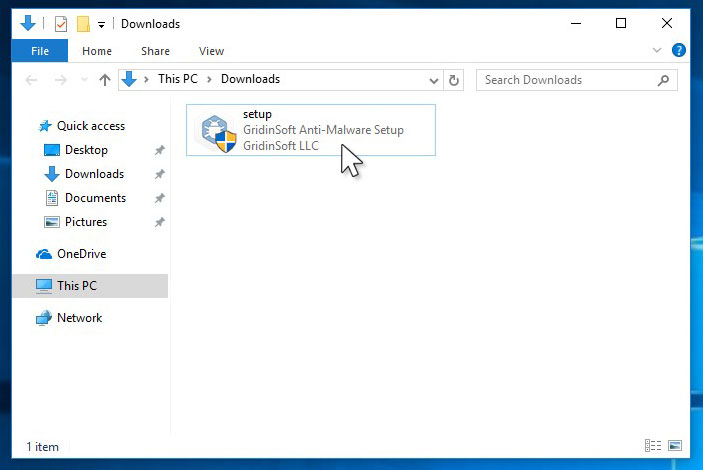
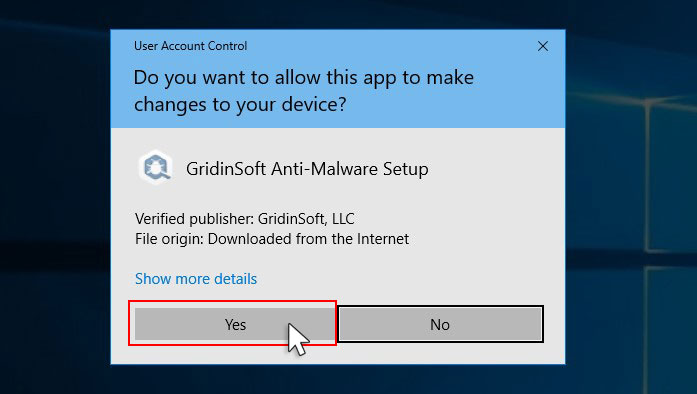
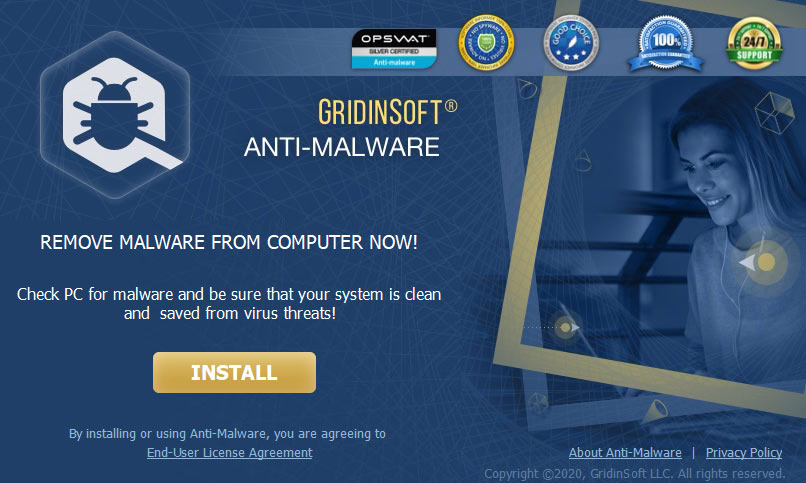
Press “Install” button.
Once installed, Anti-Malware will automatically run.
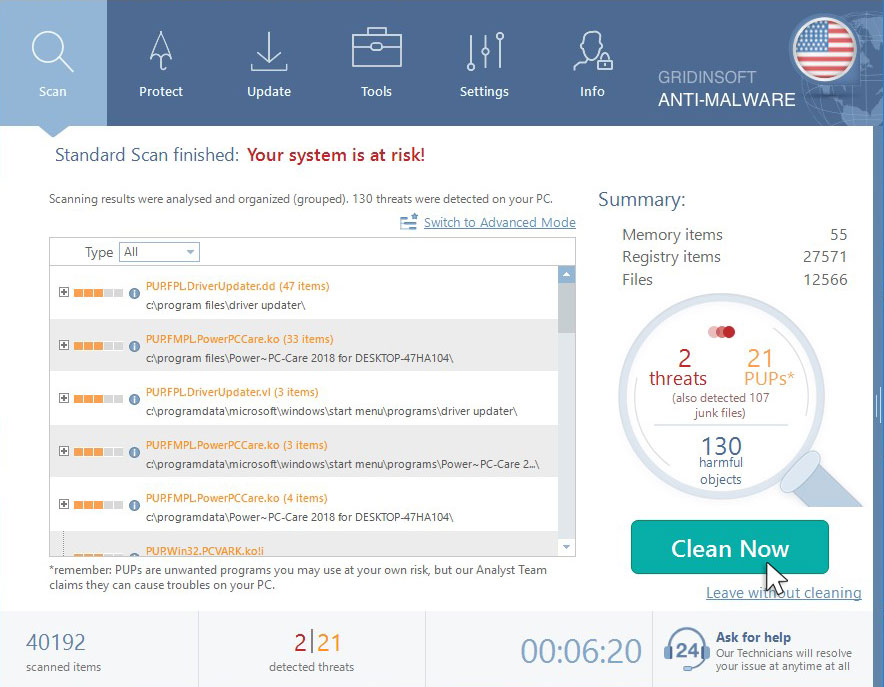
Wait for the Anti-Malware scan to complete.
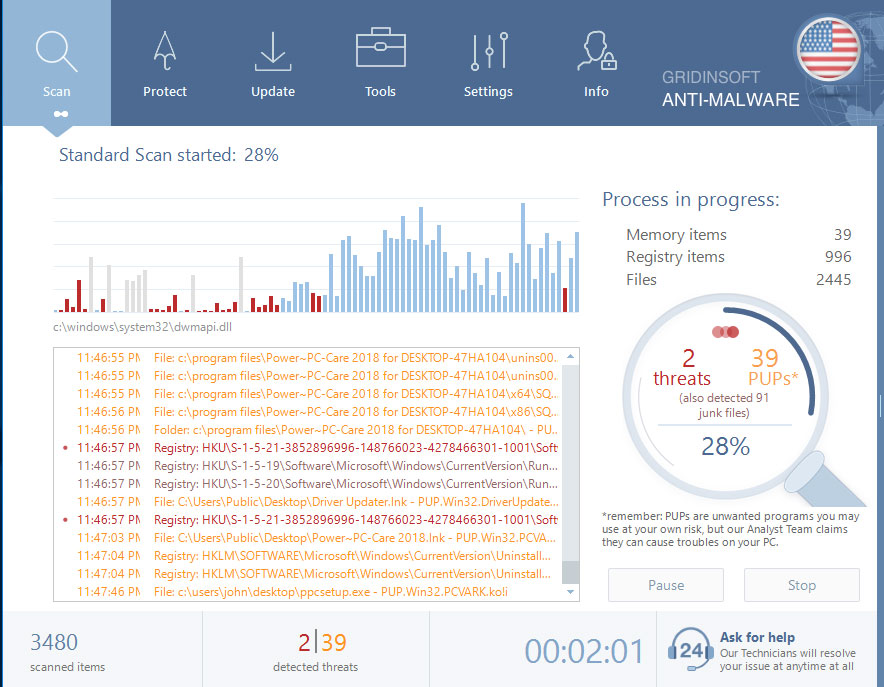
Click on “Clean Now”.
Frequently Asked Questions
🤔 Are the “.Cavallososo.[victim_ID]” files accessible?
Unfortunately, no. You need to decipher the “.Cavallososo.[victim_ID]” files first. Then you will be able to open them.
🤔 What should I do to make my files accessible as fast as possible?
If the “.Cavallososo.[victim_ID]” files contain some really important information, then you probably have them backed up. If not, there is still a function of System Restore but it needs a Restore Point to be previously saved. There are other ways to beat ransomware, but they take time.
🤔 What should I do if the Cavallososo malware has blocked my computer and I can’t get the activation key.
🤔 And what should I do now?
Many of the encoded files might still be within your reach
- If you sent or received your critical files through email, you could still download them from your online mail server.
- You may have shared photographs or videos with your friends or relatives. Just ask them to post those images back to you.
- If you have initially got any of your files from the Internet, you can try to do it again.
- Your messengers, social networks pages, and cloud disks might have all those files too.
- Maybe you still have the needed files on your old computer, a laptop, phone, flash memory, etc.
USEFUL TIP: You can use file recovery utilities5 to get your lost data back since ransomware blocks the copies of your files, removing the authentic ones. In the video below, you can learn how to use PhotoRec for such a restoration, but be advised: you won’t be able to do it before you remove the virus with an antivirus program.
Also, you can contact the following governmental fraud and scam sites to report this attack:
- In the United States: On Guard Online;
- In Canada: Canadian Anti-Fraud Centre;
- In the United Kingdom: Action Fraud;
- In Australia: SCAMwatch;
- In New Zealand: Consumer Affairs Scams;
- In France: Agence nationale de la sécurité des systèmes d’information;
- In Germany: Bundesamt für Sicherheit in der Informationstechnik;
- In Ireland: An Garda Síochána;
To report the attack, you can contact local executive boards. For instance, if you live in USA, you can have a talk with FBI Local field office, IC3 or Secret Service.


Leave a Comment