
Safety specialist Tomas Meskauskas was the person who originally brought to light the Annoy virus, which belongs under the ransomware type of malicious agent. Ransomware of such sort encrypts all the data on your PC (photos, documents, excel tables, audio files, videos, etc) and appends its own extension to every file.
What is Annoy virus?
The scheme of renaming is the following: .annoy. In the process of encryption, a file entitled, for example, “report.docx” will be changed to “report.docx..FBDC1672-D8E4-6322-BAAA-BCC19668745C.annoy”.
The ransom note most probably contains a description of how to purchase the decryption tool from the Annoy developers. You can get this tool after contacting [email protected] via email. That is pretty much the scheme of the felony.
Annoy Overview:
| Name | Annoy Virus |
| Extension | .annoy |
| Contact | [email protected] |
| Detection | Trojan:Win32/Tnega!MSR Removal, Win32:Adware-DNA [Adw] Virus Removal, Win32:Secat [Trj] Virus Removal |
| Symptoms | Your files (photos, videos, documents) get a .annoy extension and you can’t open them. |
| Fix Tool | See If Your System Has Been Affected by Annoy virus |
The note coming in package with the Annoy ransomware provides the following dispiriting information:
I\'ll try to be brief: 1. It is beneficial for us that your files are decrypted no less than you, we don\'t want to harm you, we just want to get a ransom for our work.
2. Its only takes for us at list 20 minutes after payment to completely decrypt you,
to its original state, it\'s very simple for us!
3.If you contact decryption companies, you are automatically exposed to publicity,also, these companies do not care about your files at all, they only think about their own benefit!
4.They also contact the police. Again, only you suffer from this treatment!
5. We have developed a scheme for your secure decryption without any problems, unlike the above companies,
who just as definitely come to us to decipher you and simply make a profit from you as intermediaries, preventing a quick resolution of this issue!


6. In case of refusal to pay, we transfer all your personal data such as (emails, link to panel, payment documents , certificates , personal information of you staff, SQL,ERP,financial information for other hacker groups) and they will come to you again for sure!


We will also publicize this attack using social networks and other media, which will significantly affect your reputation!


7. If you contact us no more than 12 hours after the attack, the price is only 50% of the price afterwards!


8. Do not under any circumstances try to decrypt the files yourself; you will simply break them!


We was more than 2 weeks inside of your network !


We have DOWNLOADING MANY OF YOUR PERSONAL DATA ! ! !


Contacts

Download the (Session) messenger (hxxps://getsession.org) in messenger :ID\"0585ae8a3c3a688c78cf2e2b2b7df760630377f29c0b36d999862861bdbf93380d\"
MAIL:annoy [email protected]
In the screenshot below, you can see what a directory with files encrypted by the Annoy looks like. Each filename has the “.annoy” extension appended to it.
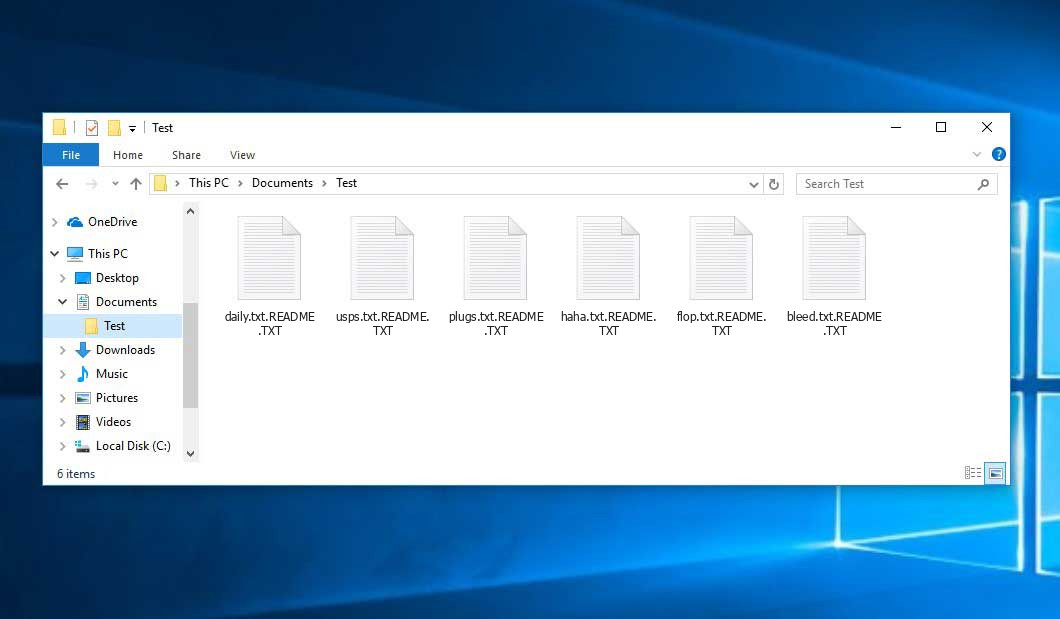
That is how encrypted “.annoy” files look.
How did my computer get infected with Annoy ransomware?
There are plenty of possible ways of ransomware infiltration.
Nowadays, there are three most popular ways for criminals to have ransomware acting in your digital environment. These are email spam, Trojan infiltration and peer-to-peer file transfer.
- Another thing the hackers might try is a Trojan file scheme. A Trojan is a program that infiltrates into your machine pretending to be something different. Imagine, you download an installer of some program you need or an update for some software. However, what is unboxed reveals itself a harmful agent that encrypts your data. As the installation file can have any title and any icon, you’d better be sure that you can trust the source of the files you’re downloading. The optimal way is to trust the software companies’ official websites.
- As for the peer file transfer protocols like torrent trackers or eMule, the threat is that they are even more trust-based than the rest of the Web. You can never guess what you download until you get it. Our suggestion is that you use trustworthy resources. Also, it is reasonable to scan the directory containing the downloaded files with the anti-malware utility as soon as the downloading is done.
How do I get rid of ransomware?
It is crucial to note that besides encrypting your files, the Annoy virus will probably deploy Vidar Stealer on your computer to get access to credentials to various accounts (including cryptocurrency wallets). The mentioned program can derive your credentials from your browser’s auto-filling data.
How do I avoid ransomware infection?
Annoy ransomware doesn’t have a endless power, so as any similar malware.
You can protect your PC from its infiltration within three easy steps:
- Ignore any letters from unknown mailers with unknown addresses, or with content that has nothing to do with something you are expecting (how can you win in a lottery without even taking part in it?). In case the email subject is more or less something you are waiting for, check all elements of the dubious email with caution. A hoax letter will always have a mistake.
- Avoid using cracked or unknown programs. Trojan viruses are often spreaded as an element of cracked software, possibly as a “patch” to prevent the license check. But untrusted programs are very hard to distinguish from trustworthy software, because trojans may also have the functionality you need. Try searching for information on this program on the anti-malware forums, but the best solution is not to use such software.
Frequently Asked Questions
🤔 Is it possible to open “.annoy” files?
Unfortunately, no. You need to decipher the “.annoy” files first. Then you will be able to open them.
🤔 The encrypted files are very important to me. How can I decrypt them quickly?
If the “.annoy” files contain some really important information, then you probably have them backed up. Otherwise, you might try to employ System Restore. The only question is whether you have saved any Restore Points that would be helpful now. There are other ways to beat ransomware, but they take time.
🤔 What actions should I take if the Annoy ransomware has blocked my computer and I can’t get the activation code.
🤔 What can I do right now?
Some of the encrypted data can be located elsewhere.
- If you sent or received your critical files through email, you could still download them from your online mailbox.
- You might have shared photographs or videos with your friends or family members. Just ask them to post those pictures back to you.
- If you have initially got any of your files from the Internet, you can try to do it again.
- Your messengers, social networks pages, and cloud storage might have all those files too.
- Maybe you still have the needed files on your old computer, a laptop, phone, external storage, etc.
HINT: You can use data recovery programs1 to get your lost data back since ransomware encodes the copies of your files, removing the authentic ones. In the video below, you can see how to recover your files with PhotoRec, but be advised: you won’t be able to do it before you remove the ransomware itself with an antivirus program.
I need your help to share this article.
It is your turn to help other people. I have written this article to help users like you. You can use the buttons below to share this on your favorite social media Facebook, Twitter, or Reddit.
Brendan SmithReferences
- Here’s the list of Top 10 Data Recovery Software Of 2024.


Leave a Comment