
What is Win32/RemoteAdmin.RemoteUtilities.X potentially unsafe infection?
In this article you will certainly discover concerning the definition of Win32/RemoteAdmin.RemoteUtilities.X potentially unsafe as well as its unfavorable effect on your computer system. Such ransomware are a form of malware that is clarified by on the internet scams to require paying the ransom money by a sufferer.
In the majority of the instances, Win32/RemoteAdmin.RemoteUtilities.X potentially unsafe ransomware will certainly advise its victims to start funds move for the purpose of neutralizing the modifications that the Trojan infection has actually presented to the victim’s gadget.
Win32/RemoteAdmin.RemoteUtilities.X potentially unsafe Summary
These modifications can be as follows:
- SetUnhandledExceptionFilter detected (possible anti-debug);
- Executed a command line with /C or /R argument to terminate command shell on completion which can be used to hide execution;
- Yara rule detections observed from a process memory dump/dropped files/CAPE;
- Creates RWX memory;
- Anomalous file deletion behavior detected (10+);
- Guard pages use detected – possible anti-debugging.;
- A process attempted to delay the analysis task.;
- Dynamic (imported) function loading detected;
- Performs HTTP requests potentially not found in PCAP.;
- Reads data out of its own binary image;
- A process created a hidden window;
- CAPE extracted potentially suspicious content;
- Executed a very long command line or script command which may be indicative of chained commands or obfuscation;
- Unconventionial language used in binary resources: Russian;
- The binary contains an unknown PE section name indicative of packing;
- Authenticode signature is invalid;
- Uses Windows utilities for basic functionality;
- Created a process from a suspicious location;
- Installs itself for autorun at Windows startup;
- Collects information about installed applications;
- Detects Bochs through the presence of a registry key;
- Appears to use command line obfuscation;
- A script or command line contains a long continuous string indicative of obfuscation;
- Anomalous binary characteristics;
- Uses suspicious command line tools or Windows utilities;
- Ciphering the files situated on the target’s hard drive — so the target can no more utilize the information;
- Preventing normal accessibility to the target’s workstation;
Related domains:
| wpad.local-net | Trojan-Ransom.Win32.Crypmod.zfq |
Win32/RemoteAdmin.RemoteUtilities.X potentially unsafe
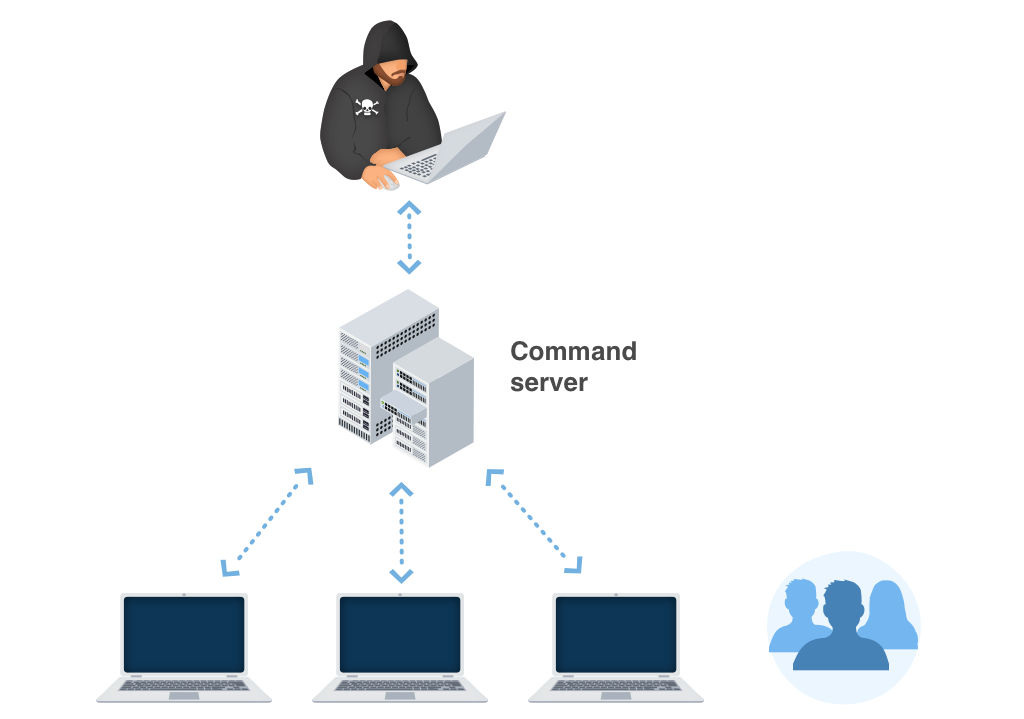
One of the most regular channels through which Win32/RemoteAdmin.RemoteUtilities.X potentially unsafe Ransomware are infused are:
- By ways of phishing e-mails;
- As a consequence of individual winding up on a resource that organizes a harmful software application;
As soon as the Trojan is successfully injected, it will either cipher the information on the target’s computer or avoid the gadget from operating in a proper fashion – while likewise placing a ransom note that discusses the need for the sufferers to effect the repayment for the purpose of decrypting the documents or bring back the documents system back to the initial condition. In most circumstances, the ransom note will certainly turn up when the client reboots the PC after the system has already been harmed.
Win32/RemoteAdmin.RemoteUtilities.X potentially unsafe circulation channels.
In different edges of the globe, Win32/RemoteAdmin.RemoteUtilities.X potentially unsafe grows by leaps and also bounds. Nonetheless, the ransom notes and methods of obtaining the ransom money quantity might vary depending upon specific neighborhood (local) setups. The ransom notes and techniques of obtaining the ransom money quantity may vary depending on particular regional (local) settings.
As an example:
Faulty informs concerning unlicensed software program.
In certain areas, the Trojans commonly wrongfully report having identified some unlicensed applications enabled on the victim’s gadget. The sharp then demands the customer to pay the ransom.
Faulty declarations about prohibited web content.
In nations where software application piracy is much less prominent, this technique is not as efficient for the cyber scams. Additionally, the Win32/RemoteAdmin.RemoteUtilities.X potentially unsafe popup alert might incorrectly claim to be deriving from a law enforcement organization and also will report having situated child pornography or other prohibited data on the tool.
Win32/RemoteAdmin.RemoteUtilities.X potentially unsafe popup alert may falsely assert to be deriving from a regulation enforcement establishment and will certainly report having situated youngster pornography or other prohibited data on the tool. The alert will similarly contain a need for the customer to pay the ransom.
Technical details
File Info:
name: 3C812375BD2333FF9408.mlwpath: /opt/CAPEv2/storage/binaries/4709b7715f29a8e67f4de4114391fd440a7038bc2aeac2f15741d7eecf1a749ccrc32: E05D9318md5: 3c812375bd2333ff940800eb818c00b4sha1: 6dfba72690d9da80ea1d583ab6d8deeed2aef1cesha256: 4709b7715f29a8e67f4de4114391fd440a7038bc2aeac2f15741d7eecf1a749csha512: e4d50d908725b891e5945cc43e73eb3223066ffe111e8efbf05e3786f2044085d93ce13b94af6f92cb6200e7771c8ab1b81dd526ec89d0e250f95e024db5ea1dssdeep: 196608:hKg2rhafR+xbIJnxzagrjtN4HkQmK79SJ4V3x83Ha6wzg63+0nQmWBENoxXo0Q:b0MfR+pIJxNf4HrkL6D3RQmWBENAXontype: PE32 executable (GUI) Intel 80386, for MS Windowstlsh: T181B63379D5909A3BE2512C7F5B83D2B2E136F604195420EE63DE9938790731E0BB23BDsha3_384: acf099b256826a1fff9876b258a6cc4cc33cc07bb46ffc6339f4b50b25342cf733a3c6b53d5804ae21166c44d8e23bbdep_bytes: 558bec83c4f0b888534200e824f2fdfftimestamp: 1992-06-19 22:22:17Version Info:
Comments: CompanyName: OpenVPN, lnc. FileDescription: OpenVPN 2.5.3 Installation FileVersion: 2.5.3 LegalCopyright: OpenVPN, lnc. Translation: 0x0409 0x04e4
Win32/RemoteAdmin.RemoteUtilities.X potentially unsafe also known as:
| GridinSoft | Trojan.Ransom.Gen |
| Lionic | Trojan.Win32.Generic.4!c |
| DrWeb | Trojan.Siggen9.17172 |
| MicroWorld-eScan | Application.Generic.3072944 |
| McAfee | Artemis!3C812375BD23 |
| Cylance | Unsafe |
| Sangfor | Trojan.Win32.Generic.ky |
| K7GW | Riskware ( 0040eff71 ) |
| K7AntiVirus | Riskware ( 0040eff71 ) |
| Cyren | W32/Trojan.KIQN-2616 |
| ESET-NOD32 | a variant of Win32/RemoteAdmin.RemoteUtilities.X potentially unsafe |
| TrendMicro-HouseCall | TROJ_GEN.R002H07JN21 |
| Paloalto | generic.ml |
| Kaspersky | HEUR:Trojan.Win32.Generic |
| BitDefender | Application.Generic.3072944 |
| NANO-Antivirus | Trojan.Win32.RemoteAdmin.ixfnsc |
| Avast | Other:Malware-gen [Trj] |
| Ad-Aware | Application.Generic.3072944 |
| Emsisoft | Application.Generic.3072944 (B) |
| McAfee-GW-Edition | BehavesLike.Win32.PUP.vc |
| FireEye | Generic.mg.3c812375bd2333ff |
| Sophos | Generic PUA GN (PUA) |
| Ikarus | Trojan.MSIL.Crypt |
| GData | Application.Generic.3072944 |
| eGambit | Unsafe.AI_Score_68% |
| Antiy-AVL | Trojan/Generic.ASMalwS.2C573E5 |
| Arcabit | Application.Generic.D2EE3B0 |
| Microsoft | Program:Win32/Uwamson.A!ml |
| ALYac | Application.Generic.3072944 |
| VBA32 | Trojan.Wacatac |
| APEX | Malicious |
| Yandex | Trojan.Agent!WOSiCTDfWC8 |
| SentinelOne | Static AI – Suspicious PE |
| MaxSecure | Trojan-Ransom.Win32.Crypmod.zfq |
| Fortinet | Riskware/RemoteAdmin_RemoteUtilities |
| AVG | Other:Malware-gen [Trj] |
| Cybereason | malicious.690d9d |
How to remove Win32/RemoteAdmin.RemoteUtilities.X potentially unsafe virus?
Unwanted application has ofter come with other viruses and spyware. This threats can steal account credentials, or crypt your documents for ransom.
Reasons why I would recommend GridinSoft1
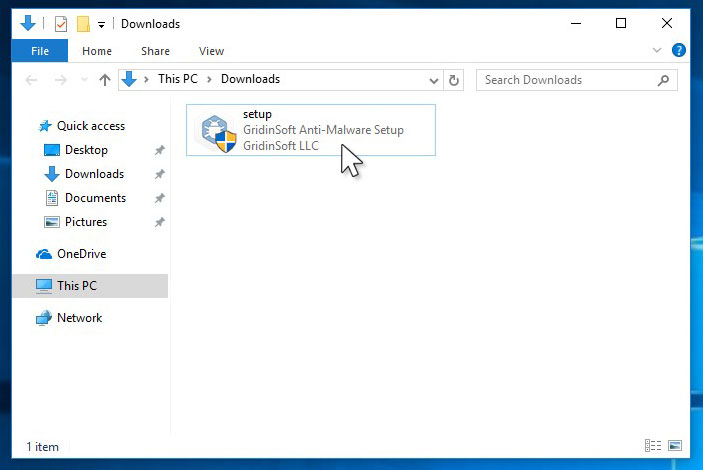
Run the setup file.
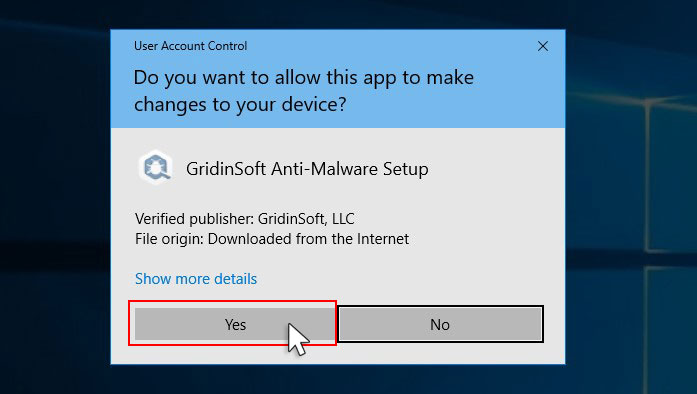
Press “Install” button.
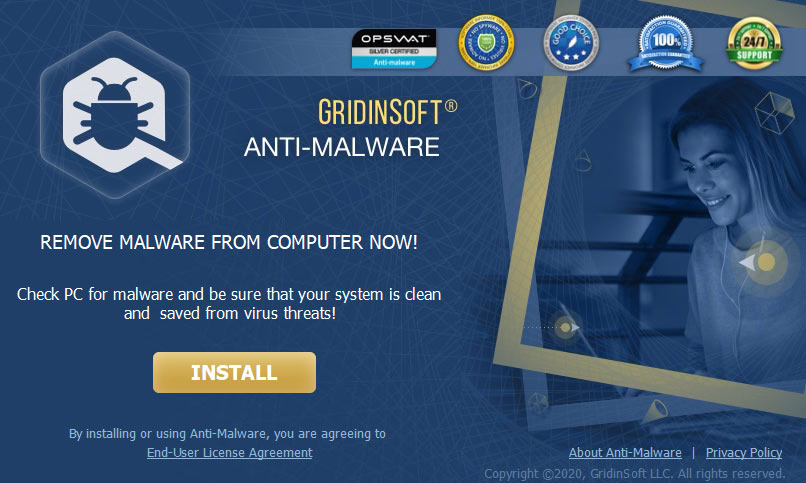
Once installed, Anti-Malware will automatically run.
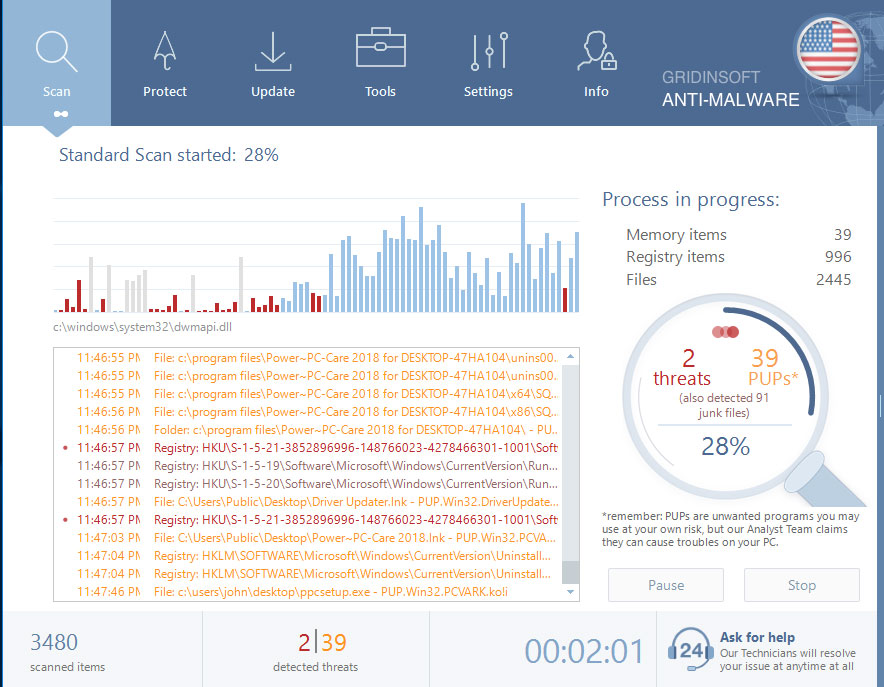
Wait for the Anti-Malware scan to complete.
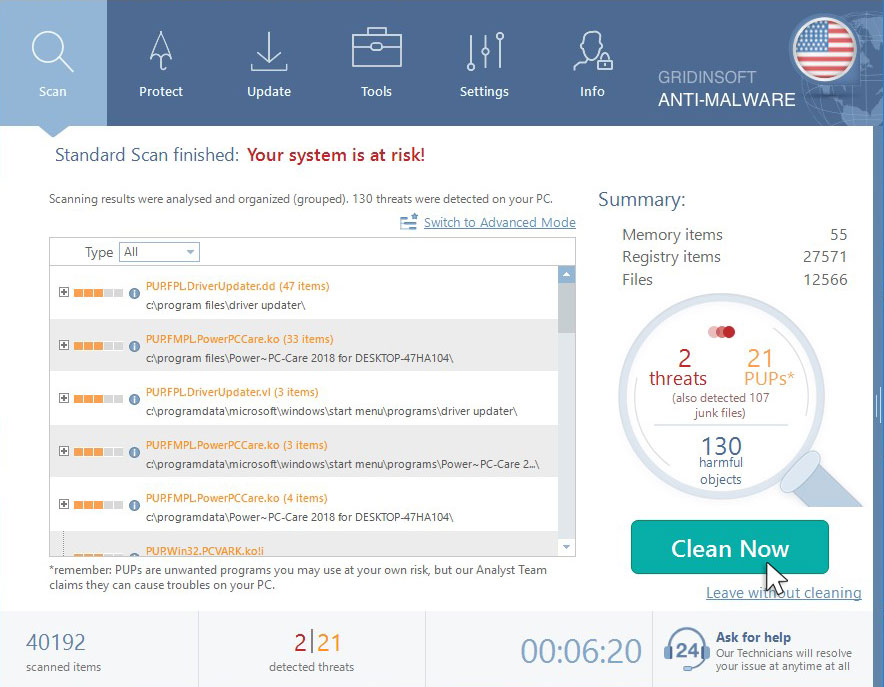
Click on “Clean Now”.
Are Your Protected?
If the guide doesn’t help you to remove Win32/RemoteAdmin.RemoteUtilities.X potentially unsafe you can always ask me in the comments for getting help.


Leave a Comment