
If you spectate the notification of Win32/Lodi detection, it appears that your computer has a problem. All malicious programs are dangerous, without any deviations.
Win32/Lodi unwanted apps can not be named full-size malware. However, it has enough signals to state that you will not love the changes this thing brings to your computer. PUAs like that may be just a disturbing thing, as well as cause a dangerous influence on your system’s functioning. Moreover, there are a lot of cases when users mention that this application acts like spyware or a backdoor.
What does the pop-up with Win32/Lodi detection mean?
The Win32/Lodi detection you can see in the lower right side is shown to you by Microsoft Defender. That anti-malware application is good at scanning but prone to be basically unreliable. It is vulnerable to malware invasions, and it has a glitchy user interface and bugged malware removal features. Hence, the pop-up which says concerning the Lodi is simply an alert that Defender has spotted it. To remove it, you will likely need to use another anti-malware program.
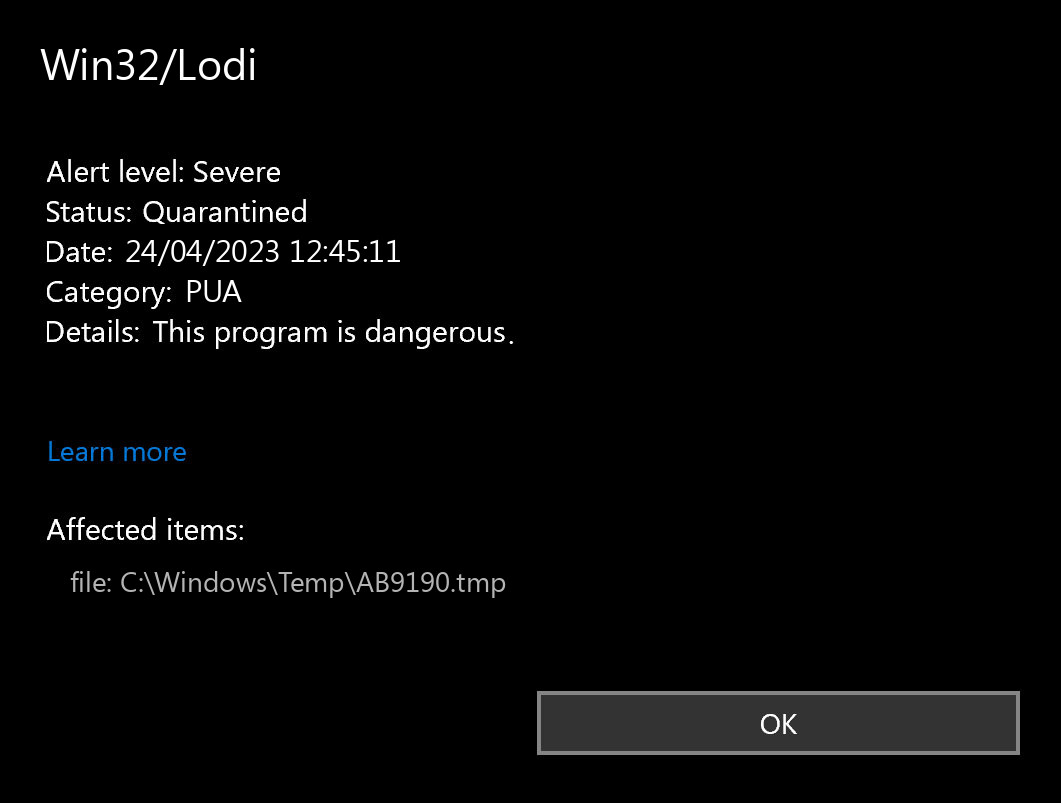
Microsoft Defender: “Win32/Lodi”
Win32/Lodi unwanted program is a case in point of PUA, which is pretty widespread nowadays. Being free to use, it can provide you “the extended functions” for the additional payment. Some instances of this program type can have no real performance at all – just the shell with the colorful interface. It is advertised as a system optimization tool, driver updater, or torrent downloads tracker. This or another way does not grant you any kind of real functionality, exposing you to risk instead.
Unwanted Program Summary:
| Name | Lodi PUA |
| Detection | Misleading:Win32/Lodi!MTB, Misleading:Win32/Lodi!SA, Misleading:Win32/Lodi!MSR, Misleading:Win32/Lodi |
| Damage | Lodi is at least useless or can perform various malicious actions on your PC. |
| Similar behaviour | Wave Browser, Chistilka, Vtools |
Is Win32/Lodi dangerous?
I have already stated that Win32/Lodi PUA is not as trustworthy as it pretends to be. The “legitimate and valuable” program can suddenly discover itself as a downloader trojan, spyware, backdoor, or coin miner virus. And you can never figure out what to expect, even from different examples of Lodi’s unwanted program. That still does not imply that you need to panic – perhaps, this nasty thing has not succeeded in doing poor things to your PC.
How did I get this virus?
It is hard to line the sources of malware on your PC. Nowadays, things are mixed, and distribution methods used by adware six years ago may be utilized by spyware nowadays. However, if we abstract from the exact distribution tactic and will think of why it works, the answer will be really basic – low level of cybersecurity understanding. Individuals press on advertisements on strange sites, click the pop-ups they receive in their browsers, and call “Microsoft tech support,” assuming that the scary banner that states about malware is true. It is important to know what is legit – to stay away from misunderstandings when attempting to determine a virus.
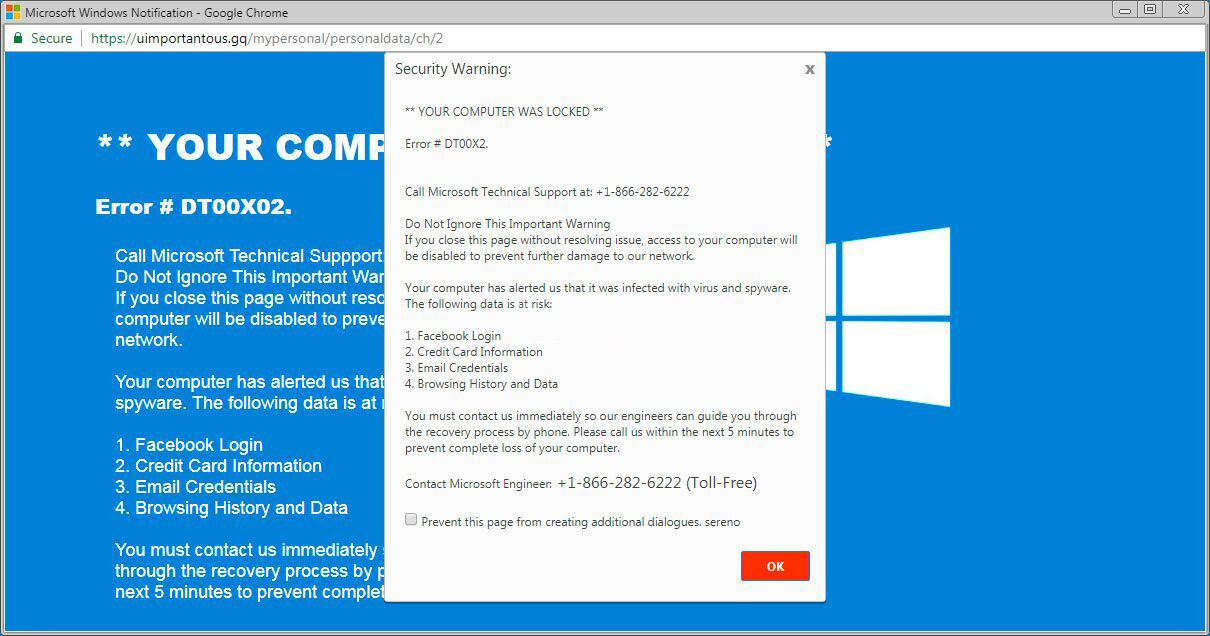
The example of Microsoft Tech support scam banner
Nowadays, there are two of the most widespread ways of malware distribution – bait e-mails and also injection into a hacked program. While the first one is not so easy to avoid – you should know a lot to understand a counterfeit – the second one is simple to solve: just don’t utilize cracked apps. Torrent trackers and other sources of “free” applications (which are, in fact, paid, but with a disabled license checking) are really a giveaway point of malware. And Win32/Lodi is simply one of them.



Leave a Comment