
What is Win32/Kryptik.EPJD infection?
In this post you will locate about the interpretation of Win32/Kryptik.EPJD and also its negative effect on your computer. Such ransomware are a form of malware that is elaborated by on-line frauds to demand paying the ransom by a victim.
In the majority of the instances, Win32/Kryptik.EPJD infection will instruct its targets to start funds move for the function of counteracting the changes that the Trojan infection has presented to the target’s gadget.
Win32/Kryptik.EPJD Summary
These modifications can be as follows:
- Executable code extraction. Cybercriminals often use binary packers to hinder the malicious code from reverse-engineered by malware analysts. A packer is a tool that compresses, encrypts, and modifies a malicious file’s format. Sometimes packers can be used for legitimate ends, for example, to protect a program against cracking or copying.
- Compression (or decompression);
- Injection with CreateRemoteThread in a remote process;
- Attempts to connect to a dead IP:Port (1 unique times);
- Creates RWX memory. There is a security trick with memory regions that allows an attacker to fill a buffer with a shellcode and then execute it. Filling a buffer with shellcode isn’t a big deal, it’s just data. The problem arises when the attacker is able to control the instruction pointer (EIP), usually by corrupting a function’s stack frame using a stack-based buffer overflow, and then changing the flow of execution by assigning this pointer to the address of the shellcode.
- Possible date expiration check, exits too soon after checking local time;
- Starts servers listening on 0.0.0.0:10077, 0.0.0.0:5787;
- Expresses interest in specific running processes;
- Performs some HTTP requests;
- Unconventionial language used in binary resources: Chinese (Singapore);
- Code injection with NtQueueApcThread in a remote process;
- Attempts to stop active services;
- A process attempted to delay the analysis task by a long amount of time.;
- A system process is generating network traffic likely as a result of process injection;
- Attempts to identify installed AV products by registry key;
- Operates on local firewall’s policies and settings;
- Creates a copy of itself;
- Attempts to modify or disable Security Center warnings;
- Attempts to interact with an Alternate Data Stream (ADS);
- Ciphering the papers found on the sufferer’s hard drive — so the target can no longer utilize the information;
- Preventing regular accessibility to the victim’s workstation;
Similar behavior
Related domains
| terminreg.cc | TrojWare.Win32.Ransom.TeslaCrypt.AS@6avt1u |
| synchronized3.cc | TrojWare.Win32.Ransom.TeslaCrypt.AS@6avt1u |
Win32/Kryptik.EPJD
One of the most regular channels where Win32/Kryptik.EPJD Ransomware Trojans are injected are:
- By methods of phishing emails;
- As a consequence of customer winding up on a resource that organizes a harmful software application;
As quickly as the Trojan is successfully infused, it will certainly either cipher the information on the victim’s computer or avoid the tool from working in a proper fashion – while likewise putting a ransom note that states the demand for the targets to effect the payment for the objective of decrypting the papers or restoring the data system back to the initial problem. In the majority of circumstances, the ransom money note will show up when the customer reboots the PC after the system has currently been harmed.
Win32/Kryptik.EPJD circulation networks.
In various corners of the world, Win32/Kryptik.EPJD expands by leaps and also bounds. However, the ransom notes and also techniques of extorting the ransom amount may vary depending on particular neighborhood (local) settings. The ransom money notes and tricks of obtaining the ransom quantity may vary depending on specific local (regional) settings.
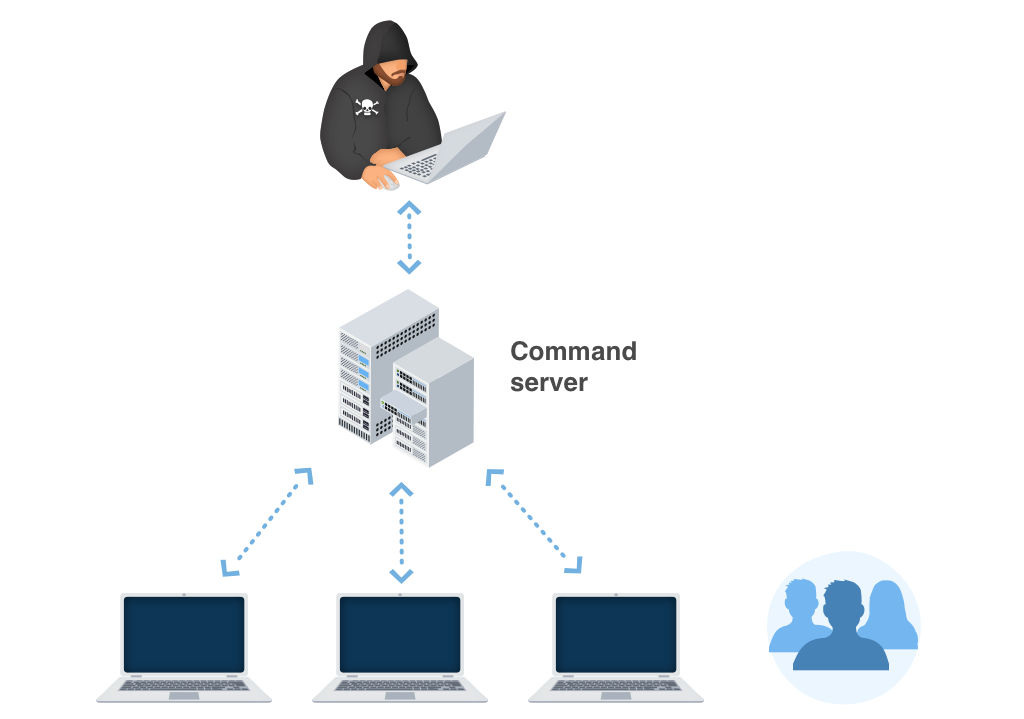
For example:
Faulty alerts regarding unlicensed software.
In specific locations, the Trojans typically wrongfully report having actually discovered some unlicensed applications allowed on the victim’s device. The sharp after that demands the user to pay the ransom money.
Faulty declarations regarding illegal material.
In countries where software application piracy is less preferred, this approach is not as effective for the cyber frauds. Alternatively, the Win32/Kryptik.EPJD popup alert might incorrectly assert to be stemming from a police organization and will report having located youngster porn or various other unlawful information on the gadget.
Win32/Kryptik.EPJD popup alert might wrongly assert to be deriving from a legislation enforcement establishment and will report having situated child porn or various other illegal data on the gadget. The alert will likewise contain a demand for the user to pay the ransom.
Technical details
File Info:
crc32: F9FE49C3md5: 85ec1d04136a867cc65498e07f1a21ffname: 85EC1D04136A867CC65498E07F1A21FF.mlwsha1: d8db0709c140186e77e47457a03a3440c8256d28sha256: 9802d4137d6924ce946d3d779af68c5e2b1e0376ad86ff41229e779281e397fcsha512: 459a94d22c5ac3589541e4c2b48c06c4365181db75522f807f63634440a7a8666dede313ac3c39d104d57821be39566b1c839dc3b134e1758a727a0a60c728fcssdeep: 6144:WZ3DEq5D/qQWsV9hfVh7fqxk6ycKtqiuCp/fwJ3m0e7KCj2A6g23sbGESxnQIW:WZ3Dv5D/5jHRd6nKtqizHGmeC6/9stAtype: PE32 executable (GUI) Intel 80386, for MS WindowsVersion Info:
LegalCopyright: Ranting MillionthInternalName: Rodeo MisusingFileVersion: 224, 144, 179, 101CompanyName: TrueCafe, LtdLegalTrademarks: Moderations MiscellaneaProductName: Rethinking ReinstateProductVersion: 73, 78, 122, 61FileDescription: Reversing OrigamiOriginalFilename: Rearguard Perturb
Win32/Kryptik.EPJD also known as:
| GridinSoft | Trojan.Ransom.Gen |
| Bkav | W32.AIDetect.malware1 |
| K7AntiVirus | Trojan ( 0055dd191 ) |
| Elastic | malicious (high confidence) |
| DrWeb | Trojan.Elevator.68 |
| Cynet | Malicious (score: 100) |
| ALYac | Trojan.TeslaCrypt.Gen.4 |
| Cylance | Unsafe |
| Zillya | Trojan.Kryptik.Win32.1548667 |
| Sangfor | Trojan.Win32.Save.a |
| CrowdStrike | win/malicious_confidence_100% (D) |
| Alibaba | Trojan:Win32/Waldek.aa933e14 |
| K7GW | Trojan ( 0055dd191 ) |
| Cybereason | malicious.4136a8 |
| Symantec | Trojan.Gen |
| ESET-NOD32 | a variant of Win32/Kryptik.EPJD |
| APEX | Malicious |
| Avast | FileRepMetagen [Malware] |
| Kaspersky | Trojan.Win32.Waldek.ajrm |
| BitDefender | Trojan.TeslaCrypt.Gen.4 |
| NANO-Antivirus | Trojan.Win32.AD.ebfeln |
| MicroWorld-eScan | Trojan.TeslaCrypt.Gen.4 |
| Tencent | Win32.Trojan.Waldek.Ecum |
| Ad-Aware | Trojan.TeslaCrypt.Gen.4 |
| Sophos | Mal/Generic-S |
| Comodo | TrojWare.Win32.Ransom.TeslaCrypt.AS@6avt1u |
| BitDefenderTheta | Gen:NN.ZexaF.34686.uq0@aeLg@xbb |
| VIPRE | Trojan.Win32.Generic!BT |
| McAfee-GW-Edition | BehavesLike.Win32.Generic.fm |
| FireEye | Generic.mg.85ec1d04136a867c |
| Emsisoft | Trojan.TeslaCrypt.Gen.4 (B) |
| SentinelOne | Static AI – Malicious PE |
| Jiangmin | Trojan.Generic.ovpm |
| Webroot | W32.Trojan.Gen |
| Avira | HEUR/AGEN.1124198 |
| Kingsoft | Win32.Troj.Generic_a.a.(kcloud) |
| Microsoft | TrojanDropper:Win32/Evotob.B |
| AegisLab | Trojan.Win32.Agent.mCPk |
| GData | Trojan.TeslaCrypt.Gen.4 |
| AhnLab-V3 | Malware/Win32.Generic.C2192132 |
| Acronis | suspicious |
| McAfee | Generic.dwg |
| MAX | malware (ai score=86) |
| VBA32 | BScope.Trojan.Waldek |
| Panda | Trj/GdSda.A |
| Rising | Dropper.Evotob!8.73F (CLOUD) |
| Yandex | Trojan.Agent!aUrOMYDAWB4 |
| Ikarus | Trojan.Win32.Exploit |
| AVG | FileRepMetagen [Malware] |
| Paloalto | generic.ml |
How to remove Win32/Kryptik.EPJD virus?
Unwanted application has ofter come with other viruses and spyware. This threats can steal account credentials, or crypt your documents for ransom.
Reasons why I would recommend GridinSoft1
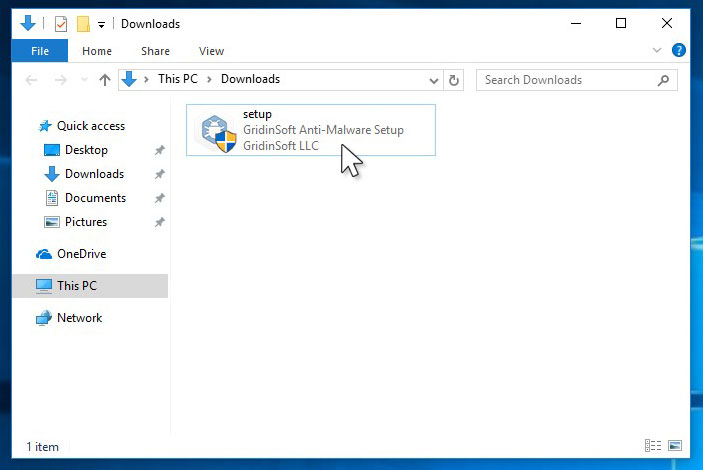
Run the setup file.
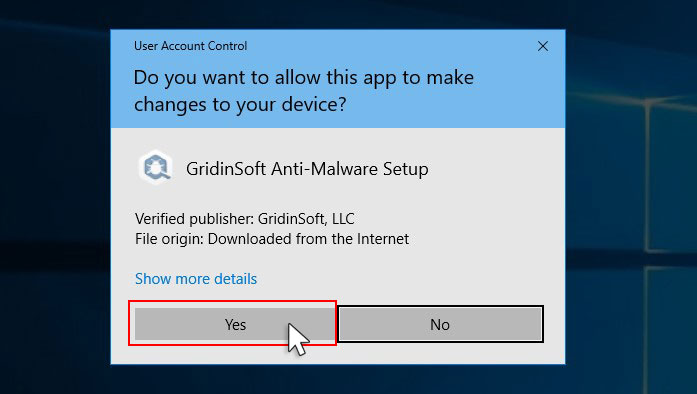
Press “Install” button.
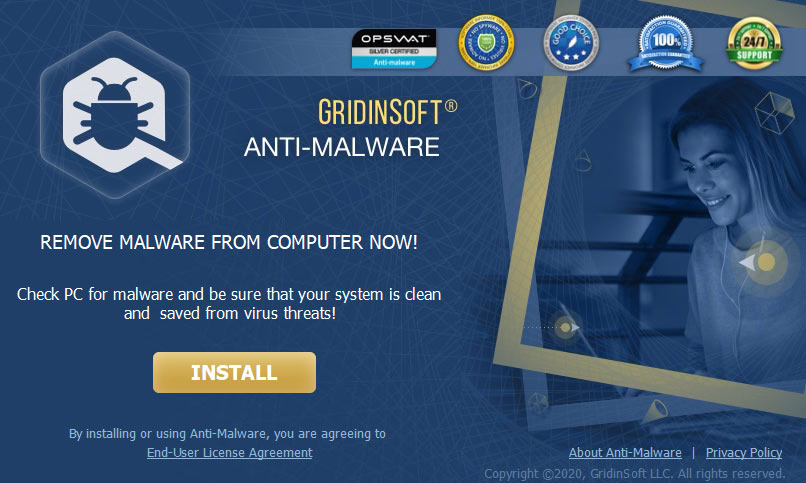
Once installed, Anti-Malware will automatically run.
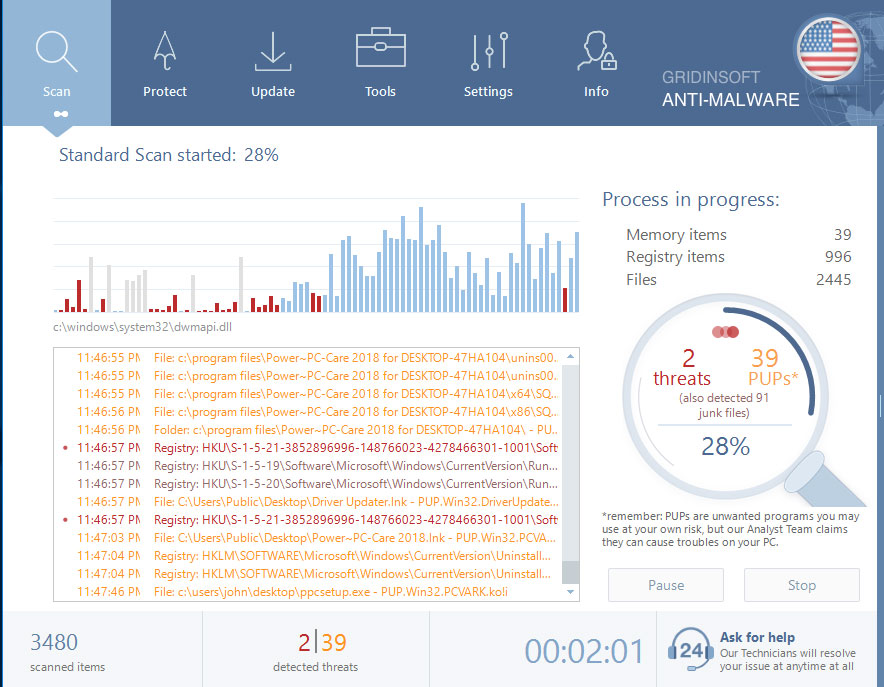
Wait for the Anti-Malware scan to complete.
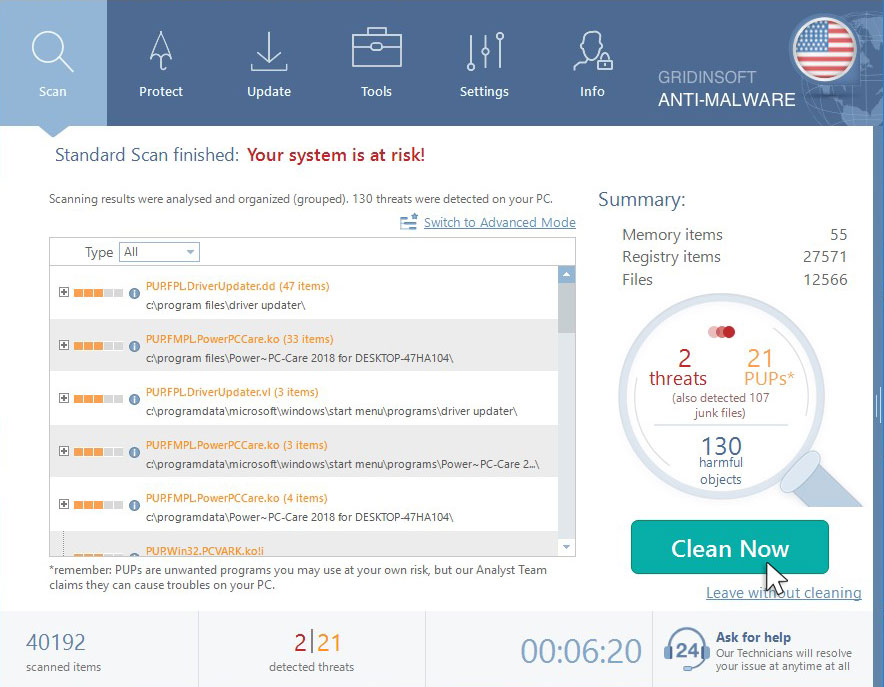
Click on “Clean Now”.
Are Your Protected?
If the guide doesn’t help you to remove Win32/Kryptik.EPJD you can always ask me in the comments for getting help.


Leave a Comment