
Trojan:Win32/Casur.A!cl is a specific detection name used by antivirus software, such as Microsoft Defender Antivirus, to identify a particular variant of the Casur trojan. Trojans are a type of malware that often masquerade as legitimate files or software to deceive users and perform malicious activities on infected systems.
Trojan:Win32/Casur.A!cl specifically refers to the Casur trojan variant that antivirus vendors have identified and classified. However, without more specific information about its characteristics or behavior, providing detailed insights into this particular variant is challenging.
Trojans like Casur are designed to perform various malicious activities, such as:
- Unauthorized Access: Trojans may create backdoors or provide remote access to attackers, allowing them to control infected systems, execute commands, or install additional malware.
- Information Theft: Trojans can harvest sensitive information, such as login credentials, financial data, or personal information, from infected systems. This information is often used for identity theft, financial fraud, or other malicious purposes.
- System Modification: Trojans may modify system settings, alter registry entries, or disable security software to maintain persistence and avoid detection by security measures.
- Distribution of Additional Malware: Trojans can download and install other malware or unwanted software onto infected systems, further compromising security and stability.
In the majority of the situations, Trojan:Win32/Casur.A!cl virus will certainly instruct its sufferers to start funds move to neutralize the changes that the Trojan infection has presented to the target’s tool.
Trojan:Win32/Casur.A!cl Summary
These alterations can be as complies with:
- Network activity detected but not expressed in API logs. Microsoft built an API solution into its Windows operating system. It reveals network activity for all apps and programs that ran on the computer in the past 30 days. This malware hides network activity.
- Ciphering the papers found on the sufferer’s hard disk — so the sufferer can no more utilize the information;
- Preventing routine accessibility to the victim’s workstation. This is the typical behavior of a virus called locker. It blocks access to the computer until the victim pays the ransom.
Similar behavior
Related domains
| z.whorecord.xyz | Trojan.Ransom.29 |
| a.tomx.xyz | Trojan.Ransom.29 |
Trojan:Win32/Casur.A!cl
The most typical channels through which Trojan:Win32/Casur.A!cl are infused are:
- By means of phishing e-mails;
- As a consequence of customer winding up on a resource that holds a malicious software application;
As soon as the Trojan is effectively infused, it will either cipher the information on the victim’s computer or prevent the gadget from operating in a proper manner – while additionally placing a ransom note that points out the demand for the victims to impact the payment for the objective of decrypting the files or recovering the file system back to the initial condition. In most instances, the ransom note will turn up when the customer reboots the PC after the system has already been harmed.
Trojan:Win32/Casur.A!cl distribution channels.
In different corners of the world, Trojan:Win32/Casur.A!cl grows by leaps and bounds. Nonetheless, the ransom money notes and tricks of obtaining the ransom quantity may vary depending on certain neighborhood (local) settings. The ransom notes, and methods of obtaining the ransom amount may vary depending on particular local (local) setups.
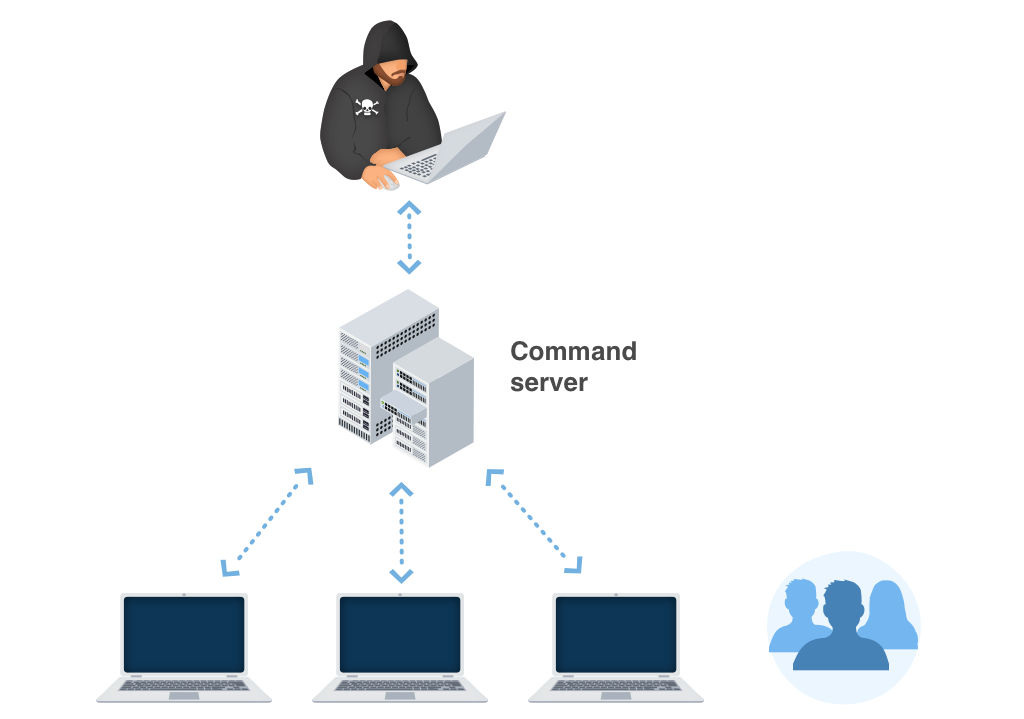
As an example:
Faulty alerts about unlicensed software programs.
In certain locations, the Trojans frequently wrongfully report having discovered some unlicensed applications that made it possible for the target’s device. The sharp after that requires the user to pay the ransom money.
Faulty statements about prohibited content.
In countries where software application piracy is less preferred, this method is not as reliable for cyber scams. Conversely, the Trojan:Win32/Casur.A!cl popup alert might falsely assert originating from a law enforcement organization and will report having located kid pornography or other prohibited information on the gadget.
Trojan:Win32/Casur.A!cl popup alert may incorrectly claim to be obtained from a legislation enforcement establishment and also will report having located kid porn or various other prohibited data on the tool. The alert will likewise have a demand for the user to pay the ransom money.
Technical details
File Info:
crc32: 5DD98A3Dmd5: 0b9c254c8af36ee0205e68f45935b34ename: 0B9C254C8AF36EE0205E68F45935B34E.mlwsha1: b9ae6e5f6e913a0738d39ccb05f6cb002f5dada3sha256: 94dcf2cd38d5390c853442d681a91c504b948ce2d01901c69238dea975d1e6f8sha512: 5ae8ad04d13bdc46d46751bc6a5a85dcb94a9e2299f12486697f9f6f74d10816bfdfaa086dbea910d424801ec7e2c33444a74706a1852931953f8b220347e677ssdeep: 768:H2FZJjbqU0cbN5YwiXMtBjr9oG334lJqRmbbjkCIszR+/tmfXQQCmFbXd3qNOWX:WT8MXY+txr9H3olkRqftY/8HCm9zW3Stype: PE32 executable (GUI) Intel 80386 Mono/.Net assembly, for MS WindowsVersion Info:
Translation: 0x0000 0x04b0LegalCopyright: Copyright xa9 2013Assembly Version: 1.0.0.0InternalName: Example.exeFileVersion: 1.0.0.0ProductName: WindowsApplication1ProductVersion: 1.0.0.0FileDescription: WindowsApplication1OriginalFilename: Example.exe
Trojan:Win32/Casur.A!cl also known as:
| GridinSoft | Trojan.Ransom.Gen |
| DrWeb | Trojan.Ransom.29 |
| Cynet | Malicious (score: 99) |
| ALYac | Trojan.Ransom.GenericKD.30339841 |
| Cybereason | malicious.c8af36 |
| Symantec | ML.Attribute.HighConfidence |
| ESET-NOD32 | a variant of Generik.EQQZLYA |
| APEX | Malicious |
| Avast | Win32:Malware-gen |
| BitDefender | Trojan.Ransom.GenericKD.30339841 |
| NANO-Antivirus | Trojan.Win32.Ransom.ewvwyp |
| MicroWorld-eScan | Trojan.Ransom.GenericKD.30339841 |
| Ad-Aware | Trojan.Ransom.GenericKD.30339841 |
| Sophos | Mal/Generic-S |
| BitDefenderTheta | Gen:NN.ZemsilF.34684.hm0@aC79U6h |
| VIPRE | Trojan.Win32.Generic!BT |
| McAfee-GW-Edition | GenericRXDQ-NP!0B9C254C8AF3 |
| FireEye | Trojan.Ransom.GenericKD.30339841 |
| Emsisoft | Trojan.Ransom.GenericKD.30339841 (B) |
| SentinelOne | Static AI – Malicious PE |
| Jiangmin | TrojanDropper.Agent.bjjx |
| Avira | TR/Ransom.dzcqg |
| Microsoft | Trojan:Win32/Casur.A!cl |
| Arcabit | Trojan.Ransom.Generic.D1CEF301 |
| GData | Trojan.Ransom.GenericKD.30339841 |
| McAfee | GenericRXDQ-NP!0B9C254C8AF3 |
| MAX | malware (ai score=87) |
| AVG | Win32:Malware-gen |
How to remove Trojan:Win32/Casur.A!cl virus?
Unwanted application has often come with other viruses and spyware. This threat can steal account credentials or crypt your documents for ransom.
Reasons why I would recommend GridinSoft1
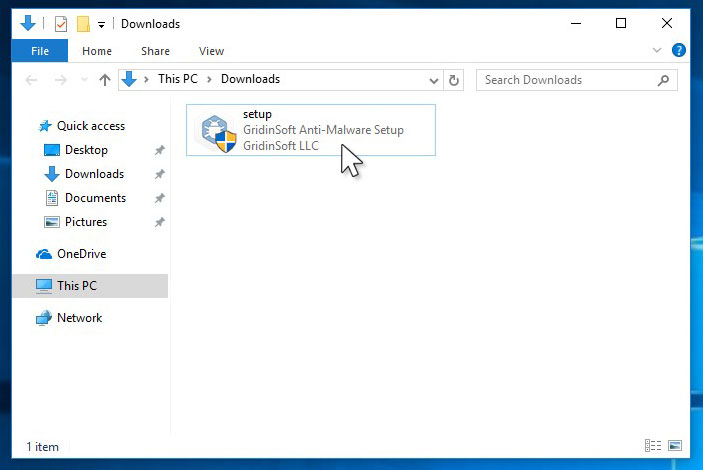
Run the setup file.
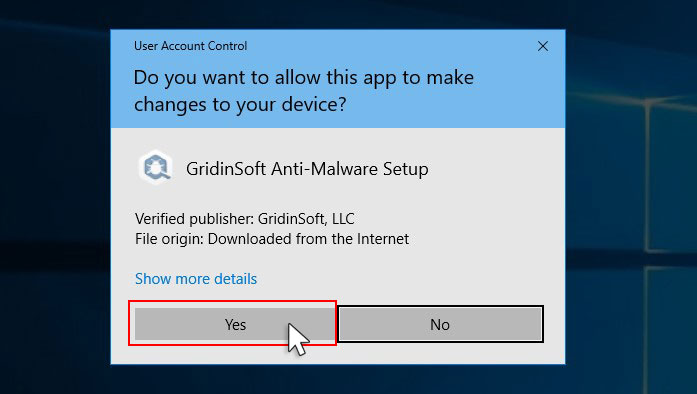
Press “Install” button.
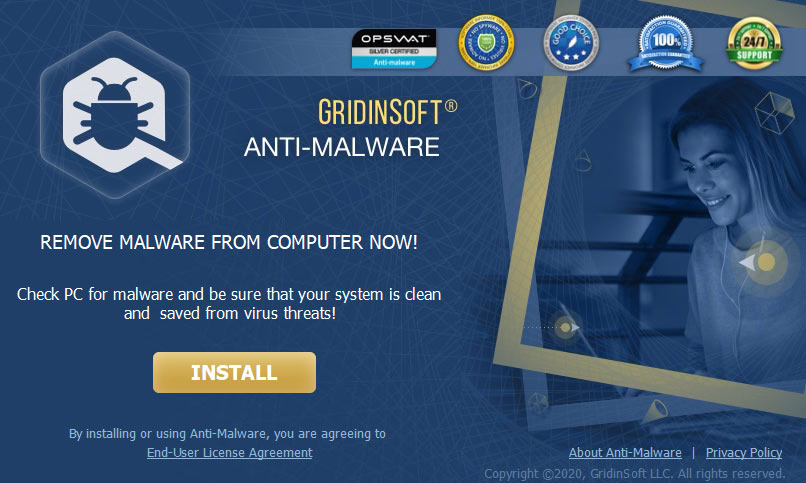
Once installed, Anti-Malware will automatically run.
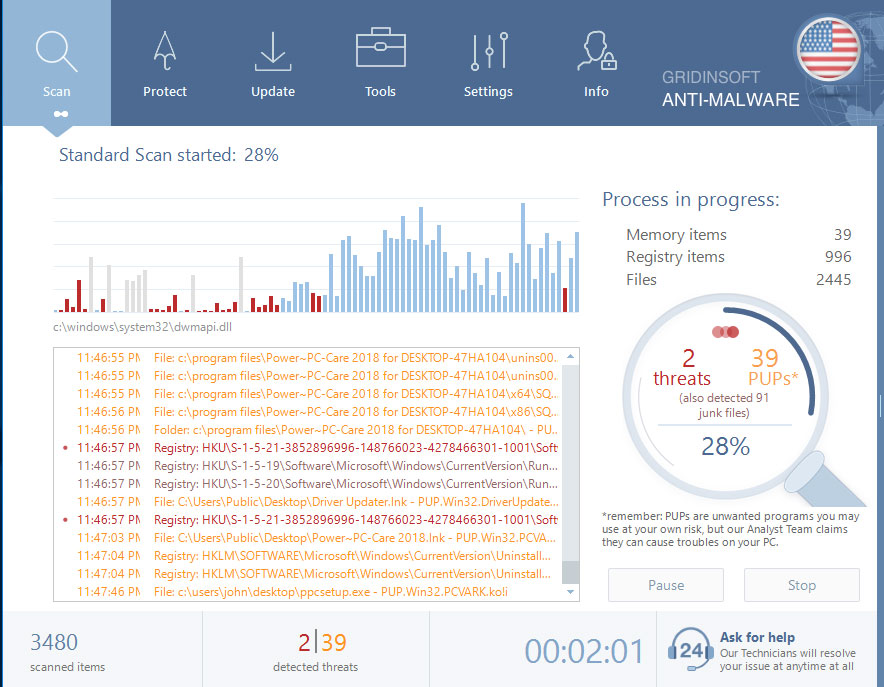
Wait for the Anti-Malware scan to complete.
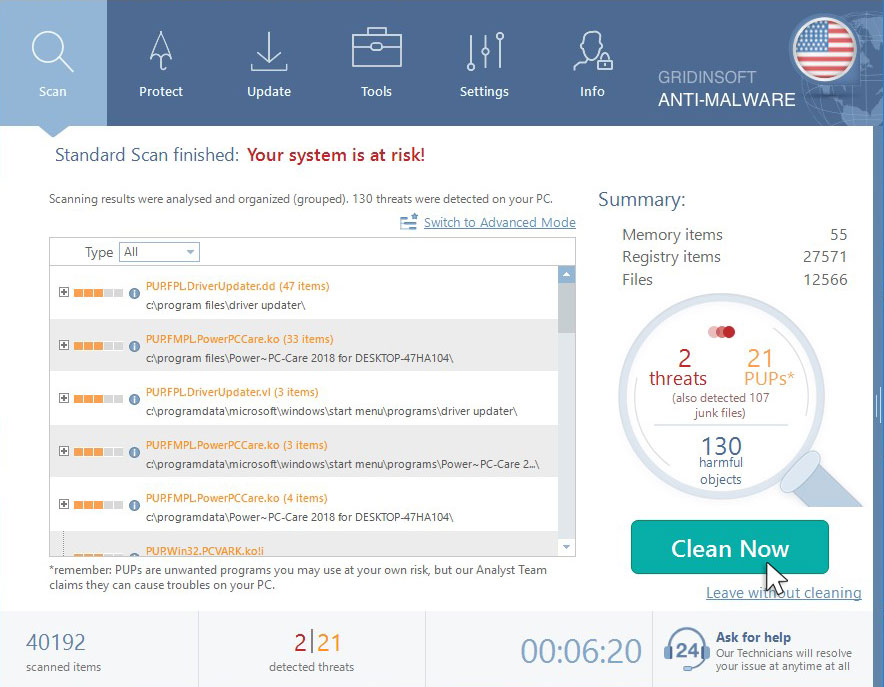
Click on “Clean Now”.
Are Your Protected?
If the guide doesn’t help you to remove Trojan:Win32/Casur.A!cl you can always ask me in the comments for getting help.


Leave a Comment