
What is Ransom:Win32/Avaddon.RND!MTB infection?
In this post you will find about the interpretation of Ransom:Win32/Avaddon.RND!MTB and also its negative effect on your computer system. Such ransomware are a kind of malware that is clarified by on the internet scams to demand paying the ransom by a victim.
Most of the instances, Ransom:Win32/Avaddon.RND!MTB virus will instruct its sufferers to start funds move for the objective of counteracting the changes that the Trojan infection has actually presented to the target’s device.
Ransom:Win32/Avaddon.RND!MTB Summary
These modifications can be as follows:
- Attempts to connect to a dead IP:Port (4 unique times);
- Creates RWX memory. There is a security trick with memory regions that allows an attacker to fill a buffer with a shellcode and then execute it. Filling a buffer with shellcode isn’t a big deal, it’s just data. The problem arises when the attacker is able to control the instruction pointer (EIP), usually by corrupting a function’s stack frame using a stack-based buffer overflow, and then changing the flow of execution by assigning this pointer to the address of the shellcode.
- Possible date expiration check, exits too soon after checking local time;
- A process attempted to delay the analysis task.;
- At least one IP Address, Domain, or File Name was found in a crypto call;
- Repeatedly searches for a not-found process, may want to run with startbrowser=1 option;
- A process created a hidden window;
- Drops a binary and executes it. Trojan-Downloader installs itself to the system and waits until an Internet connection becomes available to connect to a remote server or website in order to download additional malware onto the infected computer.
- Performs some HTTP requests;
- Creates an autorun.inf file;
- Uses Windows utilities for basic functionality;
- Attempts to delete volume shadow copies;
- Attempts to repeatedly call a single API many times in order to delay analysis time. This significantly complicates the work of the virus analyzer. Typical malware tactics!
- Installs itself for autorun at Windows startup. There is simple tactic using the Windows startup folder located at:
C:\Users\[user-name]\AppData\Roaming\Microsoft\Windows\StartMenu\Programs\Startup. Shortcut links (.lnk extension) placed in this folder will cause Windows to launch the application each time [user-name] logs into Windows.The registry run keys perform the same action, and can be located in different locations:
- HKEY_LOCAL_MACHINE\Software\Microsoft\Windows\CurrentVersion\Run
- HKEY_CURRENT_USER\Software\Microsoft\Windows\CurrentVersion\Run
- HKEY_LOCAL_MACHINE\Software\Microsoft\Windows\CurrentVersion\RunOnce
- HKEY_CURRENT_USER\Software\Microsoft\Windows\CurrentVersion\RunOnce
- Exhibits possible ransomware file modification behavior;
- Creates a hidden or system file. The malware adds the hidden attribute to every file and folder on your system, so it appears as if everything has been deleted from your hard drive.
- Creates a copy of itself;
- Attempts to disable UAC.
User Account Control or just UAC is a part of the Windows security system which prevents apps from making unwanted changes on PC.
UAC includes several technologies 1:
- File and egistry Virtualization;
- Same-desktop Elevation;
- Filtered Token;
- User Interface Privilege Isolation;
- Protected Mode Internet Explorer;
- Installer Detection;
- Attempts to create or modify system certificates;
- Attempts to modify UAC prompt behavior;
- Ciphering the files located on the sufferer’s hard disk drive — so the target can no longer make use of the information;
- Preventing routine accessibility to the sufferer’s workstation. This is the typical behavior of a virus called locker. It blocks access to the computer until the victim pays the ransom.
Ransom:Win32/Avaddon.RND!MTB
The most regular channels whereby Ransom:Win32/Avaddon.RND!MTB Ransomware are infused are:
- By ways of phishing emails;
- As a consequence of user ending up on a source that hosts a destructive software program;
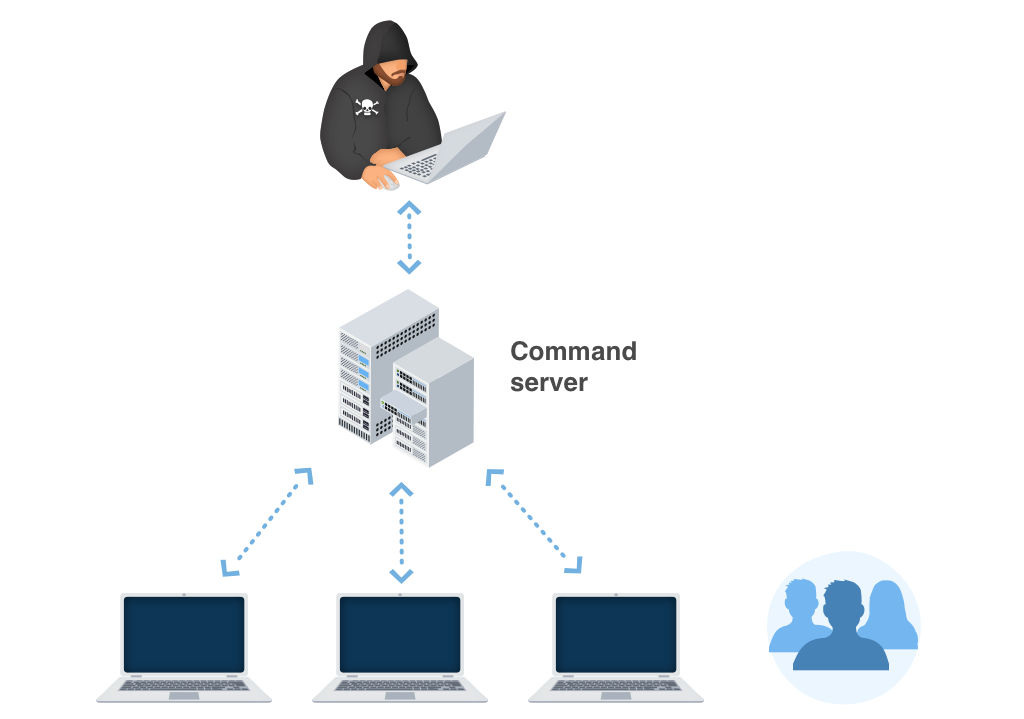
As soon as the Trojan is effectively injected, it will certainly either cipher the data on the victim’s PC or avoid the gadget from operating in a proper way – while also placing a ransom note that discusses the requirement for the sufferers to impact the settlement for the purpose of decrypting the records or bring back the documents system back to the first problem. In the majority of instances, the ransom money note will certainly show up when the customer restarts the PC after the system has actually currently been harmed.
Ransom:Win32/Avaddon.RND!MTB circulation networks.
In numerous edges of the globe, Ransom:Win32/Avaddon.RND!MTB expands by jumps and bounds. However, the ransom notes as well as methods of obtaining the ransom money quantity might differ depending upon specific local (regional) settings. The ransom money notes and also methods of extorting the ransom money quantity may differ depending on particular local (local) settings.
For example:
Faulty notifies about unlicensed software.
In certain locations, the Trojans typically wrongfully report having discovered some unlicensed applications enabled on the victim’s device. The sharp after that demands the customer to pay the ransom money.
Faulty statements about prohibited content.
In nations where software application piracy is much less prominent, this method is not as reliable for the cyber scams. Conversely, the Ransom:Win32/Avaddon.RND!MTB popup alert might wrongly declare to be deriving from a law enforcement establishment and will report having located child porn or various other unlawful information on the gadget.
Ransom:Win32/Avaddon.RND!MTB popup alert might incorrectly claim to be acquiring from a legislation enforcement establishment as well as will report having located child porn or various other illegal data on the device. The alert will likewise include a demand for the customer to pay the ransom money.
Technical details
File Info:
crc32: A15E6FC0md5: f647e7e16ee676feed9601ae83ce8997name: F647E7E16EE676FEED9601AE83CE8997.mlwsha1: 08de3a80b989101b42702ebba81ed0872c45e9b2sha256: 6b401b1090396db4410ae71310c684b8bffa697207d7cd59ca558d612892aacfsha512: 387be2ecfbf57caa8d63993956550da56d69deab3b548fde413f29cc2fba1387d1ac1d02bdb51e16b6405a880c0eecd7da454f20d49ec841cd518e94369da819ssdeep: 24576:7xx/L4U7IrLBms4o2S3ge8ZuuTCxrblAWOn1snN:z7IrLBmQ2SQsuTCFxAWOn1snNtype: PE32 executable (GUI) Intel 80386, for MS WindowsVersion Info:
LegalCopyright: xa9 Microsoft Corporation. All rights reserved.InternalName: taskhost.exeFileVersion: 10.0.17763.831 (WinBuild.160101.0800)CompanyName: Microsoft CorporationProductName: Microsoftxae Windowsxae Operating SystemProductVersion: 10.0.17763.831FileDescription: Host Process for Windows TasksOriginalFilename: taskhost.exeTranslation: 0x0409 0x04b0
Ransom:Win32/Avaddon.RND!MTB also known as:
| GridinSoft | Trojan.Ransom.Gen |
| K7AntiVirus | Trojan ( 00577dec1 ) |
| Elastic | malicious (high confidence) |
| Cynet | Malicious (score: 100) |
| ALYac | Gen:Variant.Zusy.378774 |
| Cylance | Unsafe |
| Sangfor | Trojan.Win32.Save.a |
| CrowdStrike | win/malicious_confidence_90% (W) |
| K7GW | Trojan ( 00577dec1 ) |
| Cybereason | malicious.16ee67 |
| Symantec | Ransom.Avaddon!g1 |
| ESET-NOD32 | a variant of Win32/Filecoder.Avaddon.D |
| APEX | Malicious |
| Avast | Win32:Trojan-gen |
| Kaspersky | HEUR:Trojan.Win32.DelShad.gen |
| BitDefender | Gen:Variant.Zusy.378774 |
| MicroWorld-eScan | Gen:Variant.Zusy.378774 |
| Tencent | Malware.Win32.Gencirc.11c10e72 |
| Ad-Aware | Gen:Variant.Zusy.378774 |
| Sophos | Troj/Avaddon-A |
| BitDefenderTheta | Gen:NN.ZexaF.34738.Yu0@aGGno!fi |
| VIPRE | Trojan.Win32.Generic!BT |
| TrendMicro | Ransom.Win32.AVADDON.SMTHA |
| McAfee-GW-Edition | BehavesLike.Win32.Generic.ch |
| FireEye | Generic.mg.f647e7e16ee676fe |
| Emsisoft | Gen:Variant.Zusy.378774 (B) |
| Avira | TR/AD.RansomHeur.usvpz |
| eGambit | Unsafe.AI_Score_100% |
| Microsoft | Ransom:Win32/Avaddon.RND!MTB |
| Arcabit | Trojan.Zusy.D5C796 |
| GData | Gen:Variant.Zusy.378774 |
| AhnLab-V3 | Malware/Win.Ransom.R422799 |
| McAfee | Artemis!F647E7E16EE6 |
| MAX | malware (ai score=84) |
| Malwarebytes | Ransom.Avaddon |
| Panda | Trj/GdSda.A |
| TrendMicro-HouseCall | Ransom.Win32.AVADDON.SMTHA |
| Rising | Ransom.Avaddon!1.C7A8 (CLASSIC) |
| Yandex | Trojan.DelShad!A2ifoRy9jxQ |
| MaxSecure | Trojan.Malware.74279478.susgen |
| Fortinet | W32/Avaddon.C!tr.ransom |
| AVG | Win32:Trojan-gen |
How to remove Ransom:Win32/Avaddon.RND!MTB virus?
Unwanted application has ofter come with other viruses and spyware. This threats can steal account credentials, or crypt your documents for ransom.
Reasons why I would recommend GridinSoft2
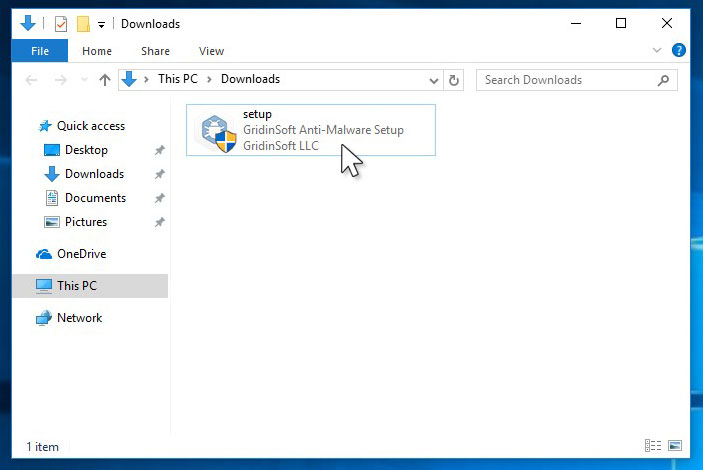
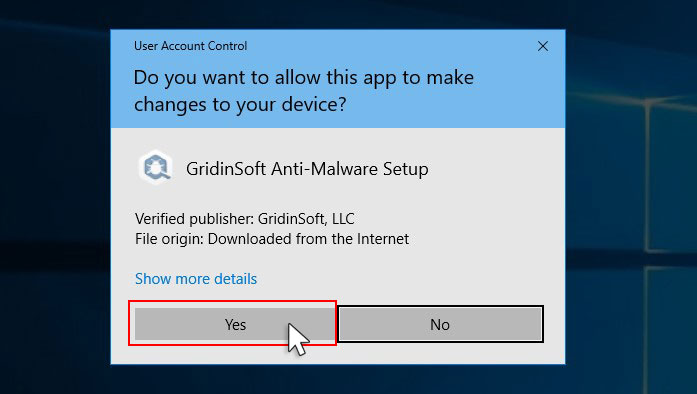
Run the setup file.
Press “Install” button.
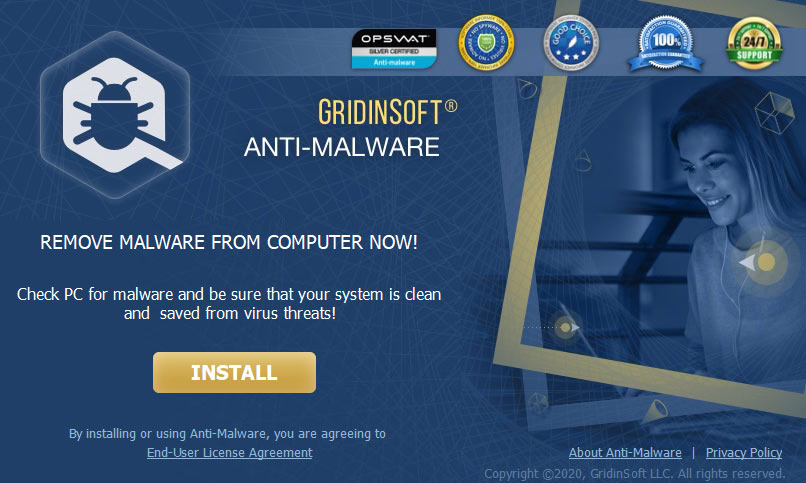
Once installed, Anti-Malware will automatically run.
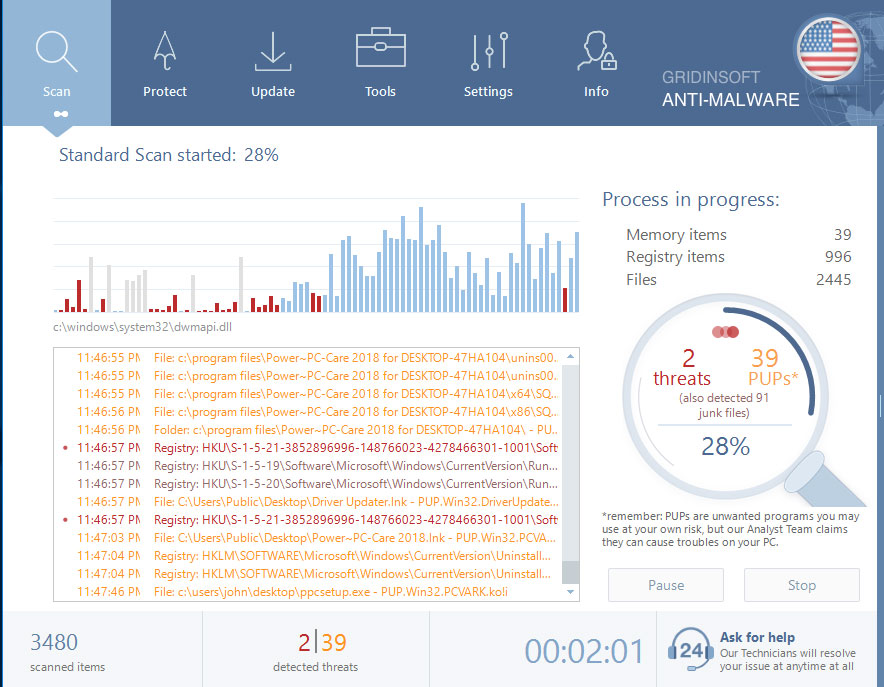
Wait for the Anti-Malware scan to complete.
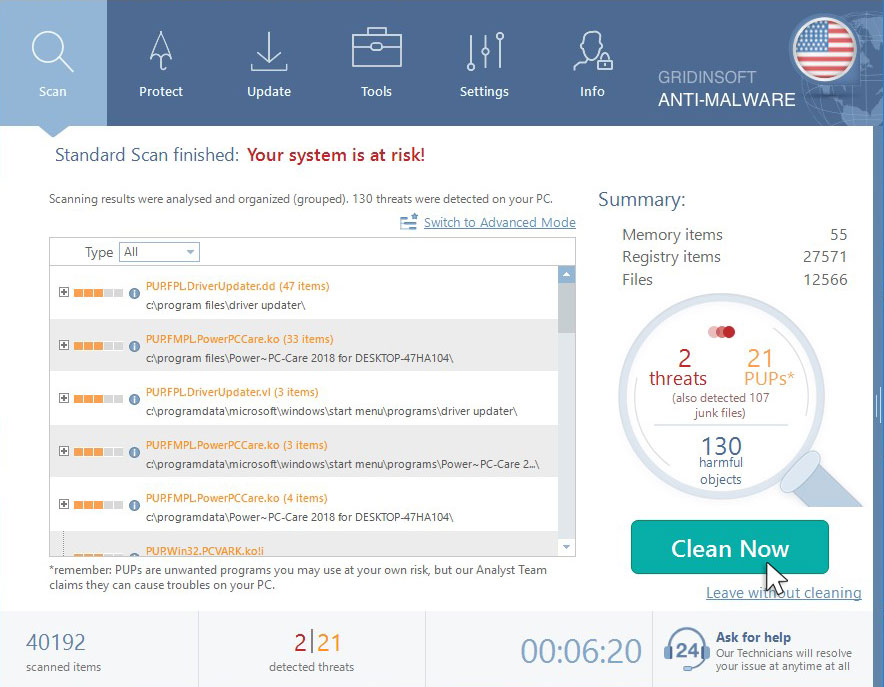
Click on “Clean Now”.
Are Your Protected?
If the guide doesn’t help you to remove Ransom:Win32/Avaddon.RND!MTB you can always ask me in the comments for getting help.
References
- Microsoft Ignite: How to disable User Account Control (UAC) on Windows Server


Leave a Comment