
If you spectate the notification of PUA:Win32/Mobogenie detection, it looks like that your computer has a problem. All viruses are dangerous, with no deviations. Mobogenie unwanted applications can not be called full-fledged malware. Nonetheless, it has a lot of proof to say that you will not be pleased with the changes this thing brings to your PC. PUAs like that may be just a pesky thing, and either causes a severe impact on your system’s functionality. Moreover, there are a number of situations when users report that this application acts like spyware or a backdoor.
Mobogenie is an Android management application that allows users to manage their Android devices, including installing and updating apps, managing contacts and messages, and transferring files between their device and PC. However, it is often criticized for its aggressive and intrusive advertising practices, including displaying pop-up ads, promoting other apps, and collecting user data.
What does the notification with PUA:Win32/Mobogenie detection mean?
The PUA:Win32/Mobogenie detection you can see in the lower right side is shown to you by Microsoft Defender. That anti-malware application is quite OK at scanning, however, prone to be generally unstable. It is unprotected from malware attacks, it has a glitchy interface and problematic malware removal capabilities. Thus, the pop-up which says about the Mobogenie is rather just a notification that Defender has identified it. To remove it, you will likely need to make use of another anti-malware program.
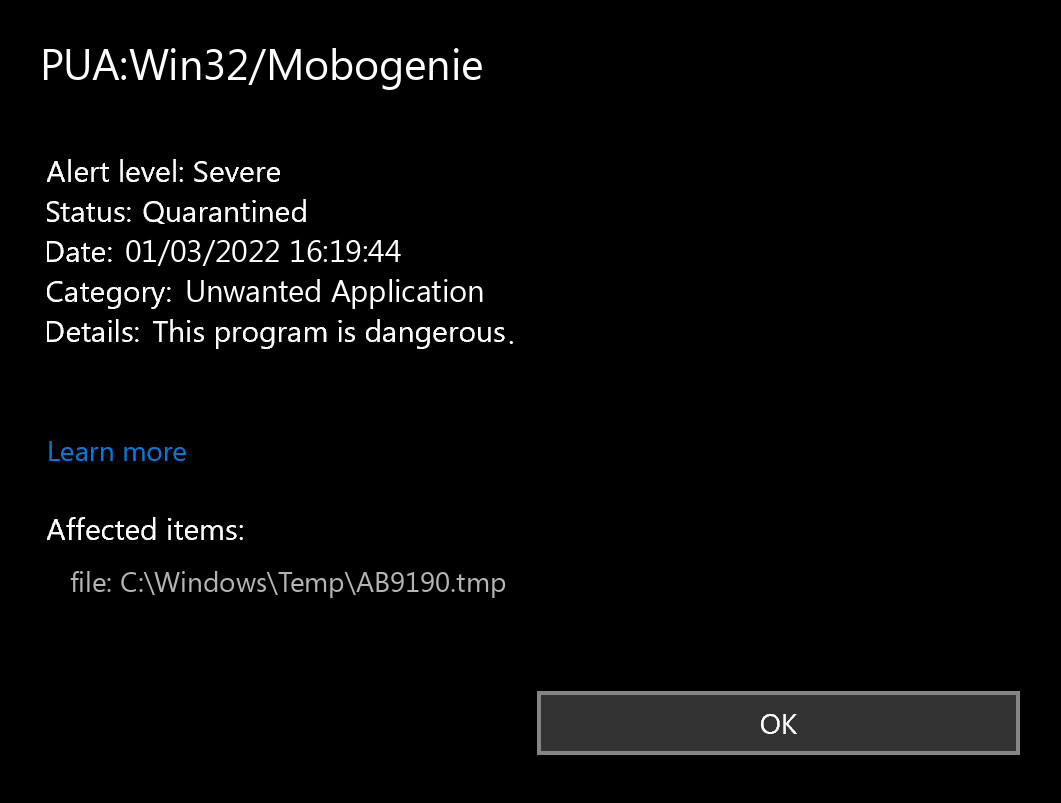
Microsoft Defender: “PUA:Win32/Mobogenie”
PUA:Win32/Mobogenie unwanted program is a typical example of PUA, which are pretty much widespread nowadays. Being free to use, it can provide you “the extended features” for the additional payment. Some instances of this program type can have no useful performance at all – only the shell with the colorful interface. You can see it advertised as a system optimization tool, driver updater or torrent downloading tracker. This or another way does not grant you any type of true capability, exposing you to risk instead.
Unwanted Program Summary:
| Name | Mobogenie PUA |
| Detection | PUA:Win32/Mobogenie |
| Damage | Mobogenie is at least useless, or can perform various malicious actions on your PC. |
| Fix Tool | See If Your System Has Been Affected by Mobogenie exploit |
Is PUA:Win32/Mobogenie dangerous?
I have already mentioned that PUA:Win32/Mobogenie PUA is not as trustworthy as it claims to be. The “legit and valuable” app may suddenly unveil itself as a downloader trojan, spyware, backdoor, or coin miner virus. And you can never predict what to anticipate even from different variants of Mobogenie unwanted program. That still does not imply that you need to panic – probably, this unpleasant thing has not succeeded to do poor things to your computer.
The particular harm to your system can be caused not only as a result of the malware injection. A significant share of suspicious programs, like the Mobogenie application is, is just badly made. Possibly, their actions are quite effective than useless if done on particular system configurations, however, not on each one. That’s how an uncomplicated system optimization app can cause chaos with continuous BSODs on your system. Any interruptions to the system registry are unsafe, and they are much more unsafe if completed with such programs.
How did I get this virus?
It is not easy to trace the sources of malware on your computer. Nowadays, things are mixed up, and distribution methods used by adware 5 years ago may be used by spyware nowadays. However, if we abstract from the exact spreading way and will think about why it works, the explanation will be very uncomplicated – low level of cybersecurity awareness. People click on ads on weird sites, open the pop-ups they get in their web browsers, call the “Microsoft tech support” thinking that the strange banner that says about malware is true. It is essential to know what is legitimate – to avoid misunderstandings when attempting to figure out a virus.
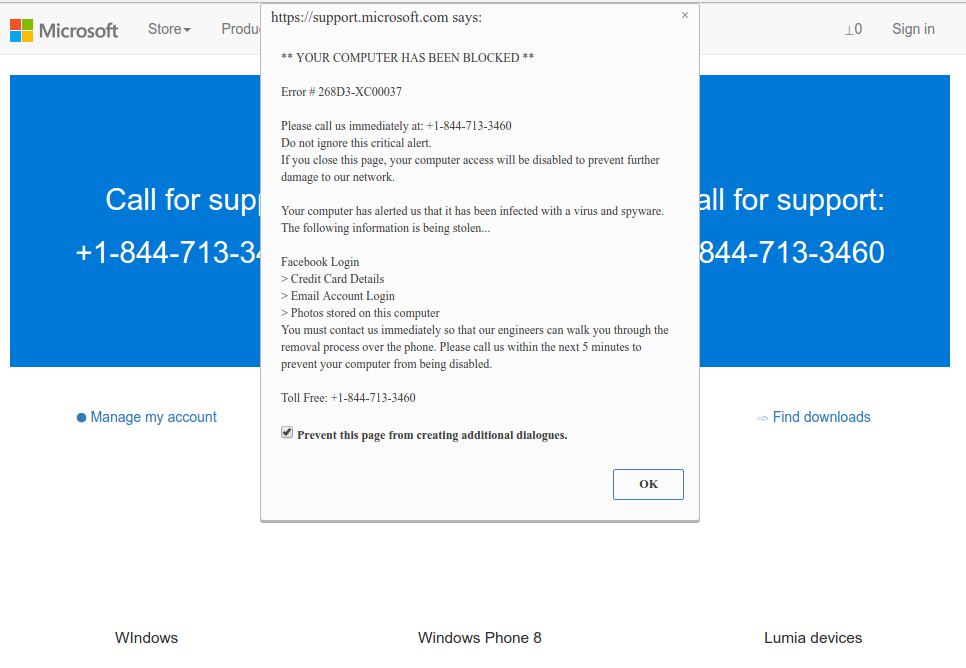
Microsoft Tech Support Scam
Nowadays, there are two of the most common tactics of malware spreading – lure e-mails and injection into a hacked program. While the first one is not so easy to evade – you must know a lot to recognize a fake – the second one is very easy to address: just don’t utilize cracked applications. Torrent-trackers and other sources of “totally free” applications (which are, actually, paid, but with a disabled license checking) are just a giveaway point of malware. And PUA:Win32/Mobogenie is simply one of them.


Leave a Comment