
What is PHP/Qhost.R infection?
In this article you will discover about the interpretation of PHP/Qhost.R and also its adverse impact on your computer. Such ransomware are a form of malware that is clarified by online fraudulences to require paying the ransom money by a sufferer.
In the majority of the situations, PHP/Qhost.R virus will certainly advise its victims to start funds transfer for the objective of reducing the effects of the changes that the Trojan infection has actually presented to the victim’s gadget.
PHP/Qhost.R Summary
These adjustments can be as complies with:
- Executable code extraction. Cybercriminals often use binary packers to hinder the malicious code from reverse-engineered by malware analysts. A packer is a tool that compresses, encrypts, and modifies a malicious file’s format. Sometimes packers can be used for legitimate ends, for example, to protect a program against cracking or copying.
- Attempts to connect to a dead IP:Port (1 unique times);
- Reads data out of its own binary image. The trick that allows the malware to read data out of your computer’s memory.
Everything you run, type, or click on your computer goes through the memory. This includes passwords, bank account numbers, emails, and other confidential information. With this vulnerability, there is the potential for a malicious program to read that data.
- The binary likely contains encrypted or compressed data. In this case, encryption is a way of hiding virus’ code from antiviruses and virus’ analysts.
- The executable is compressed using UPX;
- Installs itself for autorun at Windows startup. There is simple tactic using the Windows startup folder located at:
C:\Users\[user-name]\AppData\Roaming\Microsoft\Windows\StartMenu\Programs\Startup. Shortcut links (.lnk extension) placed in this folder will cause Windows to launch the application each time [user-name] logs into Windows.The registry run keys perform the same action, and can be located in different locations:
- HKEY_LOCAL_MACHINE\Software\Microsoft\Windows\CurrentVersion\Run
- HKEY_CURRENT_USER\Software\Microsoft\Windows\CurrentVersion\Run
- HKEY_LOCAL_MACHINE\Software\Microsoft\Windows\CurrentVersion\RunOnce
- HKEY_CURRENT_USER\Software\Microsoft\Windows\CurrentVersion\RunOnce
- Creates a copy of itself;
- The sample wrote data to the system hosts file.;
- Ciphering the documents found on the victim’s hard disk — so the target can no longer use the data;
- Preventing routine accessibility to the target’s workstation. This is the typical behavior of a virus called locker. It blocks access to the computer until the victim pays the ransom.
PHP/Qhost.R
One of the most common networks where PHP/Qhost.R Ransomware are injected are:
- By ways of phishing e-mails;
- As an effect of user winding up on a source that holds a malicious software application;
As quickly as the Trojan is efficiently injected, it will either cipher the data on the sufferer’s computer or prevent the tool from operating in an appropriate way – while also placing a ransom note that states the demand for the targets to impact the payment for the function of decrypting the files or bring back the data system back to the preliminary condition. In many instances, the ransom note will certainly come up when the client restarts the COMPUTER after the system has actually already been damaged.
PHP/Qhost.R circulation networks.
In different corners of the world, PHP/Qhost.R grows by leaps as well as bounds. Nonetheless, the ransom notes and also techniques of extorting the ransom money amount might vary depending upon particular local (local) settings. The ransom notes and also methods of obtaining the ransom amount might differ depending on particular neighborhood (local) settings.
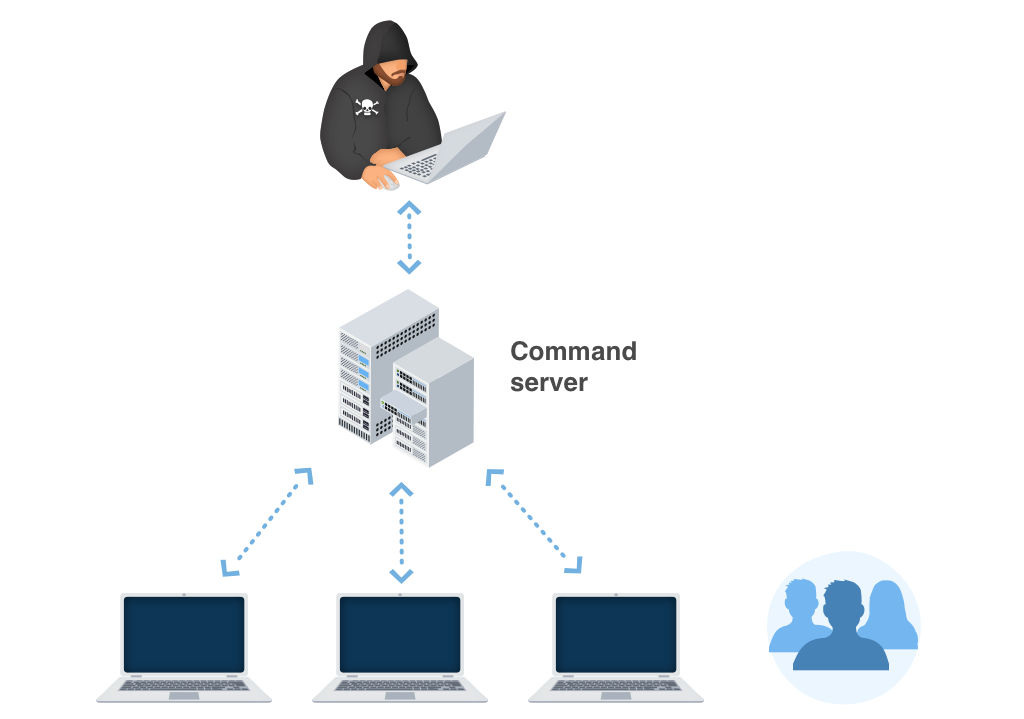
For example:
Faulty signals regarding unlicensed software.
In particular locations, the Trojans often wrongfully report having detected some unlicensed applications enabled on the victim’s gadget. The alert then requires the customer to pay the ransom.
Faulty declarations concerning prohibited material.
In countries where software application piracy is much less popular, this technique is not as reliable for the cyber scams. Conversely, the PHP/Qhost.R popup alert might wrongly declare to be stemming from a police institution and also will report having situated child pornography or other prohibited information on the tool.
PHP/Qhost.R popup alert may falsely assert to be obtaining from a regulation enforcement institution and also will certainly report having located child porn or other prohibited information on the device. The alert will in a similar way have a need for the user to pay the ransom money.
Technical details
File Info:
crc32: 604C8CD0md5: a62e8deb5abe77005ff5c076854c5321name: A62E8DEB5ABE77005FF5C076854C5321.mlwsha1: 4e6c1cd0342c6472bc1f1f6f8bbcad61bc0fe0fcsha256: f2147720df702e8e4b85a050bd77c710eaefbffb4e26ad770b249cd4eeba18c0sha512: bb8d35cc2b17025446ca8d483c4edd8d8ab3af57fd545c677c1f4ca97ac792c3f392a04c1b1993dd106279bcf467ea46439188faa6df95a287280ea36c8937aessdeep: 12288:1pttfnWhO76Odns6JTPUxFFMDstuLafuYxSLFyL4jwdEYewexZ0oPWK9V5+1G2v:1LBWhS6OqgU7GDlLaWISXwrwT04VwRBtype: PE32 executable (console) Intel 80386, for MS Windows, UPX compressedVersion Info:
LegalCopyright: Web Archive Copyright 2014 InternalName: Windows Web ArchiveFileVersion: 1.0.0.0CompanyName: Windows Web ArchiveLegalTrademarks: Comments: Modified by an unpaid evaluation copy of Resource Tuner 2 (www.heaventools.com)ProductName: Windows Web ArchiveProductVersion: 1.0.0.0FileDescription: Windows Archive 2014OriginalFilename: Translation: 0x0000 0x04e3
PHP/Qhost.R also known as:
| GridinSoft | Trojan.Ransom.Gen |
| DrWeb | Trojan.Hosts.33304 |
| Qihoo-360 | Win32/Trojan.Qhost.HwsBr1oA |
| Cylance | Unsafe |
| VIPRE | Trojan.SpamThru |
| Sangfor | Trojan.PHP.Qhost.j |
| K7AntiVirus | Trojan ( 004affef1 ) |
| K7GW | Trojan ( 004affef1 ) |
| Cybereason | malicious.0342c6 |
| Symantec | ML.Attribute.HighConfidence |
| APEX | Malicious |
| Avast | Win32:Malware-gen |
| Kaspersky | Trojan.PHP.Qhost.j |
| Alibaba | Trojan:PHP/Qhost.bf3cc42a |
| NANO-Antivirus | Trojan.Win32.Symmi.dindni |
| AegisLab | Trojan.PHP.Qhost.4!c |
| Rising | Trojan.Qhost!8.1B0 (CLOUD) |
| TACHYON | Trojan/W32.Qhost.1609728 |
| Comodo | Malware@#2wegu37lus1t4 |
| F-Secure | Trojan.TR/Symmi.662528 |
| TrendMicro | TROJ_SPNR.3AK014 |
| McAfee-GW-Edition | BehavesLike.Win32.Dropper.jc |
| Webroot | W32.Trojan.Spamthru |
| Avira | TR/Symmi.662528 |
| Antiy-AVL | Trojan[Ransom]/Win32.Blocker |
| Kingsoft | Win32.Troj.Generic_a.a.(kcloud) |
| Microsoft | Trojan:Win32/Wacatac.B!ml |
| ZoneAlarm | Trojan.PHP.Qhost.j |
| Cynet | Malicious (score: 85) |
| AhnLab-V3 | Trojan/Win32.Agent.C498054 |
| McAfee | Artemis!A62E8DEB5ABE |
| MAX | malware (ai score=99) |
| VBA32 | Trojan.PHP.Qhost |
| Malwarebytes | Malware.Heuristic.1003 |
| Panda | Trj/Genetic.gen |
| ESET-NOD32 | PHP/Qhost.R |
| TrendMicro-HouseCall | TROJ_SPNR.3AK014 |
| Tencent | Php.Trojan.Qhost.Lknm |
| Yandex | Trojan.Symmi!U5h1IcKH6RQ |
| Ikarus | Trojan.PHP.Qhost |
| Fortinet | PHP/Qhost.R!tr |
| AVG | Win32:Malware-gen |
| Paloalto | generic.ml |
How to remove PHP/Qhost.R ransomware?
Unwanted application has ofter come with other viruses and spyware. This threats can steal account credentials, or crypt your documents for ransom.
Reasons why I would recommend GridinSoft1
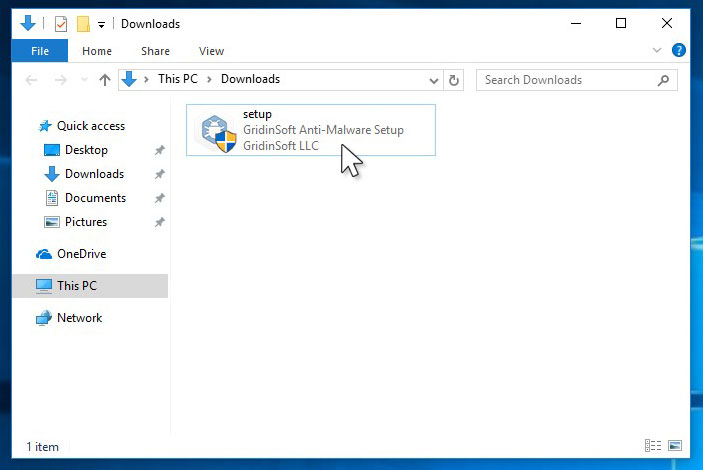
Run the setup file.
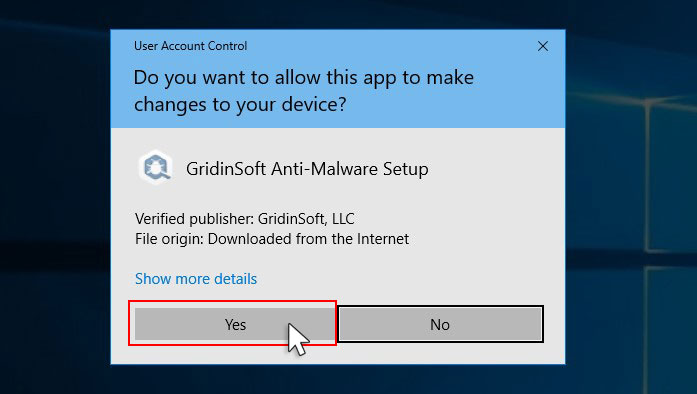
Press “Install” button.
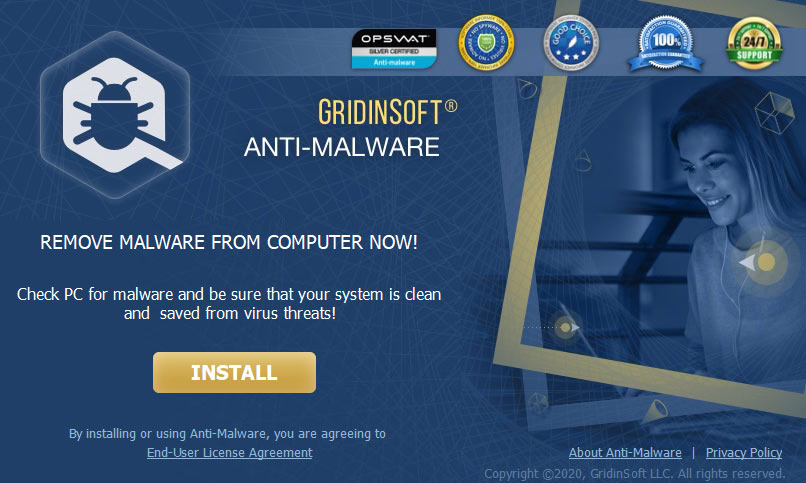
Once installed, Anti-Malware will automatically run.
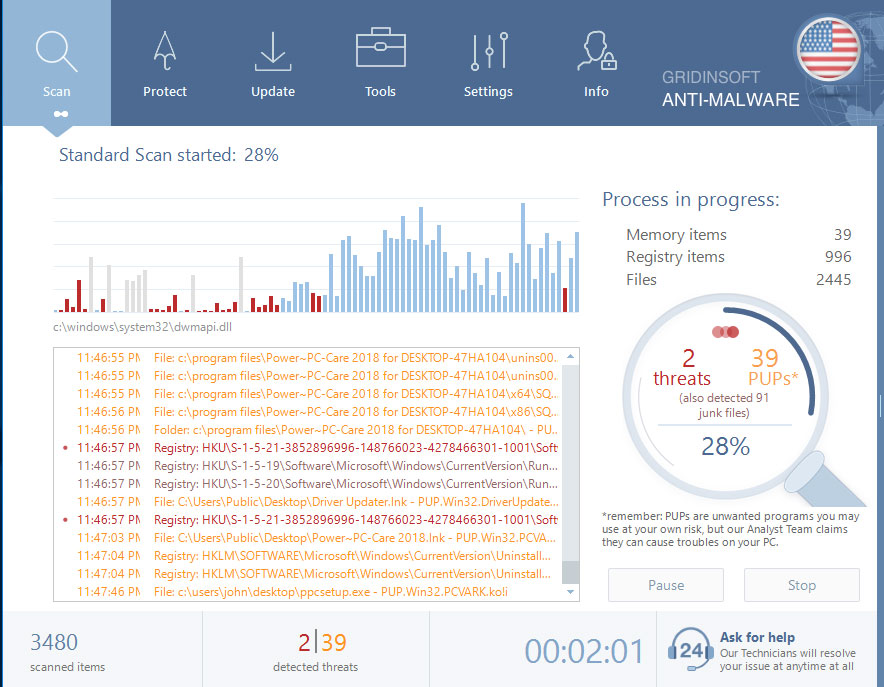
Wait for the Anti-Malware scan to complete.
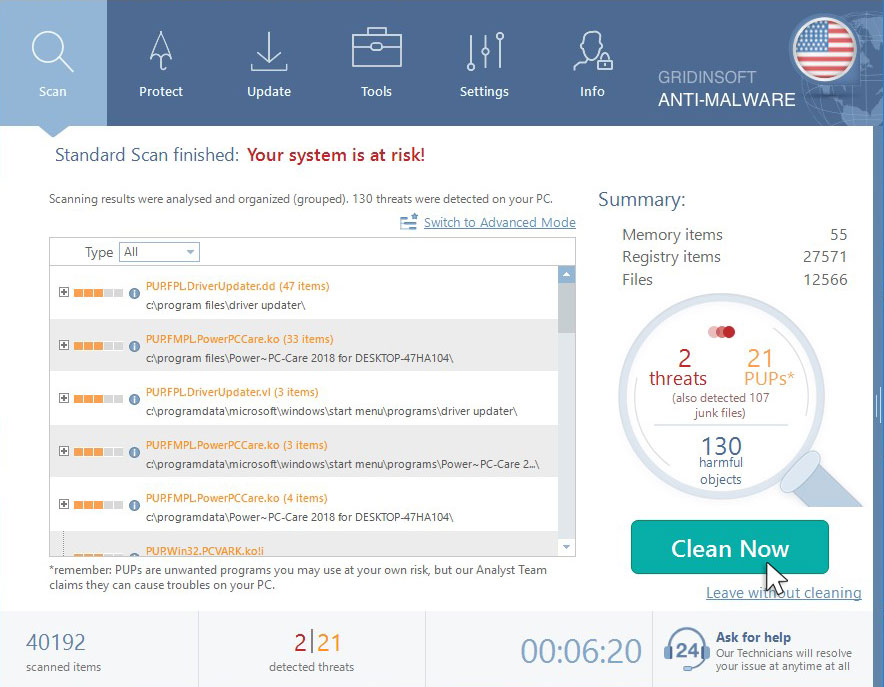
Click on “Clean Now”.
Are Your Protected?
If the guide doesn’t help you to remove PHP/Qhost.R you can always ask me in the comments for getting help.


Leave a Comment