
LPEClient is a sophisticated and evasive malware associated with the Lazarus group. It is the initial infection vector, targeting defense contractors, nuclear engineers, and the cryptocurrency industry.
This malware often disguises itself as legitimate software, tricking users into downloading it. Once inside a system, it gathers victim information and downloads additional malicious payloads from a remote server, all while maintaining stealth to evade detection. Its adaptability and evolving attack methods make it a persistent threat.
LPEClient Overview
LPEClient is a malicious software that first emerged in 2020. This malware is crafted to infiltrate a victim’s system, collect sensitive information, and subsequently download and execute additional malicious payloads from a remote server. By running these payloads in the computer’s memory, LPEClient aims to remain covert and evade detection.
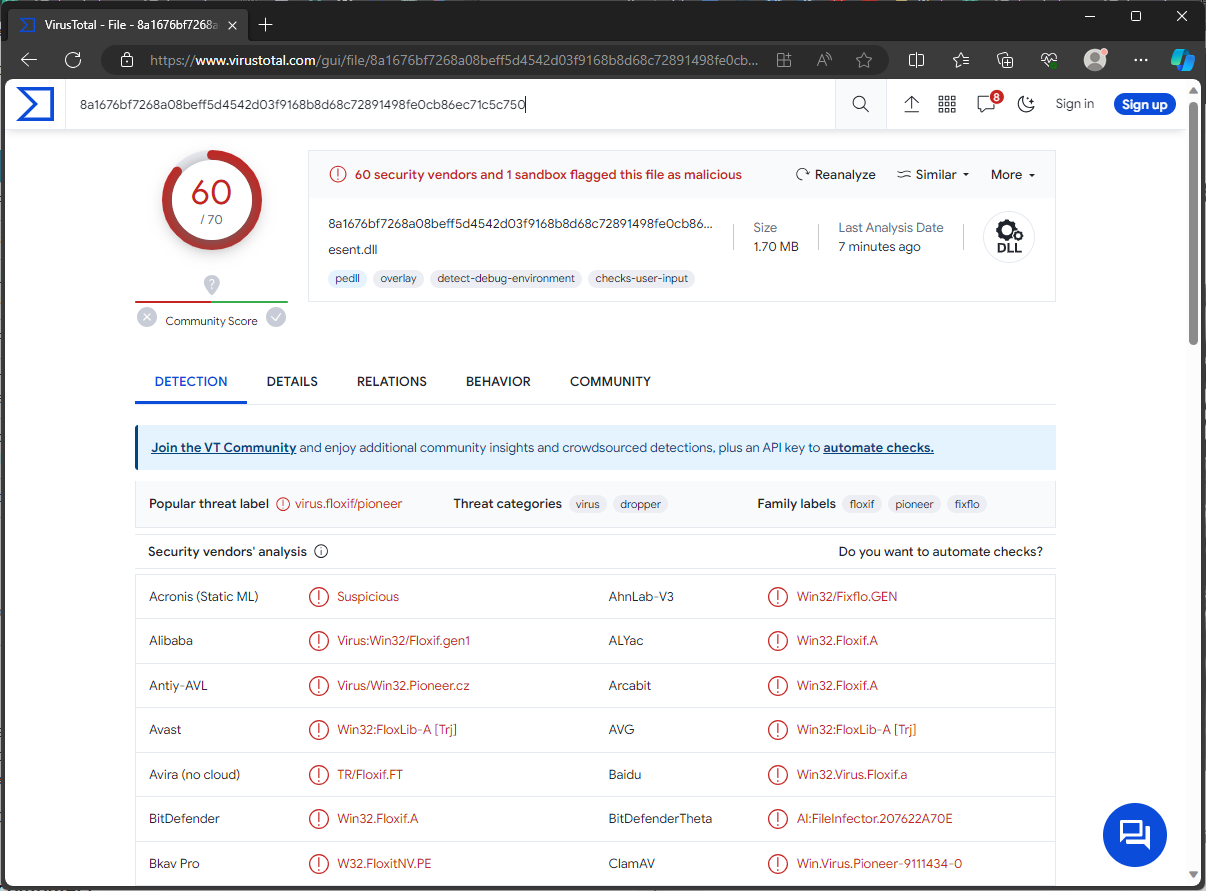
VirusTotal analysis result
| Name | LPEClient dropper |
| Detection | Virus:Win32/Floxif.H (Microsoft) |
| Damage | Stolen passwords and banking information, identity theft, the victim’s computer added to a botnet |
| Similar Behavitor | Trojan:Win32/Dropper!MSR, Trojan:MSIL/Dropper.CSC!MTB |
Technical Analysis
LPEClient, a malware associated with the Lazarus group, has evolved, becoming increasingly sophisticated and adept at eluding detection. This malicious tool serves as the group’s initial entry point into target systems, enabling data collection and facilitating the deployment of more damaging software. While the Lazarus group has used various attack vectors, from disguising LPEClient as VNC or Putty software to targeting the cryptocurrency industry via supply chain attacks, LPEClient remains a pivotal component of their attack strategy, highlighting its enduring significance in their cyber operations.
LPEClient Spreading Methods
Additionally, LPEClient has been disseminated through a malware loader known as SIGNBT, which is delivered using software vulnerabilities and possibly other distribution methods. This multi-pronged approach makes it challenging to detect and highlights the malware’s adaptability in exploiting various attack vectors.


Leave a Comment