
Ledger Wallet Stealer poses as the official Ledger Live tool, designed for managing crypto assets. It is in fact an impostor that only impersonates the genuine tool, trying to take users’ money. Users must promptly remove it from infected devices to prevent financial losses.
The fake application is a rather unusual approach in cryptocurrency stealing. More commonly, stealer malware collects information from desktop apps, browser plugins and that is it. Tricking users into giving out all the important information by themselves may be the first sign of a new strategy.
Ledger Wallet Stealer Overview
Ledger Wallet Stealer works as a fake Ledger Live window, prompting users to input a 24-word recovery phrase under the guise of a failed firmware update. This deceptive tactic aims to grant cybercriminals access to victims’ wallets, enabling them to transfer funds for their gain. Additionally, personal information within wallets may be exploited for identity theft or sold to third parties.
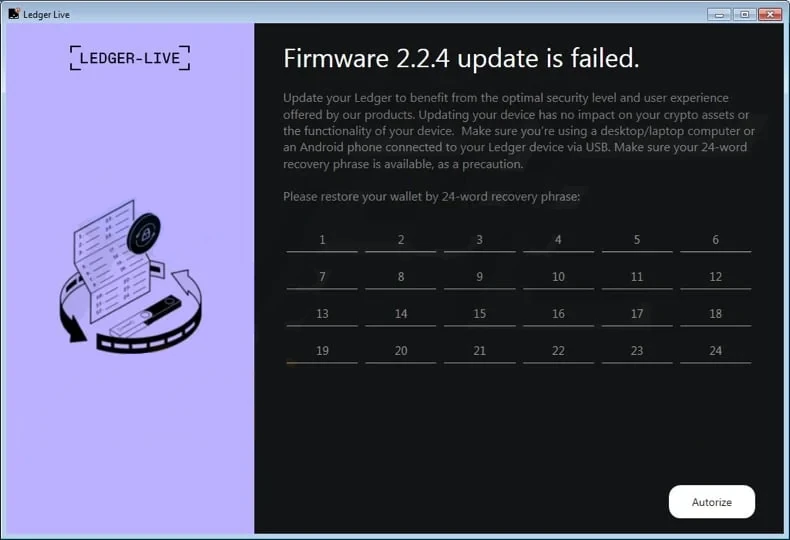
Window that Ledger Wallet Stealer shows to trick the users
| Name | Ledger Wallet Stealer |
| Detection | Trojan:Win32/Casdet!rfn, Trojan.Win32.Selfdel.ca (VirusTotal) |
| Damage | Steals credentials from Ledger Live asset management software |
| Similar | Lumma Stealer, BloodyStealer |
Ledger Live, developed by Ledger, facilitates crypto asset management. However, a malicious app impersonating Ledger Live has emerged. This app terminates the genuine Ledger Live process, displaying a fraudulent window to trick users into revealing sensitive data, like cryptocurrency wallet credentials. To mitigate risks, users should exclusively download apps from official sources and promptly scan any suspected malware-infected devices with reputable security software.
How did I get this virus?
There are quite a few ways for an impostor Ledger Wallet to get into your system. Most often, malware similar to it is spread on thematic websites or on forums. Considering the rising popularity of cryptocurrency, hackers may try to befraud new users by spreading their malware in communities on different messengers.
However, do not ignore other attack vectors. Email spam and malvertising on the Web may still be effective even for such a targeted malware sample. Ledger Wallet Stealer may hide in the offer to update a wallet software that you’ve received on the email, or in a sudden pop-up that have appeared after opening a strange website. Either way, user attentivity is what makes all these fraudulent campaigns futile.


Yes, they’re may be a SCAM they also scammed me. Using Paypal offers no protection or refund of your purchase