
Recently, Kuminex.com service surfaced, promoting itself as a place to keep cryptocurrency and other assets securely. I managed to gather credible supporting information that clearly confirms it is, actually, a deceptive site.
Contrary to the statements of Kuminex.com, they will never give back your capital. Despite the figures displayed in the “member area”, there is absolutely no possibility to retrieve even a single cent. All commitments regarding crypto incentives are empty as well.
Kuminex Scam Overview
The primary offering that Kuminex aims to provide is a secure and convenient cryptocurrency wallet service. The website promises exchange services, tools for handling wallets, transfers, dashboards, and similar stuff. In fact, they aim to emulate the functionality of a crypto trading platform, like Binance or Coinbase. However, it in fact exclusively serves as a shell intended to deceive the cautious.
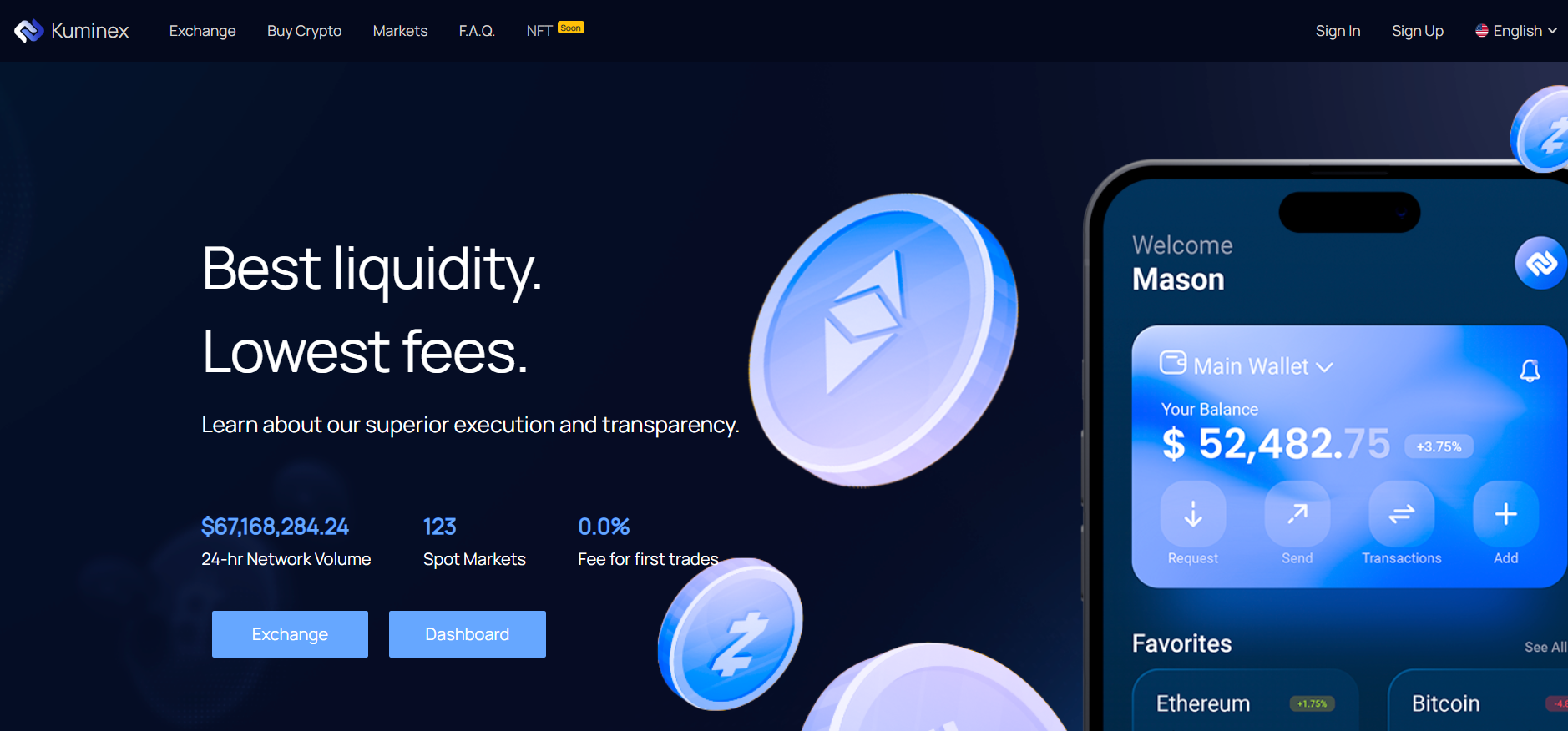
Kuminex Scam
Initially, Kuminex mimics the appearance of many equivalent websites. There are quite a few examples, like Deramex, Damblex or Saveurcoins. They are completely undistinguishable in terms of graphic elements, with slight discrepancies in the site header. Other particulars, and at times even crypto wallet addresses, are unchanged. Probably, all these scam online platforms are managed by a single gang of fraudsters.
Cryptocurrency Scam Summary
| Website | Kuminex.com |
| Hosting | AS42745 Safe Value Limited Russia, Moscow |
| IP Address | 193.233.15.56 |
| Threat Type | Scam/Fraud |
| Scam Type | Fraudulent offers of cryptocurrency services |
How the Kuminex Scam Works?
Kuminex is yet another webpage within a extensive network of linked crypto deceptive webpages. The operators utilize various brand titles and sites, like Kuminex.com, to capture victims. Nonetheless, these fraudulent websites share the same website designs, terms of service, and About content. This exposes their sources as parts of the equal fraudulent network, which promotes the identical form of scam under various appearances. The fraudsters simply copy the identical deceptive site under different names to fool users into thinking they are joining a new opportunity. However, in actuality, it’s the identical system of fraudsters orchestrating the misleading pledges and undertakings to take deposited cryptocurrency. The operators cleverly employ psychological maneuvers and enticing offers to implement their deceitful schemes.
Step 1: Spreading
To initiate the deceptive scheme, criminals set up and fill accounts on popular social media platforms. They mainly aim at Facebook, Instagram, Twitter, and TikTok. Subsequently, the advertising campaign begins. Utilizing bots and paid advertisements (when feasible), scam actors boost the exposure of their fraudulent activities to potential victims. This tactic allows them to create a broad net and interact with their aimed spectators. This public usually consists of cryptocurrency fans searching for opportunities to generate profits.
Step 2: Gaining Traffic
People who demonstrate interest visit Kuminex.com via links included in promotions or robotic posts. The website utilizes captivating visuals, design elements that appear genuine, and assertions of possessing a official license, all designed to project an initial impression of credibility.
Step 3: Data Gathering
To collect their prizes, users must deliberately create an account on Kuminex and receive guidance to submit sensitive and personal data during the sign-up process. This comprises linking their cryptocurrency wallets, sharing email addresses, giving phone numbers, furnishing identification documents, and more.
Step 4: Requesting funds
Once enrolled, users observe considerable amounts of cryptocurrency, valued at thousands of dollars, within their Kuminex wallets. However, as it usually happens with such rewards, you can’t withdraw them ahead of making a deposit. Usually, a payment of $100 is required to withdraw the sign-up bonus. This prerequisite serves as the snare that ultimately culminates to the money loss.
Step 5: Disappear
The moment the payment is sent, the fraudsters halt all interaction. They move forward to block users, delete accounts, and vanish with both the deposited capital and critical individual information. The fabricated benefits remain perpetually uncredited, as they lack actual existence. They function solely as a fraudulent ploy. This method forms the foundation for the deceivers’ ability to trick victims and embezzle hard-earned funds through their double-dealing online crypto fraud.
Signs of Scam
I gathered several facts that point at the scammy nature of the Kuminex.com. Actually, there are a lot of scams that fall under the same points, so they are pretty much universal.
- Unsubstantiated Credibility. Kuminex employs fraudulent celebrity endorsements, often featuring names like Elon Musk, Jeff Bezos, Mr. Beast, and Mark Zuckerberg. These false claims extend to fictitious partnerships with reputable entities like Coinbase, Binance, or MetaMask, despite the absence of genuine connections.
- Implausible Earnings Claims. Promising remarkable returns of 50-100-200%, Kuminex exploits the longing for quick profits. However, such gains are unrealistic within the volatile cryptocurrency landscape, unequivocally identifying Kuminex as a scam.
- Dubious Corporate Information. Kuminex arouses suspicion by providing inadequate documentation about ownership, location, and registration. Furthermore, the lack of legitimate contact information and the recent registration of domain and social media profiles deepen skepticism.
- Exclusive Cryptocurrency Payments. Kuminex.com solely accepts payments in cryptocurrencies, refraining from traditional bank transfers and other payment methods. This approach not only shrouds the company’s identity but also prevents the possibility of requesting refunds.
- Potential Pyramid Scheme. The scam relies on a Ponzi-like referral structure disseminated through social media. Nevertheless, only initial participants profit, often at the expense of funds brought in by subsequent members.
- Groundless Hype Tactics. Kuminex utilizes fabricated claims about non-existent events, such as securing contracts with Coinbase or receiving endorsements from Elon Musk. This manipulative strategy aims to foster belief in money returns and encourages individuals to top up their accounts again.
What Should I do as a Victim?
If you had to deal with Kuminex site and fell victim to that scam, there are still some steps to take. They will make further scam attempts harder, and also boost the knowledge about that scam among folks.
- Report the scam to authorities. Search for local authorities responsible for financial frauds, and also notify wallet providers and social networks via their tech support. It is essential to make the further operations of these scammers much harder.
- Tell your close friends. That step is similar to reporting to the authorities, and has similar effects. By posting info about scam crypto service, you decrease the pool of people they can fool.
- Get evidence. Screenshot or save all the information related to the website. URL, screenshot of a main page, login window, EULA, account top-up menu, wallet addresses – all these things may be useful for authorities to find the scammers.
- Check whether you can ask for a refund. As I’ve said above, crypto payments do not fall under refund policies in most banks. Nonetheless, in some circumstances, it is still possible. Never lose hope until you actually confirm it is gone.
- Make your mistake your lesson. Financial losses are always a reason for frustration, but let’s imagine it was a pay for scam revealing courses. Remember the key features of these crypto scam sites, the way they attract people and what they promise. In the future, you will easily recognize a trap of spending no money.
Scan your system for possible malware infections
Beware of cross scams! Scam actors can use your trust to make you download some stuff or interact with certain documents. It may be a trap that installs malware to your system. There are no moral barriers or limits for these scoundrels.
Throughout the timeline of the scam, fraudsters may reach out to you with particular documents. Alternatively, they may offer you to install “cryptocurrency wallet applications” or “browser extensions” to simplify access to your crypto savings. As we previously determined, these scammers have no plan of returning your funds. So, what can these emails and browser extensions represent? You guessed it right – that is another side of the fraudulent scheme designed to throw you into deliberately installing harmful software onto your system.
Both plugins and attachments included to email messages can serve as a shell for diverse malware. In this situation, I anticipate the presence of spyware and stealers among all kinds of threats. While it is not obligatory for scammers to distribute malware, the probability is always existent. As noted, their conscience is of little concern, and their reputation is already neck deep in mud. They have nothing to give up and aim to maximize revenues.
Frequently asked questions
- Contact your bank or card provider and ask about chargeback options.
- Save screenshots, receipts, tracking numbers, and emails as evidence.
- Change reused passwords and enable two-factor authentication on important accounts.
- Watch for follow-up phishing emails pretending to offer refunds or delivery updates.

