
Behavior:Win32/CoinMiner.I is a detection name used by Microsoft Defender Antivirus to identify a specific behavior pattern associated with a potential coin miner. A coin miner, also known as cryptocurrency miner, is a type of malware that exploits the resources of a computer to mine cryptocurrency without the user’s consent.
Behavior:Win32/CoinMiner.I indicates that the software or process is exhibiting behavior consistent with coin mining activity. This behavior can include high CPU or GPU usage, increased power consumption, and prolonged system slowdowns.
It’s important to note that not all instances of high resource usage or performance issues are necessarily malicious. Some legitimate applications or tasks may temporarily increase resource consumption. However, in the case of Behavior:Win32/CoinMiner.I detection, it suggests a potential unauthorized use of system resources for cryptocurrency mining purposes.
If you suspect the presence of Behavior:Win32/CoinMiner.I on your system, it is recommended to run a thorough scan using reputable antivirus software to detect and remove the malware. Keeping your antivirus software up to date and practicing safe browsing habits can help prevent such infections and protect your system from unauthorized coin mining activities.
What is Behavior:Win32/CoinMiner?
CoinMiner is a type of malware that infects computers and utilizes their resources to mine cryptocurrency without the user’s knowledge or consent. It is a form of cryptojacking, where attackers hijack a victim’s computing power to mine cryptocurrencies like Bitcoin, Monero, or Ethereum.
When a computer becomes infected with a CoinMiner virus, the malware typically runs silently in the background, utilizing the computer’s processing power, memory, and electricity to perform complex calculations required for cryptocurrency mining. This process consumes significant system resources and can lead to performance degradation, increased energy consumption, and even hardware damage in extreme cases.
Proof of CoinMiner’s existence and impact can be found in numerous real-world cases and security research reports. For example, in 2017, the WannaMine malware infected a large number of systems worldwide, causing significant disruptions and financial losses. This malware specifically targeted vulnerable systems to mine Monero cryptocurrency.
What does the pop-up with Behavior:Win32/CoinMiner.I detection mean?
The Behavior:Win32/CoinMiner.I detection you can see in the lower right corner is shown to you by Microsoft Defender. That anti-malware application is pretty good at scanning. However, prone to be mainly unstable. It is defenseless to malware attacks. It has a glitchy user interface and bugged malware removal capabilities. For this reason, the pop-up about the CoinMiner is simply an alert that Defender has recognized it. You will likely need to use a separate anti-malware program to remove it.
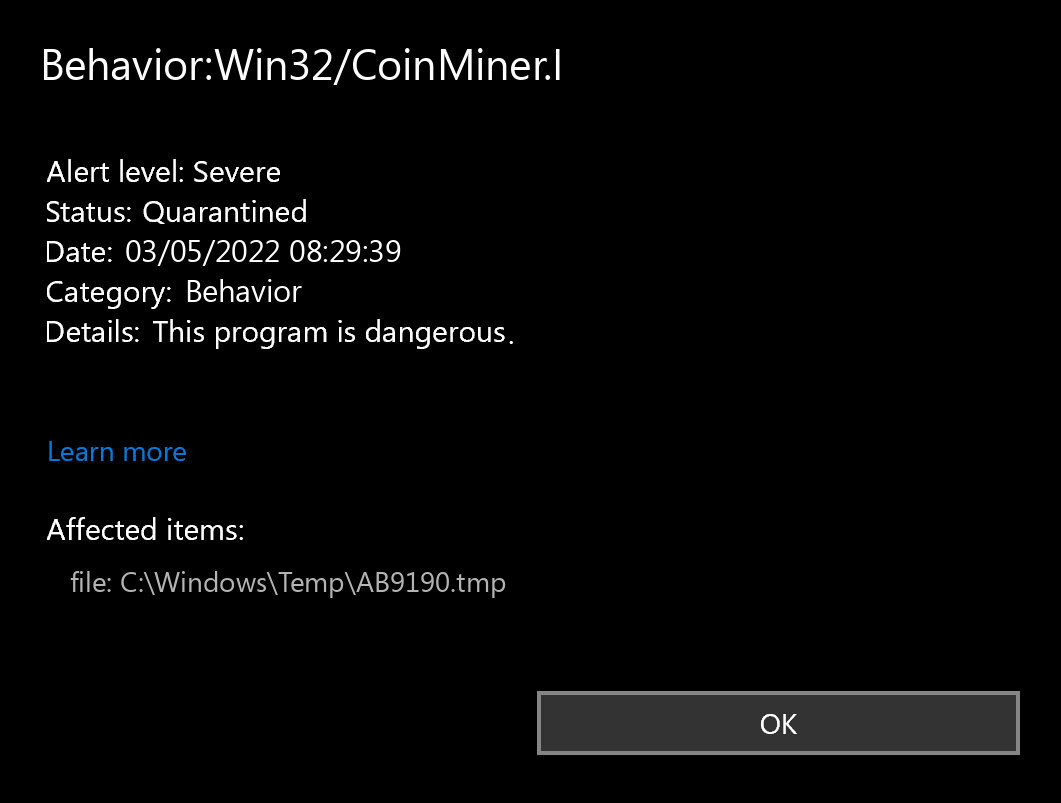
Microsoft Defender: “Behavior:Win32/CoinMiner.I”
CoinMiner viruses are typically distributed through various means, including malicious email attachments, compromised websites, infected software downloads, or exploitation of software vulnerabilities. They can be challenging to detect and remove due to their ability to evade traditional security measures and persistently operate in the background.
CoinMiner Virus Summary:
| Name | CoinMiner.I |
| Detection | Behavior:Win32/CoinMiner.I |
| Details | CoinMiner is attached to another program (such as a document), which can replicate and spread after an initial execution. |
Is Behavior:Win32/CoinMiner.I dangerous?
Non-harmful malware does not exist. And Behavior:Win32/CoinMiner.I is not an exception. This virus alters the system configurations and modifies the Group Policies and Windows registry. These things are crucial for proper system functioning, even when we are not talking about Windows security. Therefore, the malware that CoinMiner contains, or which it will download later, will maximize your profit. Cyber burglars can steal your data and sell it on the black market. Using adware and browser hijacker functions, built-in Behavior:Win32/CoinMiner.I virus, they can make money by showing you the advertisements. Each view gives them a penny, but 100 views per day = $1. 1000 victims who watch 100 banners daily – $1000. Easy math, but sad conclusions. It is a bad choice to be a donkey for crooks.
How did I get this virus?
It is difficult to trace malware’s origins on your computer. Nowadays, things are mixed, and spreading ways chosen by adware five years ago can be utilized by spyware nowadays. But if we abstract from the exact spreading method and will think of why it works, the reply will be really basic – low level of cybersecurity knowledge. Individuals click on advertisements on strange websites, open the pop-ups they receive in their web browsers, call “Microsoft tech support,” believing that the weird banner that states about malware is true. It is necessary to know what is legit – to prevent misunderstandings when attempting to find a virus.
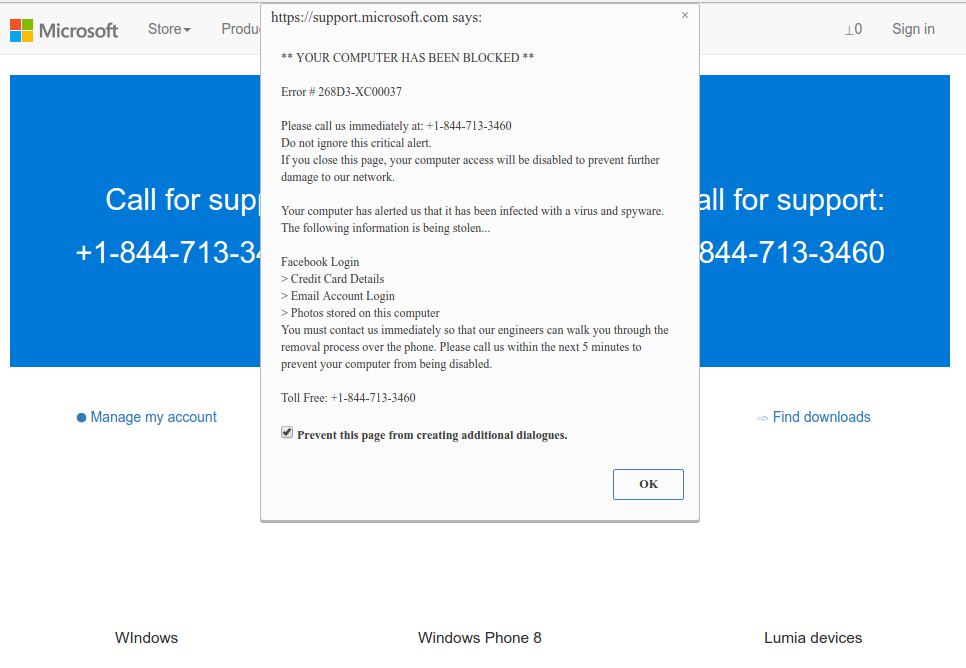
Microsoft Tech Support Scam
Nowadays, there are two of the most extensive methods of malware spreading – bait emails and also injection into a hacked program. While the first one is not so easy to stay away from – you should know a lot to recognize a fake – the second one is easy to get rid of: don’t use hacked apps. Torrent trackers and other sources of “totally free” applications (paid, but with a disabled license checking) are a giveaway point of malware. And Behavior:Win32/CoinMiner.I is just among them.


Leave a Comment