
What is Backdoor.Poison infection?
In this short article you will certainly locate about the definition of Backdoor.Poison as well as its unfavorable influence on your computer. Such ransomware are a form of malware that is clarified by online fraudulences to demand paying the ransom by a victim.
In the majority of the instances, Backdoor.Poison virus will advise its victims to start funds transfer for the objective of counteracting the amendments that the Trojan infection has actually introduced to the sufferer’s device.
Backdoor.Poison Summary
These adjustments can be as complies with:
- Executable code extraction. Cybercriminals often use binary packers to hinder the malicious code from reverse-engineered by malware analysts. A packer is a tool that compresses, encrypts, and modifies a malicious file’s format. Sometimes packers can be used for legitimate ends, for example, to protect a program against cracking or copying.
- Creates RWX memory. There is a security trick with memory regions that allows an attacker to fill a buffer with a shellcode and then execute it. Filling a buffer with shellcode isn’t a big deal, it’s just data. The problem arises when the attacker is able to control the instruction pointer (EIP), usually by corrupting a function’s stack frame using a stack-based buffer overflow, and then changing the flow of execution by assigning this pointer to the address of the shellcode.
- Unconventionial binary language: Russian;
- The binary likely contains encrypted or compressed data. In this case, encryption is a way of hiding virus’ code from antiviruses and virus’ analysts.
- Network activity detected but not expressed in API logs. Microsoft built an API solution right into its Windows operating system it reveals network activity for all apps and programs that ran on the computer in the past 30-days. This malware hides network activity.
- Anomalous binary characteristics. This is a way of hiding virus’ code from antiviruses and virus’ analysts.
- Ciphering the documents found on the victim’s disk drive — so the target can no more use the data;
- Preventing regular accessibility to the victim’s workstation;
Backdoor.Poison
One of the most normal channels where Backdoor.Poison Trojans are injected are:
- By means of phishing emails;
- As an effect of individual winding up on a resource that holds a destructive software program;
As soon as the Trojan is successfully infused, it will certainly either cipher the information on the target’s PC or prevent the device from operating in an appropriate fashion – while likewise putting a ransom money note that discusses the requirement for the targets to effect the settlement for the objective of decrypting the files or recovering the documents system back to the first problem. In the majority of instances, the ransom note will come up when the customer reboots the COMPUTER after the system has currently been harmed.
Backdoor.Poison circulation networks.
In numerous edges of the globe, Backdoor.Poison expands by leaps and also bounds. However, the ransom money notes and also methods of obtaining the ransom amount might differ depending on certain neighborhood (local) setups. The ransom money notes and also methods of obtaining the ransom money quantity may differ depending on certain local (local) settings.
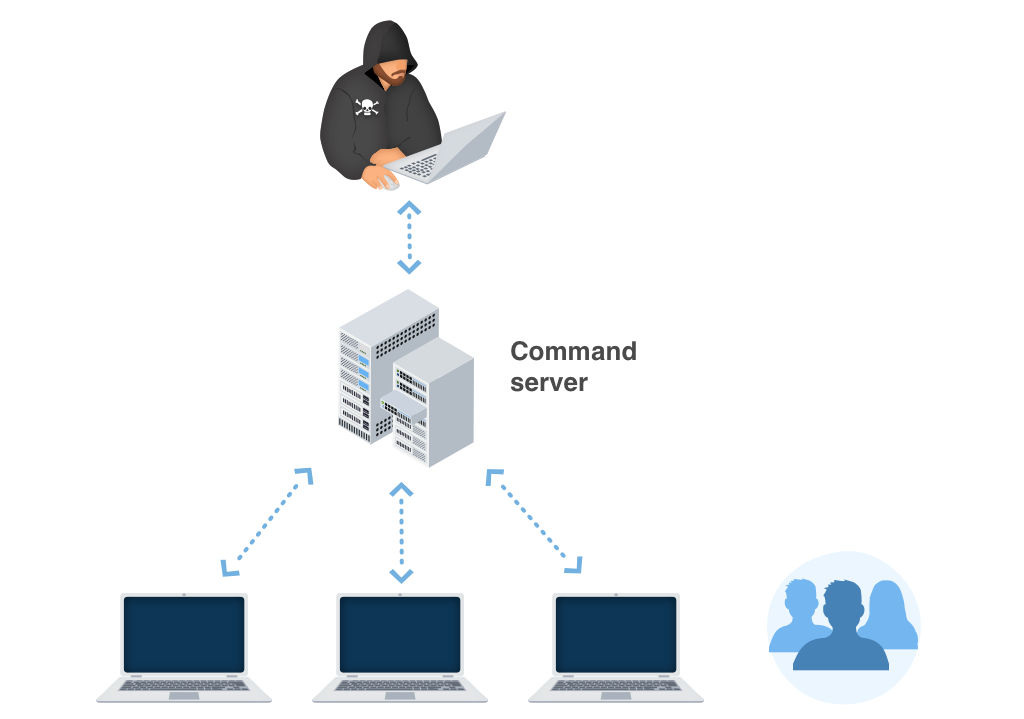
For example:
Faulty informs regarding unlicensed software.
In particular areas, the Trojans commonly wrongfully report having spotted some unlicensed applications made it possible for on the victim’s gadget. The sharp after that requires the individual to pay the ransom.
Faulty declarations concerning unlawful material.
In nations where software program piracy is much less prominent, this approach is not as effective for the cyber scams. Conversely, the Backdoor.Poison popup alert may incorrectly claim to be originating from a police organization and will report having situated youngster porn or other prohibited information on the device.
Backdoor.Poison popup alert may falsely claim to be deriving from a regulation enforcement institution and also will report having situated child porn or other illegal data on the gadget. The alert will similarly have a demand for the customer to pay the ransom.
Technical details
File Info:
crc32: 64A6A9B9md5: 5952de9fc8aef621dc92af4ca92644cfname: 376c4f63fd89addf.scrsha1: f10bdc78b10519d8281be4a7980ba30326583533sha256: 7985d2d7b505f5184e8638d69cd3781bb8d6d3a76ae5925351baf40e4b8ef4b1sha512: 45caa8234af15820b186fdbdb7d9bd04114296b3d31f944b7fc84d1c937a6e4972c5565342074fa7ae2273debd5c759b53e98739ae880f2dff2ea37266183050ssdeep: 12288:ZSQ8DkuiHca63V6eS6AppsJgWlrsxQhfAH6hLfeOZZjTaNZr:sDkptmcGApclrsxGoH6h3bctype: PE32 executable (GUI) Intel 80386, for MS WindowsVersion Info:
CompanyName: M$ WindowsProductVersion: 1.2.3.4ProductName: M$ WindowFileVersion: 1.2.3.4FileDescription: x41fx440x43ex441x43cx43ex442x440 x444x43eTranslation: 0x0419 0x04e4
Backdoor.Poison also known as:
| GridinSoft | Trojan.Ransom.Gen |
| Bkav | W32.AIDetectVM.malware |
| DrWeb | Trojan.MulDrop8.22787 |
| MicroWorld-eScan | Trojan.MSIL.Injector.MF |
| FireEye | Generic.mg.5952de9fc8aef621 |
| CAT-QuickHeal | Trojan.Agent.16368 |
| ALYac | Trojan.MSIL.Injector.MF |
| Cylance | Unsafe |
| VIPRE | Detect.Trojan.Win32.Small.nmm (v) |
| Sangfor | Malware |
| K7AntiVirus | Backdoor ( 0040f6fb1 ) |
| BitDefender | Trojan.MSIL.Injector.MF |
| K7GW | Backdoor ( 0040f6fb1 ) |
| Cybereason | malicious.fc8aef |
| TrendMicro | TROJ_VBINDER.SM |
| BitDefenderTheta | AI:Packer.4D2053201F |
| F-Prot | W32/GenTroj.S.gen!Eldorado |
| Symantec | Trojan.Dropper!g1 |
| APEX | Malicious |
| Avast | Win32:GenMalicious-NUS [Trj] |
| ClamAV | Win.Trojan.Poison-8692 |
| GData | Win32.Trojan-Dropper.Agent.AMY |
| Kaspersky | Backdoor.Win32.Poison.ggrf |
| NANO-Antivirus | Trojan.Win32.Poison.cbeljp |
| ViRobot | Backdoor.Win32.Agent.67584.L |
| Rising | Malware.Heuristic!ET#100% (RDMK:cmRtazq0fgG2hyCNgHJXiA3pDoQF) |
| Ad-Aware | Trojan.MSIL.Injector.MF |
| Sophos | Troj/Vbinder-D |
| Comodo | TrojWare.Win32.Ransom.Xorist.ET@4mg4hg |
| F-Secure | Heuristic.HEUR/AGEN.1114161 |
| Baidu | Win32.Trojan-Dropper.Small.o |
| Invincea | heuristic |
| McAfee-GW-Edition | BehavesLike.Win32.Generic.hc |
| Trapmine | malicious.high.ml.score |
| CMC | Backdoor.Win32.Poison!O |
| Emsisoft | Trojan.MSIL.Injector.MF (B) |
| SentinelOne | DFI – Malicious PE |
| Cyren | W32/GenTroj.S.gen!Eldorado |
| Jiangmin | Backdoor/Poison.abtg |
| Avira | HEUR/AGEN.1114161 |
| Endgame | malicious (high confidence) |
| Arcabit | Trojan.MSIL.Injector.MF |
| ZoneAlarm | Backdoor.Win32.Poison.ggrf |
| Microsoft | VirTool:Win32/Vbinder |
| TACHYON | Backdoor/W32.Poison.543232.B |
| AhnLab-V3 | Backdoor/Win32.Poison.R72119 |
| Acronis | suspicious |
| McAfee | GenericRXAC-LG!5952DE9FC8AE |
| MAX | malware (ai score=86) |
| VBA32 | Backdoor.Poison |
| Malwarebytes | Backdoor.Dropper |
| Panda | Trj/Injector.BH |
| ESET-NOD32 | Win32/TrojanDropper.Small.NMM |
| TrendMicro-HouseCall | TROJ_VBINDER.SM |
| Tencent | Malware.Win32.Gencirc.10b3e7f9 |
| Yandex | Trojan.Oxij.Gen.LA |
| Ikarus | Backdoor.Poison |
| Fortinet | W32/Xorist.ET!tr |
| Webroot | W32.Dropper.Gen |
| AVG | Win32:GenMalicious-NUS [Trj] |
| CrowdStrike | win/malicious_confidence_100% (D) |
| Qihoo-360 | HEUR/QVM20.1.B9C3.Malware.Gen |
How to remove Backdoor.Poison ransomware?
Unwanted application has ofter come with other viruses and spyware. This threats can steal account credentials, or crypt your documents for ransom.
Reasons why I would recommend GridinSoft1
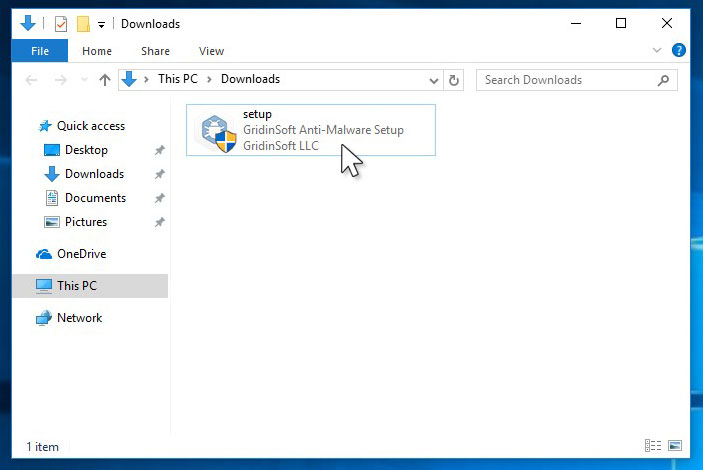
Run the setup file.
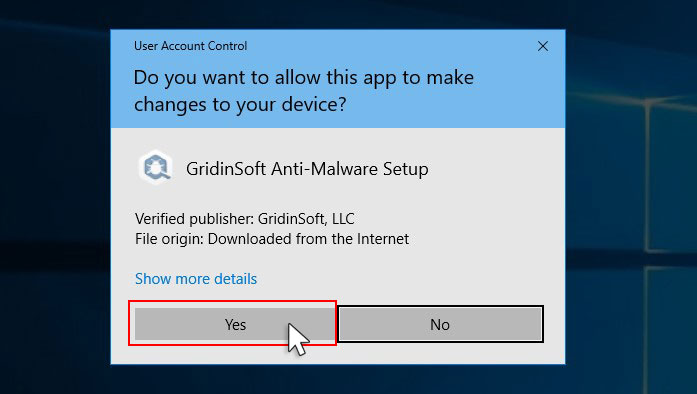
Press “Install” button.
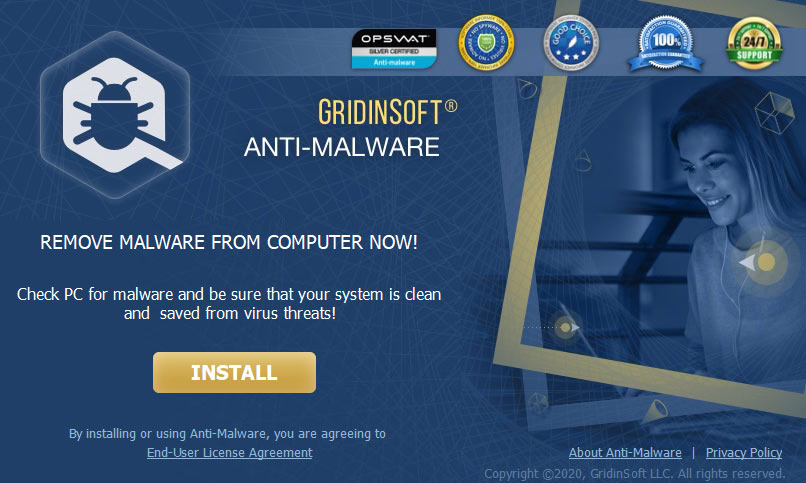
Once installed, Anti-Malware will automatically run.
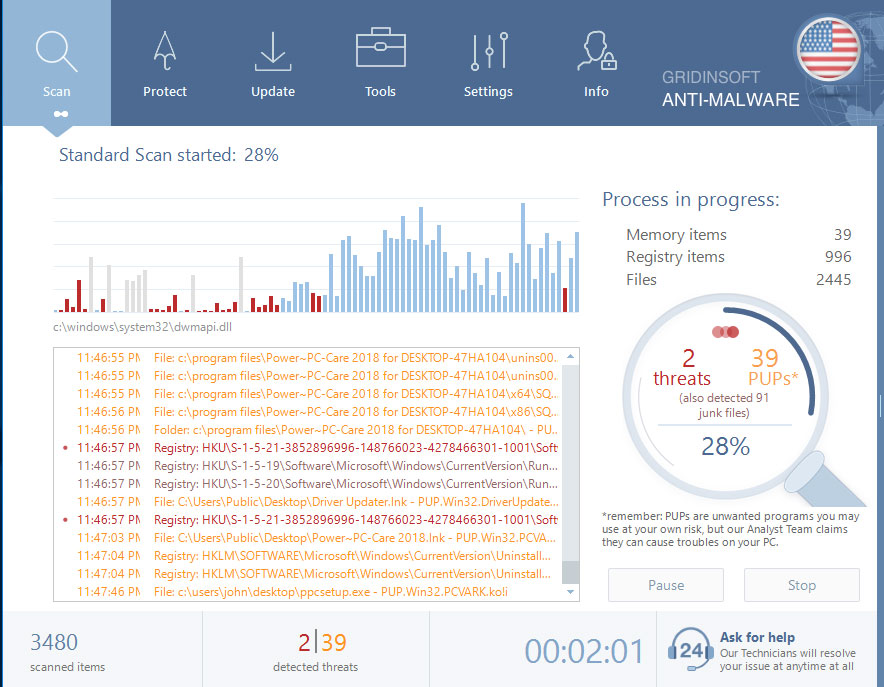
Wait for the Anti-Malware scan to complete.
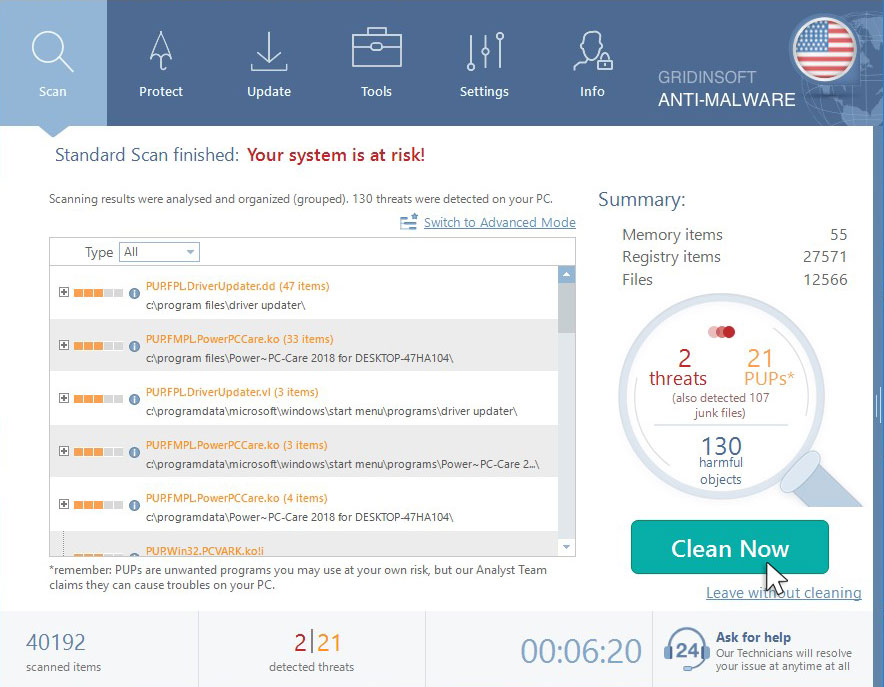
Click on “Clean Now”.
Are Your Protected?
If the guide doesn’t help you to remove Backdoor.Poison you can always ask me in the comments for getting help.


Leave a Comment