
WMI Provider Host, usually seen as WmiPrvSE.exe, is a legitimate Windows component. WMI lets Windows and applications query system information such as hardware, services, event logs, sensors, and configuration. High CPU from WMI Provider Host usually means another app is repeatedly asking WMI for information, not that WMI itself is malware.
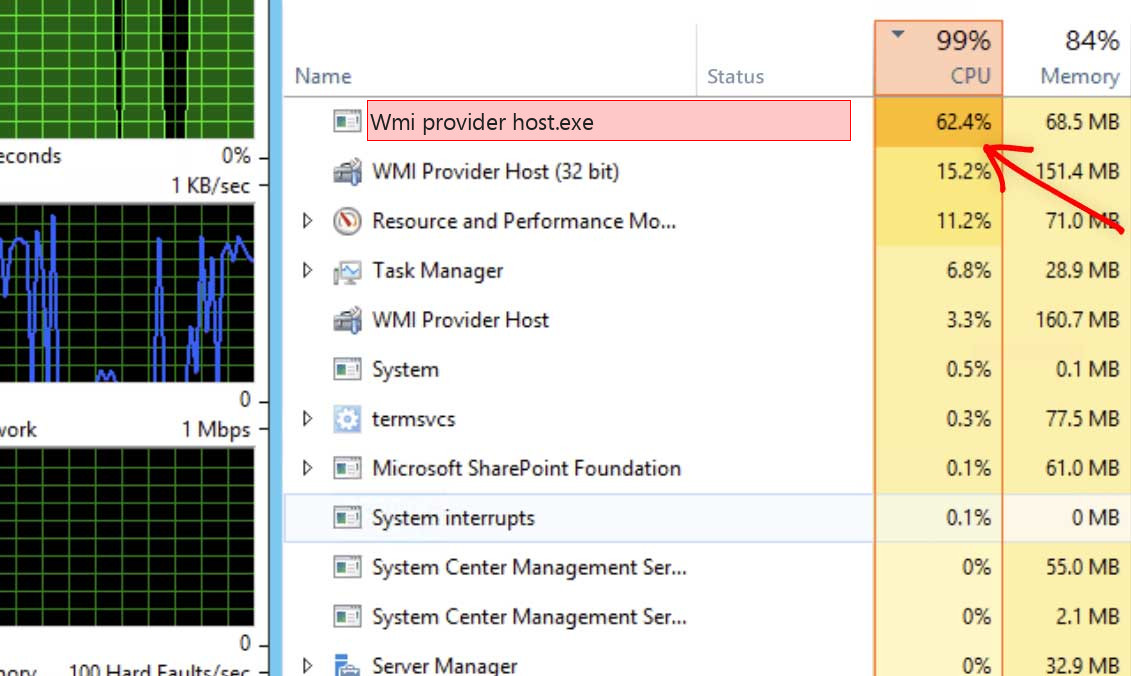
What is WMI Provider Host?
Windows Management Instrumentation is used by admin tools, monitoring software, drivers, security products, vendor utilities, and scripts. WMI Provider Host runs provider code that answers those requests. Microsoft’s troubleshooting guidance for high WMI CPU focuses on finding the provider and client process responsible for the activity.
Safe vs suspicious signs
| Usually legitimate | Suspicious |
| WmiPrvSE.exe runs from a Windows system folder and is Microsoft-signed. | A similarly named file runs from AppData, Temp, Downloads, or Startup. |
| CPU rises when a monitoring, RGB, vendor, or admin tool is active. | CPU stays high with unknown processes and suspicious startup entries. |
| Event Viewer shows a known client process querying WMI. | The client process is unsigned or located in a random folder. |
| Stopping/updating the client app fixes the issue. | The process returns after cleanup through a hidden task or service. |
How to identify the cause
- Open Event Viewer.
- Go to Applications and Services Logs > Microsoft > Windows > WMI-Activity > Operational.
- Look for recent errors or warnings with a ClientProcessId.
- Match that PID to a process in Task Manager or Process Explorer.
- Update, repair, or uninstall the client app that is hammering WMI.
Common causes
Hardware monitoring tools, motherboard utilities, RGB suites, laptop control centers, security agents, inventory tools, printer utilities, and scripts can all trigger WMI load. If the issue starts after installing a vendor utility, try stopping that utility first. If it starts after a driver update, update the vendor tool or roll back the driver.
How to fix high CPU
Restarting the WMI service may temporarily reduce CPU, but it does not fix the client causing the load. Identify the client process, update or remove it, and reboot. If WMI repository corruption is suspected, use Microsoft’s repair guidance carefully; do not randomly delete WMI folders.
When to scan for malware
Scan if WmiPrvSE.exe is outside Windows folders, unsigned, or linked to an unknown client process from AppData/Temp. Also scan if WMI high CPU appears with disabled security, fake alerts, browser hijacking, or new startup tasks.
Decision tree for WMI high CPU
If WMI Provider Host spikes only while a monitoring tool is open, that tool is probably the client. If the spike happens immediately after login, check startup apps, vendor utilities, and security agents. If it happens on a schedule, check scripts, inventory tools, and management tasks.
When Event Viewer shows a ClientProcessId, match it to the process name quickly because PIDs change after reboot. Once you identify the client, update, repair, or remove that program. Restarting the WMI service without fixing the client usually only buys time.
Common client examples
Motherboard RGB software, fan-control utilities, hardware temperature monitors, printer tools, backup agents, enterprise inventory agents, antivirus products, and badly written scripts can all query WMI too aggressively. On laptops, OEM control centers may query sensors and battery data. On servers, monitoring agents may be the source.
What not to do
Do not delete WmiPrvSE.exe. Do not randomly reset the WMI repository unless standard troubleshooting points to repository corruption. A repository reset can break management tooling. The safer first step is always to identify the client process causing WMI load.
After fixing it
After updating or removing the client, reboot and check WMI-Activity logs again. The errors should stop or become rare. If they continue with a different ClientProcessId, repeat the process; more than one app can be querying WMI heavily.
Practical example
If WMI-Activity logs point to a hardware monitor, close that monitor and watch CPU usage. If CPU drops, update the monitor or reduce polling frequency. If logs point to a printer tool or OEM service, update that tool or disable only that service temporarily for testing.
If no client is obvious, boot with non-Microsoft startup apps disabled and re-enable them in groups. This isolates the program hammering WMI without breaking Windows management.
How to avoid repeat WMI problems
Keep monitoring tools updated and avoid running several sensor dashboards at once. If two or three tools poll the same data every second, WMI load can climb even though nothing is infected. Prefer one reliable hardware monitor and disable unnecessary background dashboards. On managed systems, coordinate with IT before changing inventory or endpoint agents.
For servers, do not stop management agents blindly. First confirm whether monitoring, backup, or endpoint protection depends on WMI queries. Tune or update the client instead of breaking observability.
That keeps the fix targeted and avoids turning a performance problem into an outage.
When in doubt, capture the ClientProcessId evidence before rebooting.
Then apply one fix at a time and watch whether the WMI-Activity log quiets down.
This makes the troubleshooting repeatable instead of guesswork.
FAQ
Is WMI Provider Host a virus?
The real Microsoft process is not a virus. Malware can abuse WMI or use similar names.
Can I disable WMI?
Disabling WMI can break Windows management and apps. Find the client causing the load instead.
Why does it return after reboot?
The app or service querying WMI starts again. Find that client process and fix it.



Leave a Comment