
WISE REMOTE Stealer has emerged as a malicious tool that combines the functionalities of an infostealer, remote access Trojan (RAT), DDoS bot, and ransomware. This sophisticated threat, discovered by experts at CYFIRMA1, operates under the guise of a Malware-as-a-Service (MaaS), offering its capabilities to cybercriminals seeking to compromise systems, steal data, and engage in illicit activities.
Since its initial appearance in the darknet, WISE REMOTE Stealer has gained notoriety, actively advertised and promoted on hacker forums, particularly on platforms like HF and cracked.io. The continuous refinement of this malware-as-a-service2 offering by its creators has led to widespread use, as evident from the vast user base and the alarming number of victims who have fallen prey to its insidious operations.
Proof of concept demonstrations conducted by the developers on popular communication platforms like Discord and Telegram have showcased the efficiency and effectiveness of WISE REMOTE Stealer. These demos have successfully targeted and compromised over 1,000 unsuspecting victims, demonstrating the real-world impact of this multifunctional malware.
WISE REMOTE: Technical Details
| Name | WISE REMOTE |
| Damage | Can gather system information, provide remote access, transform computers into DDoS bots, steal data from web browsers and cryptocurrency wallets, and even engage in ransomware activities. |
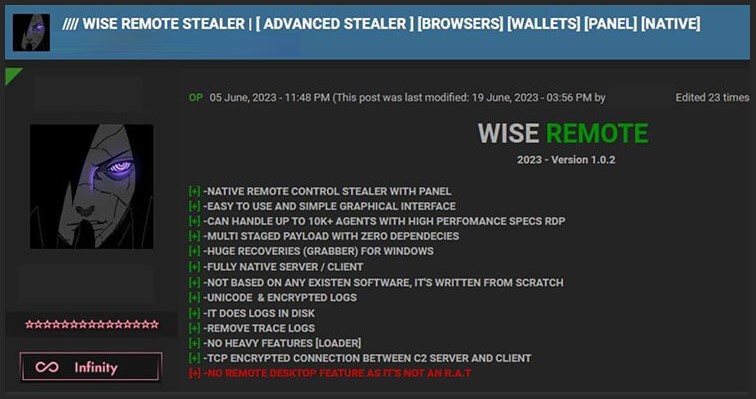
Wise Remote Stealer on hackers forum
Programming Languages and Targeted Systems
WISE REMOTE Stealer is predominantly developed using the Go programming language. However, the creators also incorporate elements of C++, C#, and Python in their codebase. It primarily targets Windows systems, specifically versions 8, 10, and 11, aiming to exploit vulnerabilities and gain unauthorized access to the targeted machines.
Evasion Techniques and Secure Communication
A Comprehensive Range of Malicious Functionalities
WISE REMOTE Stealer boasts an extensive array of capabilities designed to facilitate cybercriminal activities:
- System Information Gathering: It collects detailed information about the compromised system, enabling cybercriminals to assess the value and potential for further exploitation.
- DDoS Botnet Recruitment: This Stealer can transform infected machines into part of a larger botnet, orchestrating distributed denial-of-service (DDoS) attacks to disrupt targeted networks.
- Data Theft: The malware extracts sensitive information from web browsers, including saved passwords, cookies, banking data, bookmarks, browsing history, and installed extensions. It also targets cryptocurrency wallets, stealing digital assets.
- Ransomware Capabilities: WISE REMOTE Stealer can encrypt files on the infected system, demanding a ransom for their release.
Customization and Stealth Techniques
WISE REMOTE Stealer offers subscribers a builder tool that allows them to customize the appearance and behavior of the malware. This customization enables cybercriminals to tailor the malware to specific distribution methods and infection chains, increasing the chances of successful compromise. Additionally, the resulting malware payloads are typically compact, with sizes not exceeding 100 kilobytes, facilitating rapid distribution and reducing the risk of detection.
How to remove the WISE REMOTE?
Frequently Asked Questions (FAQ)
Conclusion: A Multi-Faceted and Alarming Threat
WISE REMOTE Stealer presents a significant and growing threat in the realm of cybercrime. Its diverse functionalities, advanced evasion techniques, and widespread usage are evidence of its potency. The multifaceted nature of stealer demands increased awareness, robust security measures, and proactive defense strategies to mitigate the risks posed by this malicious tool.


Leave a Comment