
svchost.exe is the Windows Service Host process. The legitimate file is an essential Windows component used to host services that run from DLL files. It is not automatically a Trojan or coin miner. The confusion comes from two facts: Windows may run many svchost.exe instances at once, and malware sometimes uses similar names or fake copies to hide.
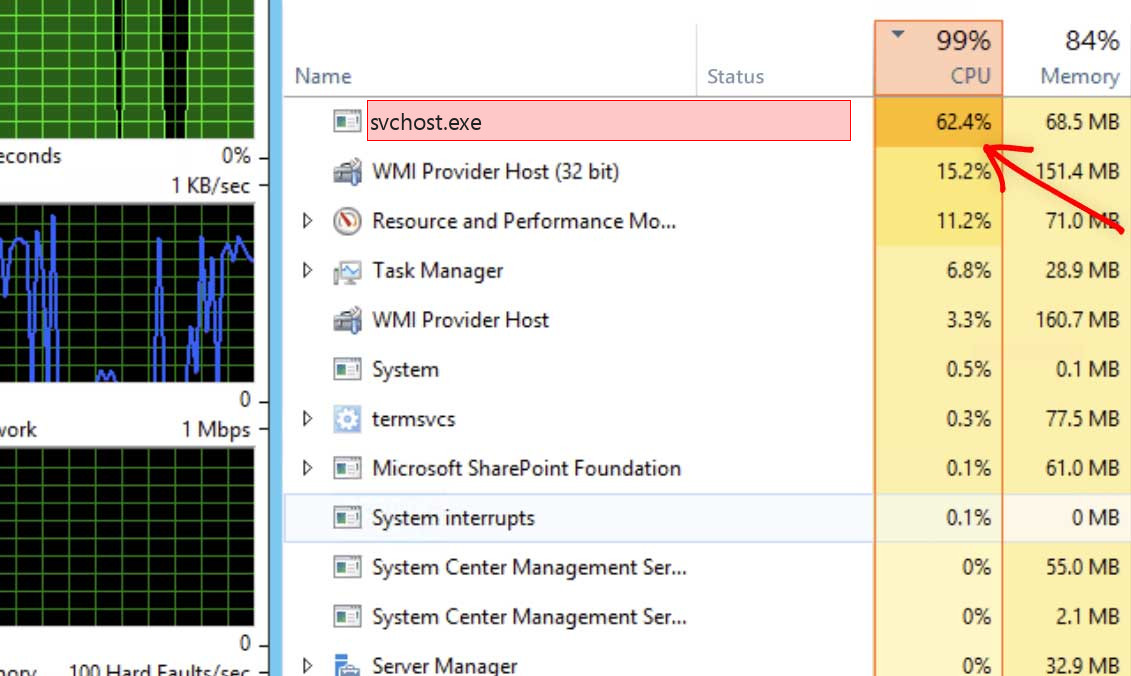
What is svchost.exe?
Microsoft describes Service Host as a shared-service process that loads Windows services from DLL files. Services are grouped by account and security requirements, so Task Manager may show several Service Host entries. On modern Windows versions, many services are separated into their own svchost.exe instance, which makes troubleshooting easier but also makes the process list look crowded.
Safe vs suspicious signs
| Usually legitimate | Suspicious |
Located in C:\Windows\System32 and signed by Microsoft. |
Runs from AppData, Temp, Downloads, Startup, or a misspelled folder. |
| Task Manager shows known Windows services under it. | Unknown service name, random startup task, or unsigned executable. |
| Network/CPU activity matches Windows Update, Defender, DNS, BITS, or other known services. | Constant high CPU/GPU, suspicious outbound connections, or disabled security. |
| Multiple instances appear, each hosting services. | A copy named scvhost.exe, svhost.exe, or another misspelling appears. |
How to see which service is responsible
- Open Task Manager and expand the Service Host group.
- Right-click the busy svchost.exe instance and choose Go to services if available.
- Use
tasklist /svc /fi "imagename eq svchost.exe"for a command-line view. - Use Resource Monitor or Process Explorer to see CPU, network, and service details.
- Fix the busy service, not svchost.exe itself.
Common reasons for high CPU or network usage
Windows Update, Delivery Optimization, BITS downloads, Defender scans, DNS Client, Windows Event Log, network services, and device services can all run through svchost.exe. High usage can be normal during updates, scans, or driver setup. Persistent usage means you should identify the hosted service and repair that service.
When to scan for malware
Scan if the file path is wrong, the name is misspelled, the file is unsigned, or a strange service launches from a user folder. Also scan if svchost.exe activity appears with browser redirects, disabled security, fake alerts, or unknown startup entries.
What not to do
Do not delete the real System32 svchost.exe. Do not disable random Windows services in bulk. Do not create broad antivirus exclusions. Troubleshooting svchost.exe means identifying the service inside that instance and handling the real cause.
Decision tree for svchost.exe high CPU
If the busy instance hosts Windows Update, BITS, Delivery Optimization, or Defender-related services, wait through updates and scans before changing anything. If the same service stays busy for hours, check update history, failed downloads, and Event Viewer. If a third-party service is inside the busy instance, update or remove that vendor software.
If the executable path is not System32, stop treating it as normal Windows behavior. A fake svchost.exe often hides in a user folder and starts through a scheduled task, service, or registry Run entry.
How to isolate the hosted service
Task Manager can show services under each Service Host group. For deeper checks, use Resource Monitor, Process Explorer, or tasklist /svc. Once you know the service name, search Event Viewer for errors around the same time. This points to the actual cause instead of blaming every svchost.exe instance.
Common legitimate causes
Windows Update, Defender scans, DNS Client, Event Log, Network Service, Windows Audio, printer services, and device services can all create short bursts. These bursts are not malware by themselves. Long-running load needs service-level troubleshooting.
After repair or cleanup
After repairing the busy service or removing a fake copy, reboot and compare the path, signature, and hosted services again. If a suspicious copy returns, the launcher survived. Check scheduled tasks, services, Startup folders, and recently installed software.
Practical example
A common case is a Service Host instance using CPU because Windows Update is stuck. The path is correct and the service list shows update-related services. The fix is to repair Windows Update, free disk space, and reboot, not to delete svchost.exe. A different case is a file named svchost.exe in AppData launched by a random task. That is a fake copy and should be removed with its launcher.
What to record before cleanup
Before changing services, record the PID, hosted service names, file path, signature, and recent Event Viewer errors. This makes the fix repeatable and avoids disabling the wrong service.
Advanced check: service command line and network
If network activity is the concern, use Resource Monitor to match the svchost.exe PID to network connections, then match that PID to hosted services. For example, DNS, Windows Update, or Delivery Optimization can legitimately use network traffic. Unknown outbound connections from a fake svchost.exe in a user folder are a different case. Keep the PID, service list, and destination details together when deciding what to remove.
If you are unsure, capture screenshots of the Services view before changing anything. That record helps reverse accidental service changes.
FAQ
Why are there many svchost.exe processes?
Windows groups or separates services into multiple Service Host instances. This is normal.
Is svchost.exe malware?
The real Microsoft file is not malware. Fake copies and misspelled names can be malicious.
Can I end svchost.exe?
Ending the wrong instance can break networking, audio, updates, or other Windows features. Identify the hosted service first.


Leave a Comment