
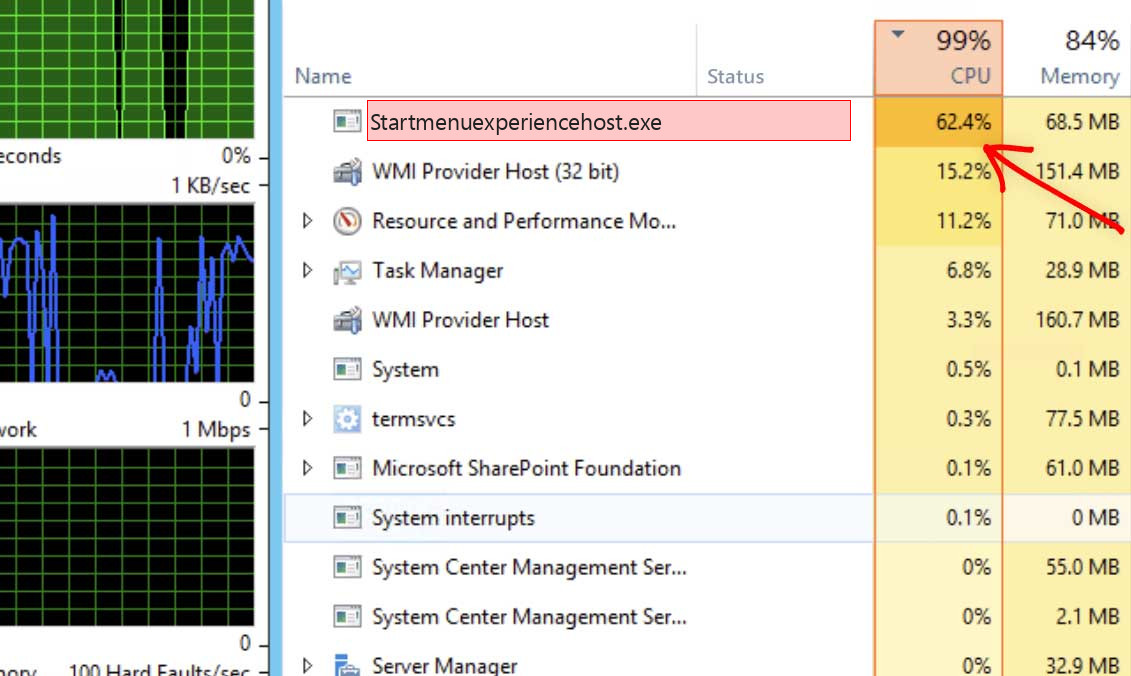
StartMenuExperienceHost.exe is the Windows Start menu host process. It is responsible for the Start menu experience and can become visible in Task Manager when the Start menu, search integration, pinned apps, recommendations, or shell UI components refresh.
What is StartMenuExperienceHost.exe?
Modern Windows separates the Start menu into its own host process so it can restart independently from the rest of the shell. This improves stability when Start menu components, pinned apps, search data, or user profile UI data misbehave.
The legitimate file is normally inside a Windows SystemApps package folder such as C:\Windows\SystemApps\Microsoft.Windows.StartMenuExperienceHost_cw5n1h2txyewy\StartMenuExperienceHost.exe and is signed by Microsoft Windows. It is not expected to run from AppData, Temp, or Downloads.
Is StartMenuExperienceHost.exe a virus?
StartMenuExperienceHost.exe is not a virus by default. The real process is part of Windows. Suspicion is justified when the path is outside the Windows SystemApps location, the signature is missing, or an unknown startup entry launches a similarly named file.
Because the name is long and official-looking, malware may imitate it. Wrong folder plus persistence after reboot is the important warning pattern.
Why StartMenuExperienceHost.exe can use CPU, GPU, memory, or disk
High CPU usually means the Start menu or a related shell component is rebuilding, syncing, or failing repeatedly.
- Corrupted Start menu layout, pinned app data, or user profile shell cache.
- Windows Search indexing or recommendations refreshing in the background.
- A broken Store app tile, package, or shell extension.
- Graphics driver or display scaling problems affecting shell rendering.
- A fake copy running outside the Windows SystemApps folder.
Signs that deserve investigation
Check whether the problem follows the Start menu and user profile before assuming malware.
- Open file location does not point to a Windows SystemApps package folder.
- The Microsoft signature is missing or invalid.
- CPU spikes every time the Start menu opens or search is used.
- The problem happens only in one Windows user profile.
- Startup entries reference a copy in AppData, Temp, or ProgramData.
How to check StartMenuExperienceHost.exe safely
Start menu issues are often repairable without removing system files. Work from profile and shell repair toward authenticity checks.
- 1. Restart Windows Explorer
Use Task Manager to restart Windows Explorer and see whether Start menu CPU usage normalizes. - 2. Verify the file path
Open file location and confirm the Windows SystemApps path with a Microsoft signature. - 3. Install Windows updates
Shell components are often fixed through cumulative updates and Store app updates. - 4. Test a new user profile
If the issue is gone in a new profile, the original profile’s Start data is likely damaged. - 5. Repair system files
Run SFC and DISM if shell components are corrupted after updates or crashes. - 6. Scan fake copies
If the file is outside the Windows folder, scan it and remove the launcher that starts it.
Start menu checks that prevent bad cleanup
StartMenuExperienceHost.exe is tightly tied to the user profile. If high CPU appears after login, after opening Start, or after typing into search, the issue is usually the Start menu data, pinned apps, recommendations, search integration, or a shell customization tool. That is different from a fake executable hiding in startup.
Before scanning, test the shell. Restart Windows Explorer, install pending Windows updates, and remove recently installed Start menu replacement tools, debloaters, or theme utilities. These tools can hook the shell and make the legitimate host process do extra work. If the problem began after uninstalling a program, check whether a broken pinned shortcut or missing app tile remains in Start.
A new local user account is a strong diagnostic test. If StartMenuExperienceHost.exe behaves normally there, the Windows system files are probably fine and the original profile needs Start menu or app-package repair. If the issue appears across profiles, move toward SFC/DISM, Windows updates, and graphics/shell component checks.
Repair path before removal
Do not delete the real StartMenuExperienceHost.exe. Repair the shell, update Windows, reset problematic Start menu data, or rebuild the user profile if the issue is profile-specific.
If Start menu CPU load began after installing a shell customization tool, uninstaller, debloater, or Start menu replacement, remove that tool first. These utilities can hook the shell and make the legitimate host process look like the cause.
Optional security check
Need a second opinion?
Optional recommendation. Do not remove a Windows component only because the name is StartMenuExperienceHost.exe; confirm the path, signer, and behavior first.
FAQ
Can I end StartMenuExperienceHost.exe?
Windows usually restarts it. Ending it may temporarily refresh the Start menu but does not fix a damaged profile or shell component.
Where should the real file be?
It should be inside a Windows SystemApps package folder and signed by Microsoft.
Why does it spike after login?
The Start menu may be refreshing pinned apps, recommendations, search data, or user profile UI data.
For enterprise or managed PCs, also check whether a policy, app deployment, or Start menu layout update was pushed recently. A managed layout that references removed apps can create repeated shell refreshes that look like a local process problem.
Conclusion
StartMenuExperienceHost.exe is a normal Windows Start menu process. Treat high CPU as a shell/profile troubleshooting issue first and a malware case only when path, signature, or startup behavior is wrong.



Leave a Comment