
Spoolsv.exe is best known as the Windows Print Spooler process, but older cleanup pages often described any high CPU instance as a coin miner. That is too broad. Most cases come from stuck print jobs, printer drivers, or offline network printers; malware is possible, but it should be confirmed with path, signature, and startup evidence.
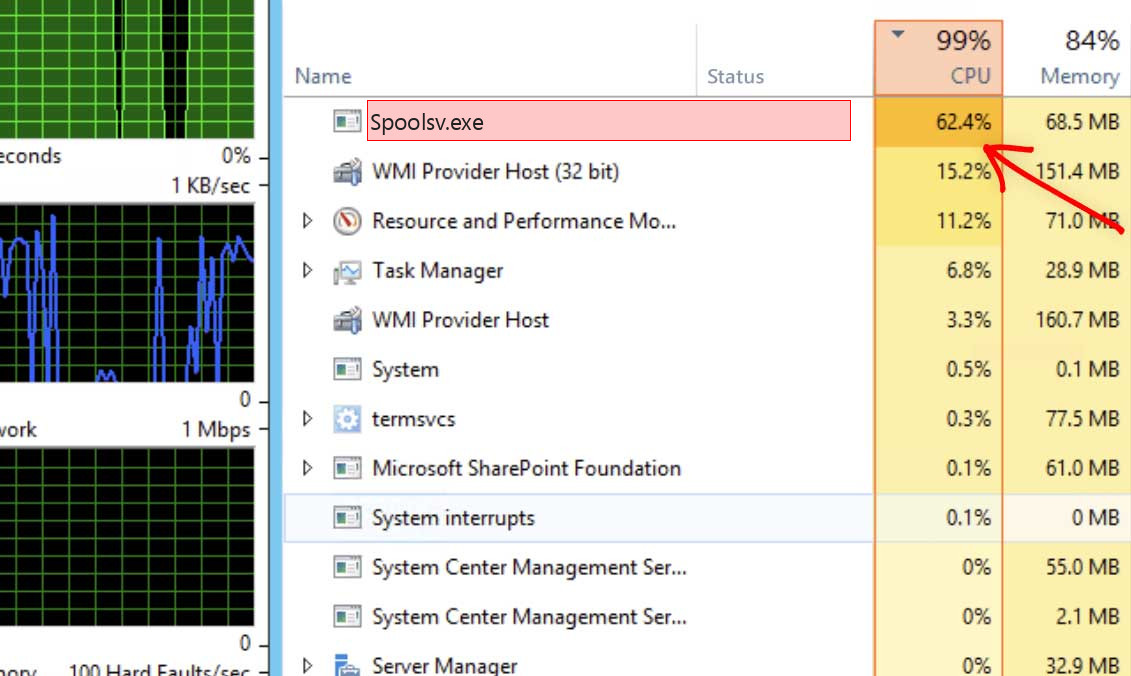
What is spoolsv.exe?
Spoolsv.exe receives print jobs from Windows applications and sends them to local, network, or virtual printers. It can also interact with printer drivers, vendor utilities, and PDF printer software.
The safe Windows file is located at C:\Windows\System32\spoolsv.exe and is Microsoft-signed. It may wake up when a document is printed, when a printer reconnects, or when Windows checks printer status.
Is spoolsv.exe a virus?
Spoolsv.exe is not automatically malware. It becomes suspicious when it runs from the wrong folder, lacks a valid Microsoft signature, persists after clearing printer queues, or is launched by an unknown startup entry.
Because the name appears on many Windows systems, a fake executable can blend in. Some unwanted programs also create services or scheduled tasks that use familiar names to avoid quick removal.
Why spoolsv.exe can use high CPU, memory, or disk
Spooler load is usually caused by printing activity. When the queue is corrupted or a driver is stuck, spoolsv.exe can use CPU continuously even though nothing is printing.
- A corrupt or very large print job is stuck in the queue.
- A network printer is offline and Windows keeps retrying.
- Old printer drivers conflict with the current Windows build.
- A virtual PDF printer or scanner package installed a buggy helper.
- A fake spoolsv.exe outside System32 is running independently of the print system.
Signs that the file should be investigated
Use the behavior and location together. The process name alone does not tell you whether this is a Windows service or an imitation.
- The executable opens from AppData, Temp, Downloads, or another user-writable folder.
- Digital signature is missing or does not belong to Microsoft.
- CPU stays high after all printers are disconnected and the queue is cleared.
- Unknown services or scheduled tasks reference spoolsv.exe outside System32.
- The process creates unexpected outbound network connections unrelated to printer discovery.
How to check spoolsv.exe manually
Follow these checks before deleting files. The safest repair is usually clearing the queue or fixing the driver.
- 1. Clear print jobs
Open the printer queue and cancel every stuck job. Restart the printer if the queue will not clear. - 2. Restart Print Spooler service
Use Services to restart Print Spooler, then watch Task Manager for CPU changes. - 3. Verify the executable
Open file location and confirm C:\Windows\System32\spoolsv.exe with a Microsoft signature. - 4. Update printer drivers
Remove old vendor driver packages and install current drivers from Windows Update or the vendor. - 5. Test without printers
Disconnect printers temporarily. If CPU drops, troubleshoot the printer or print server rather than the Windows file. - 6. Scan suspicious copies
If the file is outside System32, scan it and remove the startup mechanism that launches it.
Practical cleanup order for spoolsv.exe high CPU
First, cancel the jobs in every printer queue, including virtual printers such as Microsoft Print to PDF and third-party PDF tools. Then restart the Print Spooler service. If the CPU spike disappears, the Windows file was not the problem; the queue or driver was.
Second, remove duplicate or offline printers. Windows can keep retrying a printer that no longer exists on the network, especially on laptops that move between offices and home Wi-Fi. Reinstall only the printers you actually use, preferably with current drivers. Old print monitor components are a frequent reason the spooler becomes noisy again after every reboot.
Third, verify the executable path and signature. If the file is the Microsoft-signed System32 copy, focus on printer configuration. If the file is outside System32, treat it as a suspicious imitation, check the startup mechanism, and scan the folder. This sequence prevents two bad outcomes: deleting a Windows file when the printer is broken, or ignoring a fake copy because the name looks familiar.
Keep the print queue, driver version, file path, and signature notes together before making changes; this makes it much easier to confirm that the same issue is not returning under a different printer profile.
Should you remove spoolsv.exe?
Do not remove the real spoolsv.exe. If printing is not used on the computer, the Print Spooler service can be disabled, but that is a configuration choice rather than malware removal. Quarantine only confirmed fake copies.
Optional security check
Need a second opinion?
Optional recommendation. Do not remove a system file only because its name is spoolsv.exe; first confirm the path, signature, parent process, and recent changes on the computer.
FAQ
Is spoolsv.exe dangerous?
The legitimate Microsoft file is not dangerous. A fake file using the same name can be.
Why does it use CPU when nothing prints?
The queue may contain a stuck job, or a printer driver may be retrying in the background.
What should I check first?
Clear the print queue, restart Print Spooler, and verify the file path.
Conclusion
Spoolsv.exe should be handled as a Print Spooler troubleshooting problem first and a malware case only when path, signature, or startup evidence supports that conclusion.



Leave a Comment