
Services.exe is the Windows Service Control Manager process. It starts, stops, and coordinates Windows services and many third-party background services. A real services.exe process is critical for Windows, so calling every instance a coin miner is misleading and can lead to dangerous cleanup decisions.
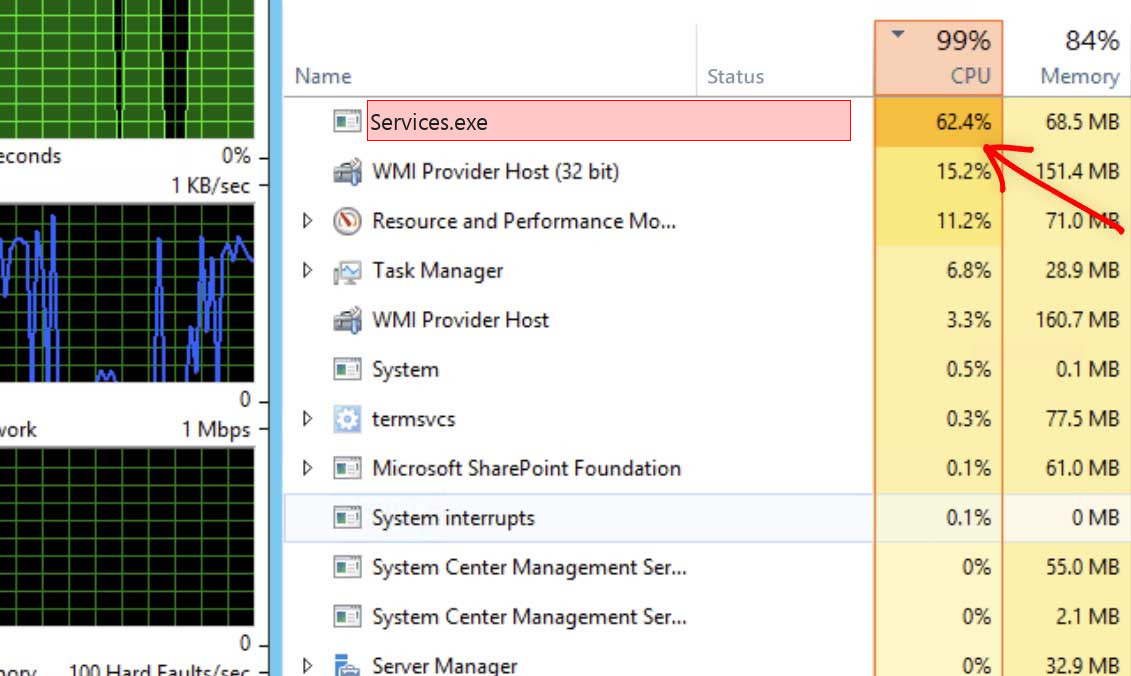
What is services.exe?
The Service Control Manager loads early during startup and manages service processes throughout the session. Networking, updates, security tools, printing, audio, device support, and many vendor utilities depend on services it coordinates.
The legitimate file is C:\Windows\System32\services.exe and is signed by Microsoft Windows. It normally runs under the system account and should not be launched from a user profile, Downloads, Temp, or an application subfolder.
Is services.exe a virus?
Services.exe is not a virus when it is the Microsoft-signed file in System32. A fake copy with the same name can be malware, and a malicious service can be controlled by the real Service Control Manager. Those are different cases and should be investigated separately.
Malware often installs itself as a service because services start automatically and can run before the user opens any program. Some threats also use names that resemble Windows service components to blend into Task Manager and Services.
Why services.exe can use high CPU, memory, or disk
If services.exe appears related to high CPU, the real cause is often a child service or a service repeatedly failing and restarting. You need to identify the service, not delete services.exe.
- Windows Update, Defender, indexing, or another system service is doing legitimate work.
- A third-party security, backup, VPN, printer, or updater service is stuck.
- A service is crashing and restarting in a loop.
- A recently installed program added an unwanted service.
- A fake services.exe is running from a non-System32 folder.
Signs that the file should be investigated
Because the real process is core Windows, use evidence-based checks before making changes.
- File location is not C:\Windows\System32\services.exe.
- Digital signature is missing or not from Microsoft.
- A new unknown service appeared around the time problems started.
- Event Viewer shows repeated service crashes or restart loops.
- The process is launched from a user-writable folder or has suspicious network activity.
How to check services.exe manually
These checks help separate a healthy Service Control Manager from a malicious service or fake executable.
- 1. Verify file location
Right-click services.exe in Task Manager and confirm the file opens in C:\Windows\System32. - 2. Check the signature
Use Properties and Digital Signatures to confirm Microsoft Windows is the signer. - 3. Find busy services
In Task Manager and Resource Monitor, identify which service host or vendor service is consuming resources. - 4. Review Services and Event Viewer
Look for recently added services, repeated failures, or services with random names. - 5. Disable only suspicious third-party services
Do not disable core Microsoft services blindly. Test one suspect vendor service at a time. - 6. Scan service files
If a service points to AppData, Temp, ProgramData, or an unknown executable, scan that file and its folder.
How to investigate services.exe without breaking Windows
The safest approach is to treat services.exe as a controller and then identify the service behind the behavior. Open the Services console and sort by startup type, recent vendor names, or services that appeared after a new install. Event Viewer can show service crashes, timeout loops, and repeated restarts. Those events are often more useful than Task Manager alone.
If a suspicious service is found, inspect its executable path before disabling it. A legitimate service normally points to Windows, Program Files, or a recognizable vendor folder. A risky service may point to AppData, Temp, a random ProgramData folder, or a file with a meaningless name. Copy the service name and path before changing anything, because that information helps verify whether the entry is unwanted.
Do not use registry cleaners or bulk service removers here. Removing the wrong Microsoft service can break networking, updates, login, security, or device support. Disable only the suspect third-party service for a test reboot, then scan the actual executable and its folder. If the fake service returns, check scheduled tasks and startup entries that may recreate it.
Should you remove services.exe?
Never delete the legitimate services.exe from System32. If malware installed a service, remove the malicious service entry and its executable, then reboot and recheck.
Optional security check
Need a second opinion?
Optional recommendation. Do not remove a system file only because its name is services.exe; first confirm the path, signature, parent process, and recent changes on the computer.
FAQ
Is services.exe a coin miner?
The real Windows services.exe is not a miner. A fake copy or malicious service can be related to mining, but that must be confirmed by path and behavior.
Why is services.exe always running?
Windows needs it to manage background services during the entire session.
Can I stop services.exe?
No. Stopping or deleting the real process can crash Windows or make the system unusable.
Conclusion
Services.exe is a core Windows component. Investigate suspicious services, fake paths, and bad signatures, but do not treat the genuine System32 file as malware.



Leave a Comment