
SearchHost.exe is usually a Microsoft Windows Search component, not malware. It helps power Start menu search, taskbar search, app search, and parts of the local search experience. The process can use CPU, memory, and disk while Windows builds or updates its search index. The useful question is not simply “is SearchHost.exe a virus?” but whether the file is genuine and whether Windows Search is indexing more than it should.
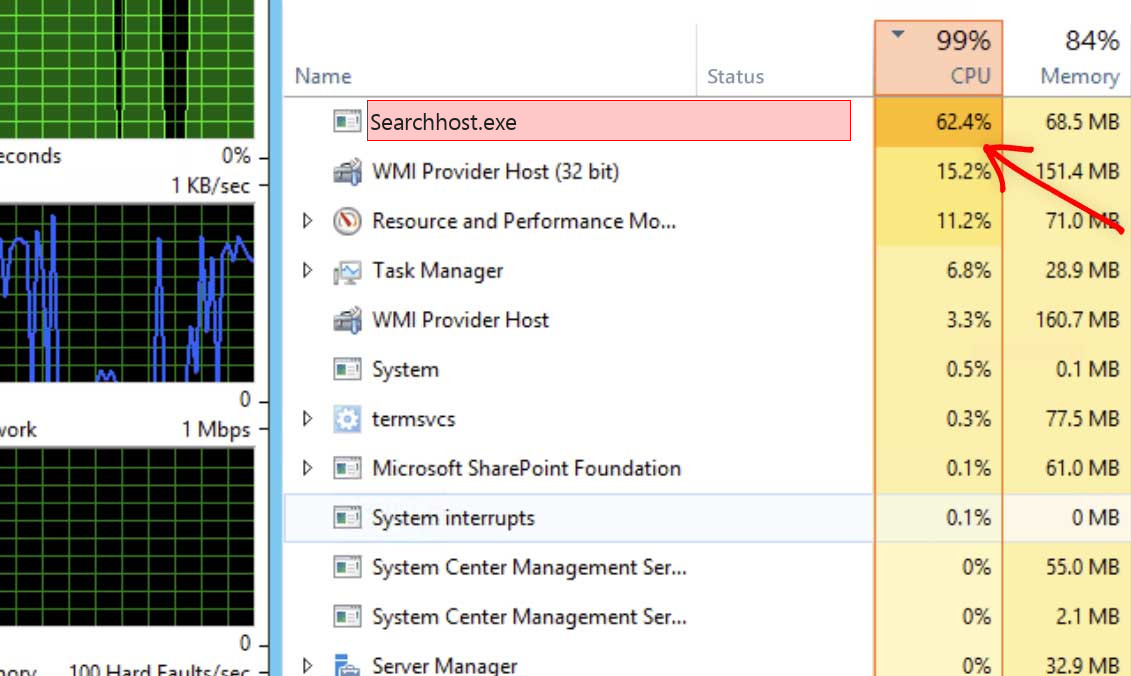
What is SearchHost.exe?
SearchHost.exe is tied to the modern Windows Search interface. Microsoft documents Windows Search as an indexing system that catalogs files, metadata, emails, documents, and other content so that searches return quickly. Windows can use Classic indexing for common user folders or Enhanced indexing for a broader search across the PC. Enhanced mode is more demanding and can affect battery life and CPU consumption.
On Windows 10 and Windows 11, SearchHost.exe may appear even when the traditional Windows Search service is stopped, because the Start search UI and modern shell search components are separate from older indexing pieces. Seeing it in Task Manager is normal if you use Start menu search, Windows Search, or search-connected shell features.
Normal vs suspicious behavior
| Usually normal | Needs checking |
| CPU rises while Windows indexes files or you search from Start. | CPU stays high for hours while the PC is idle. |
| Memory rises briefly during a search session. | Memory keeps climbing or returns immediately after ending the task. |
| The file is signed by Microsoft and lives under a Windows SystemApps folder. | The file runs from AppData, Temp, Downloads, or an unknown startup folder. |
| Usage drops after indexing finishes or after reducing indexed locations. | Usage remains high after disabling Enhanced indexing and rebooting. |
Verify the file before changing settings
Open Task Manager, right-click SearchHost.exe, and choose Open file location. A legitimate copy should belong to a Microsoft Windows system app location and be signed by Microsoft. If a file named SearchHost.exe sits in a user-writable folder, treat it as suspicious and scan the exact file before deleting anything.
Why SearchHost.exe uses high CPU, memory, or disk
The common triggers are indexing after a Windows update, switching to Enhanced indexing, adding a large folder to indexed locations, corrupted index data, cloud-synced folders constantly changing, Outlook/mail indexing, or a stuck Start search session. Microsoft also notes that searching the entire PC can affect battery life and CPU consumption, so the indexing scope matters.
In practice, SearchHost.exe may look like the problem while the real trigger is a huge Downloads folder, a development directory with thousands of changing files, a cloud sync folder, or a broken search index. Fixing the indexing scope usually works better than killing the process repeatedly.
How to fix SearchHost.exe high usage
- Open Settings → Privacy & security → Searching Windows.
- Use Classic indexing if you do not need Windows to index the whole PC.
- Remove large folders such as build directories, virtual machines, Downloads, node_modules, archives, or cloud cache folders from indexed locations.
- Pause cloud sync temporarily and check whether SearchHost usage drops.
- Rebuild the search index from Advanced indexing options if search results are broken or usage never settles.
- Install Windows updates and restart. Search components are often fixed through cumulative updates.
- If Start search itself is frozen, end SearchHost.exe once from Task Manager, then reboot and test again.
When to scan for malware
The real SearchHost.exe is a Windows component. Scan if the path is not a Microsoft Windows folder, if there is no Microsoft signature, if it launches from startup entries outside Windows, or if high usage began after a suspicious installer. Do not remove a Microsoft-signed system copy just because it appears in Task Manager.
Decision tree
- The path is a Microsoft SystemApps folder: treat it as Windows Search troubleshooting, not malware removal.
- Usage rises after adding files: reduce indexed locations and exclude folders that change constantly.
- Usage follows OneDrive, Dropbox, Google Drive, or developer folders: pause sync or exclude those folders from indexing.
- Start search is broken: rebuild the index and install Windows updates.
- The path is outside Windows folders: scan the file and inspect startup entries before trusting it.
What to exclude from indexing
Good exclusions are folders that are large, temporary, or constantly changing. Examples include virtual machine disks, build folders, package caches, browser caches, game libraries, large archive folders, and development directories such as node_modules. Excluding those folders does not delete files; it only tells Windows Search not to spend resources cataloging them.
How to tell indexing from infection
Indexing usually has a pattern: disk activity, a known Windows path, and improvement after the index completes or after reducing indexed folders. Infection usually has different signals: wrong file path, unknown publisher, startup persistence, unwanted browser changes, new scheduled tasks, or high network activity unrelated to Windows Search. Do not make the decision from CPU percentage alone.
What good looks like after repair
After reducing indexed locations or rebuilding the index, SearchHost.exe may still appear, but it should stop monopolizing CPU or disk while idle. Start menu search should open quickly, search results should populate, and the process should settle after a reboot. If the same spike returns every day, check the folder list again for newly synced or constantly changing files.
FAQ
Can I disable SearchHost.exe?
You can reduce Windows Search activity by changing indexing settings, but deleting SearchHost.exe is not recommended. It is part of the Windows search experience.
Is 200 MB of RAM normal?
It can be normal during active Start search or indexing. Sustained growth, constant CPU, or repeated spikes at idle are the signals to troubleshoot.
What is the fastest safe fix?
Switch to Classic indexing, remove huge folders from indexed locations, rebuild the index, then reboot.



Do you mean Gridinsoft contains a virus? Can you give a link to virustotal? Or provide a screenshot.
Thanks!