
Program:Win32/Contebrew.A!ml is a potentially unwanted program due to its utilization of questionable tactics for distribution. It also has the browser hijackers features.
It can carry out numerous annoying and unwanted actions while residing on the computer. PUAs (Potentially Unwanted Applications) like Win32/Contebrew.A!ml can be irritating and significantly impact your system’s performance. Furthermore, users have reported that this application exhibits behaviors similar to spyware or a backdoor.
Win32/Contebrew.A!ml Overview
Microsoft Defender displays the Program:Win32/Contebrew.A!ml detection in the lower right corner. That says your system has potentially unwanted applications. Although Microsoft Defender is proficient at scanning, it is sometimes unreliable. Malware attacks can bypass its defense, and its malware removal features are problematic.
Win32/Contebrew.A!ml is a potentially unwanted program (PUP) for Windows devices that is usually installed without the user’s knowledge or consent. It is typically bundled with other software, such as freeware or shareware. It can be installed when the user agrees to the terms and conditions of the installation wizard.
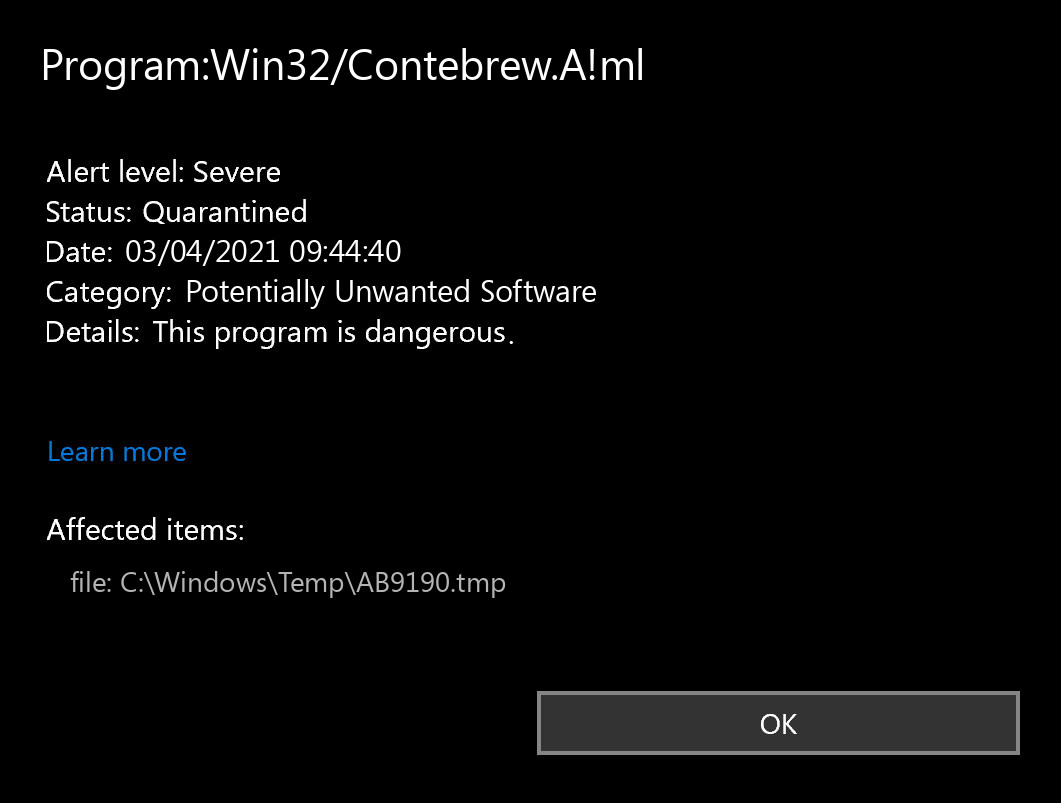
Microsoft Defender: “Program:Win32/Contebrew.A!ml”
So, just because Defender detects it doesn’t mean it will remove it. Removing it will probably require utilizing a separate anti-malware program. At the very least, using a third-party anti-malware tool will significantly reduce the chances of infecting your system.
Unwanted Program Summary:
| Name | Contebrew PUA |
| Detection | Program:Win32/Contebrew.A!ml |
| Damage | Contebrew is at least useless or can perform various malicious actions on your PC. |
| Fix Tool | See If Your System Has Been Affected by Contebrew exploit |
Is Program:Win32/Contebrew.A!ml dangerous?
Program:Win32/Contebrew.A!ml is a dangerous program that threatens your computer’s security. It falls under the category of potentially unwanted programs (PUPs), and once installed, it can cause some issues. Firstly, it can modify your system settings, such as the browser homepage and default search engine. Secondly, it installs unwanted toolbars and extensions in the browser, which can result in intrusive pop-up ads.
How did I get this virus?
It is difficult to line the sources of malware on your computer. Nowadays, things are mixed up, and spreading methods used by adware six years ago may be used by spyware nowadays. But if we abstract from the exact spreading tactic and will think of why it has success, the answer will be pretty uncomplicated – low level of cybersecurity understanding. People click on advertisements on strange sites, click the pop-ups they receive in their browsers, and call “Microsoft tech support” believing that the weird banner that says about malware is true. It is very important to recognize what is legit – to prevent misunderstandings when attempting to figure out a virus.
Nowadays, there are two of the most common methods of malware distribution – bait emails and injection into a hacked program. While the first one is not so easy to stay away from – you should know a lot to recognize a counterfeit – the 2nd one is simple to handle: just do not use hacked applications. Torrent trackers and various other sources of “free” applications (which are, in fact, paid, but with a disabled license checking) are just a giveaway place of malware. And Program:Win32/Contebrew.A!ml is just one of them.
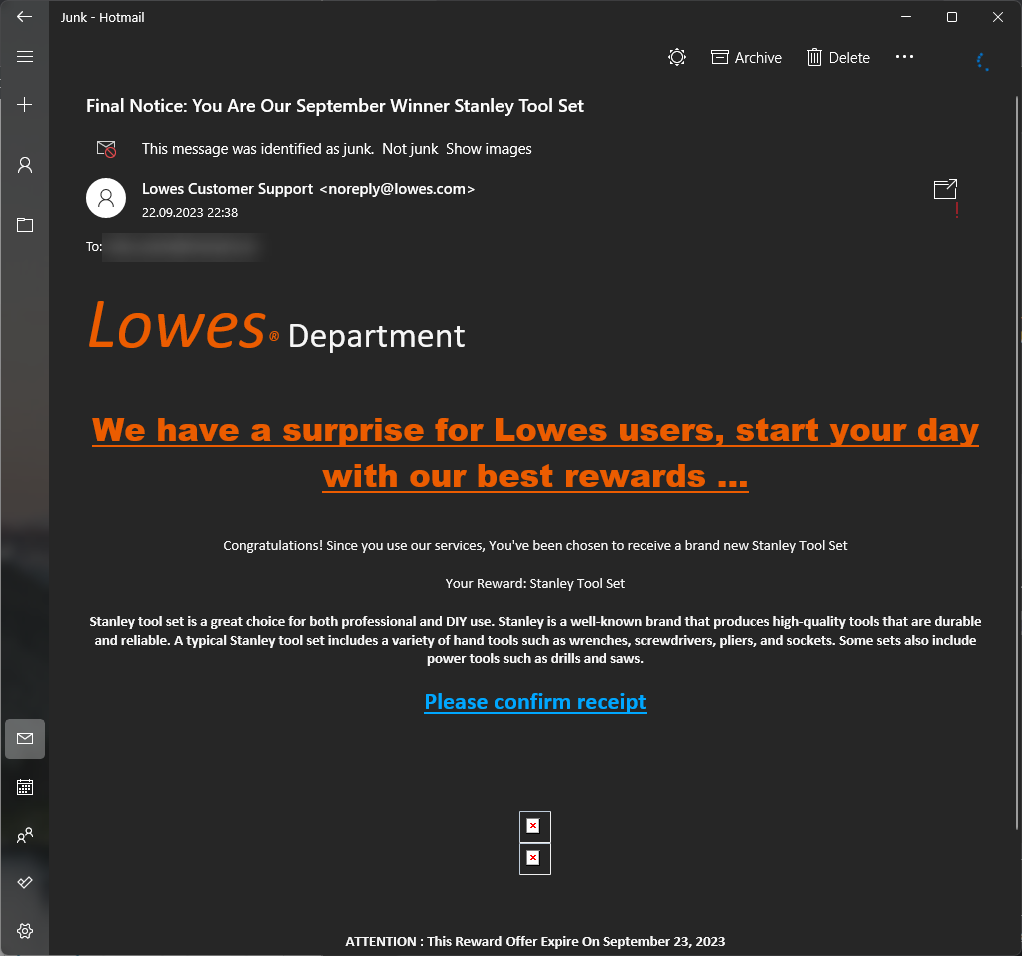
Phishing Email



Leave a Comment