
MoUSO Core Worker Process, usually shown as MoUsoCoreWorker.exe, is connected to Windows Update and the Update Session Orchestrator. It helps coordinate update checks, downloads, installation sessions, and restart-related update work. It is not automatically a virus. It becomes a problem when it stays active, wakes the PC repeatedly, or uses CPU/disk while Windows Update is stuck.
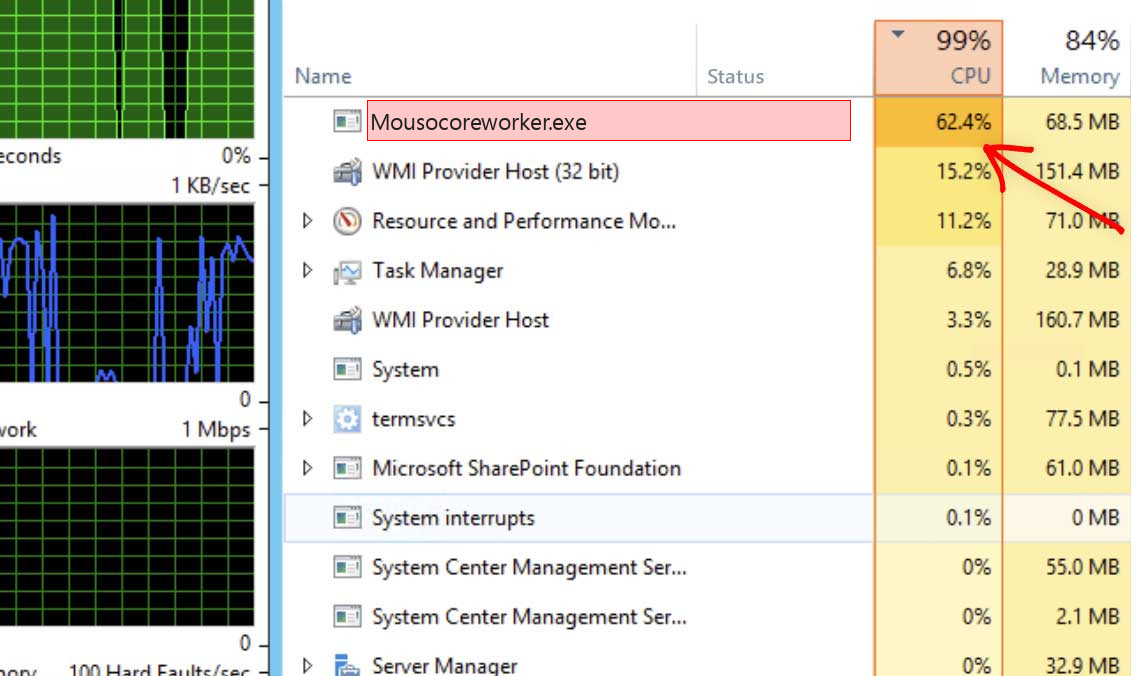
What is MoUsoCoreWorker.exe?
The name breaks down as Update Session Orchestrator. Microsoft introduced the Unified Update Platform to make Windows updates smaller and more coordinated. MoUSO-related processes are part of that update stack. They can appear while Windows checks for updates, prepares an update, resumes after sleep, or schedules a restart.
When working correctly, the process should be temporary. It may use CPU, disk, memory, or network briefly, then disappear or become idle after update work is complete.
Normal vs abnormal behavior
| Usually normal | Needs troubleshooting |
| Appears while Windows Update checks or installs updates. | Runs for hours with no visible update progress. |
| Brief CPU or disk activity after boot or resume from sleep. | Repeatedly wakes the PC from sleep or blocks sleep. |
| File is a Microsoft-signed Windows component. | File runs from a user folder, Temp, Downloads, or a random path. |
| Stops after updates finish and the PC reboots. | Returns immediately after every reboot with Windows Update errors. |
Check Windows Update first
Open Settings → Windows Update. If updates are pending, let them finish and restart the PC. If updates are stuck, MoUsoCoreWorker.exe may be trying the same failed update work repeatedly. Check update history for failed KB entries and note the error code before applying fixes.
Fix high CPU, disk usage, or wakeups
- Restart Windows once and check Windows Update again.
- Run the Windows Update troubleshooter from Settings.
- Install pending updates manually if Windows Update is stuck on one package.
- Restart update-related services such as Windows Update and Update Orchestrator only as a diagnostic step.
- Run
sfc /scannowand DISM repair commands if system files may be damaged. - Check
powercfg /lastwakeif the process wakes the PC from sleep. - Temporarily pause updates, reboot, then resume updates if the session is stuck.
When not to delete it
Do not delete MoUsoCoreWorker.exe from Windows folders. Removing update components can break Windows servicing and make future security updates fail. The safer path is to repair Windows Update, clear a stuck update session, or fix the failed package.
When to scan for malware
Scan if the file path is not a Windows update/system location, if the file is unsigned, or if a similarly named process starts from AppData or Temp. Malware can borrow legitimate-looking names, but the real MoUSO process is part of Windows servicing.
Decision tree
- Windows Update is pending: finish the update and reboot before doing anything else.
- Windows Update shows an error: fix the failed update; MoUSO is probably retrying that work.
- The PC wakes from sleep: check wake history with
powercfg /lastwakeand active wake timers. - CPU or disk stays high after updates finish: run the Windows Update troubleshooter and system file repair.
- The file path is not a Windows system/update path: verify and scan the file.
How to diagnose sleep wakeups
Open Command Prompt as administrator and run powercfg /lastwake. If the last wake source points to update orchestration, check Windows Update history and scheduled restart settings. Also run powercfg /waketimers to see whether Windows has a scheduled update wake timer. This gives you evidence before disabling anything.
Why repeated update loops happen
MoUSO can keep returning when Windows has a partially downloaded update, a failed cumulative update, a damaged component store, or a paused/restarted update session that never completed. Deleting the process will not fix that. Repair the update state: reboot, run the troubleshooter, use DISM/SFC, and install the failed update manually if needed.
What good looks like after repair
After Windows Update is healthy, MoUsoCoreWorker.exe may still appear briefly around update checks, but it should not keep the system awake all night or hold CPU/disk at idle. Update history should show successful installation rather than repeated failures for the same KB.
Service checks for advanced users
Open Services and review Windows Update, Update Orchestrator Service, Background Intelligent Transfer Service, and related update services. They do not all need to be running constantly, but disabled update services can trap Windows in a broken state where MoUSO keeps trying and failing to continue an update session.
Event Viewer is useful here. Check Windows Logs → System and the Windows Update client logs around the time MoUsoCoreWorker.exe becomes active. If the same update error repeats, solve that update error instead of treating MoUSO as the root cause.
Best practice for laptops
If the main complaint is battery drain or wakeups, combine update repair with power settings. Disable wake timers temporarily, confirm active hours, and avoid leaving the system in a half-updated state before closing the lid. Once Windows Update is healthy, re-enable normal update behavior so security patches still install.
FAQ
Why does MoUSO wake my PC?
Windows Update may wake the device to check, stage, or finish update work. If it happens repeatedly, check update history and power wake sources.
Can I end the task?
You can end it temporarily if it is stuck, but Windows may start it again. Fix Windows Update rather than fighting the process.
Is it malware?
The Microsoft-signed Windows copy is not malware. A copy in an unusual folder needs verification.



Leave a Comment