
Misleading:Win32/Lodi is a type of potentially unwanted application (PUA) that deceives users and manipulates them into downloading and installing harmful software. It is commonly distributed through misleading pop-up ads or bundled with other downloaded software. Once installed, Win32/Lodi displays fake error messages or warnings to persuade users to purchase unnecessary or harmful software or services.
Win32/Lodi refers to the underlying malware that powers Misleading:Win32/Lodi. Cybercriminals utilize this malware to create deceptive pop-up ads and messages that manipulate users into taking actions that benefit the criminals. Win32/Lodi can also be used to steal sensitive information, including login credentials, credit card numbers, and other personal data from infected computers.
To protect yourself from Win32/Lodi and other potentially unwanted programs, it is essential to exercise caution when downloading and installing software from the internet. Only download software from reputable sources and carefully read the terms and conditions before installation. Additionally, keeping your computer updated with the latest security patches and using a reliable anti-malware program to regularly scan your system are important preventive measures.
What is Misleading:Win32/Lodi?
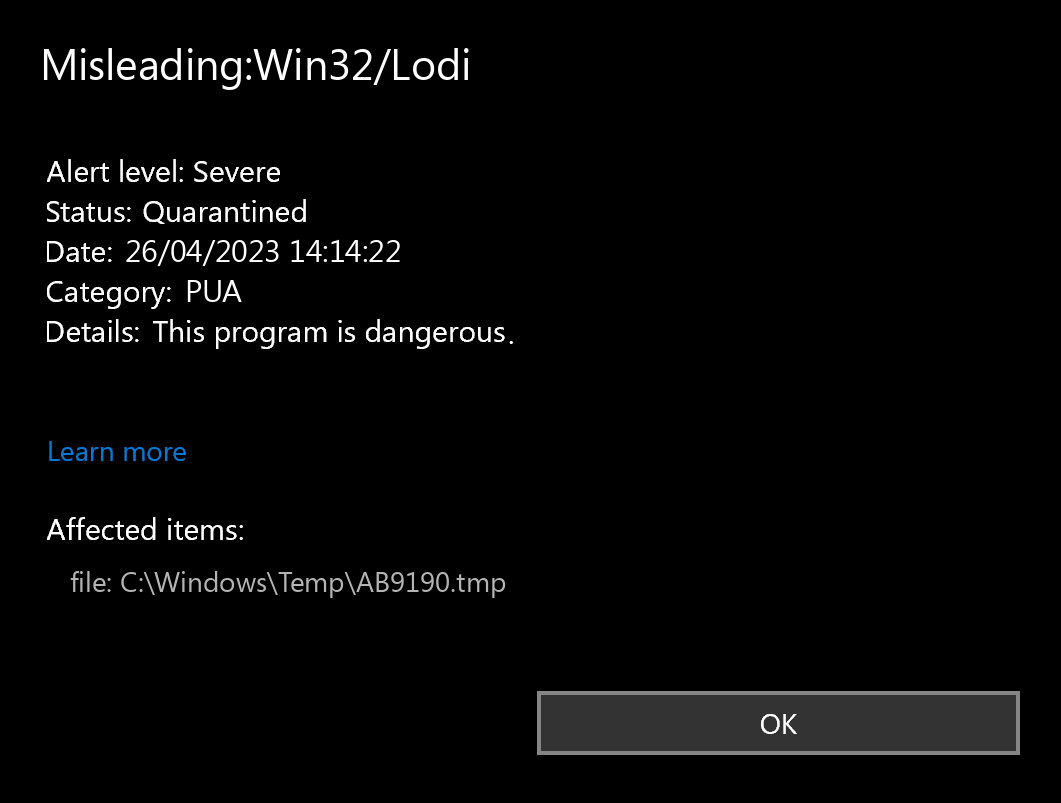
Microsoft Defender: “Misleading:Win32/Lodi”
Unwanted Program Summary:
| Name | Misleading Lodi |
| Detection | Misleading:Win32/Lodi |
| Damage | Lodi is at least useless or can perform various malicious actions on your PC. |
| Similar behavior | OfferCore, WaveBrowser, PiriformBundler |
Is Misleading:Win32/Lodi dangerous?
I have already mentioned that Misleading:Win32/Lodi PUA is not as trustworthy as it claims to be. The “legitimate and effective” app can abruptly unveil itself as a downloader trojan, spyware, backdoor, or coin miner virus. Sure, this one is mostly vicious rather than malicious. And you can never foresee what to expect even from separate variants of Lodi’s unwanted program. That still does not say that you have to panic – probably, this unpleasant thing has not succeeded in doing bad things to your PC.
The particular damage to your system may be triggered not only due to the malware injection. A large share of doubtful programs, like the Lodi application, is just badly made. Potentially, their actions are rather helpful than worthless if done on particular system setups, however, not on each one. That’s how an uncomplicated system optimization app can trigger mayhem with continuous BSODs on your system. Any type of interruptions to the system registry are not very safe, and they are much more dangerous if completed with such programs.


Leave a Comment