
iCUEDevicePluginHost.exe is usually a Corsair iCUE helper process, not a standalone virus. Corsair iCUE uses device plugins and background components so supported keyboards, mice, headsets, coolers, RAM lighting, and other devices can communicate with the main iCUE software.
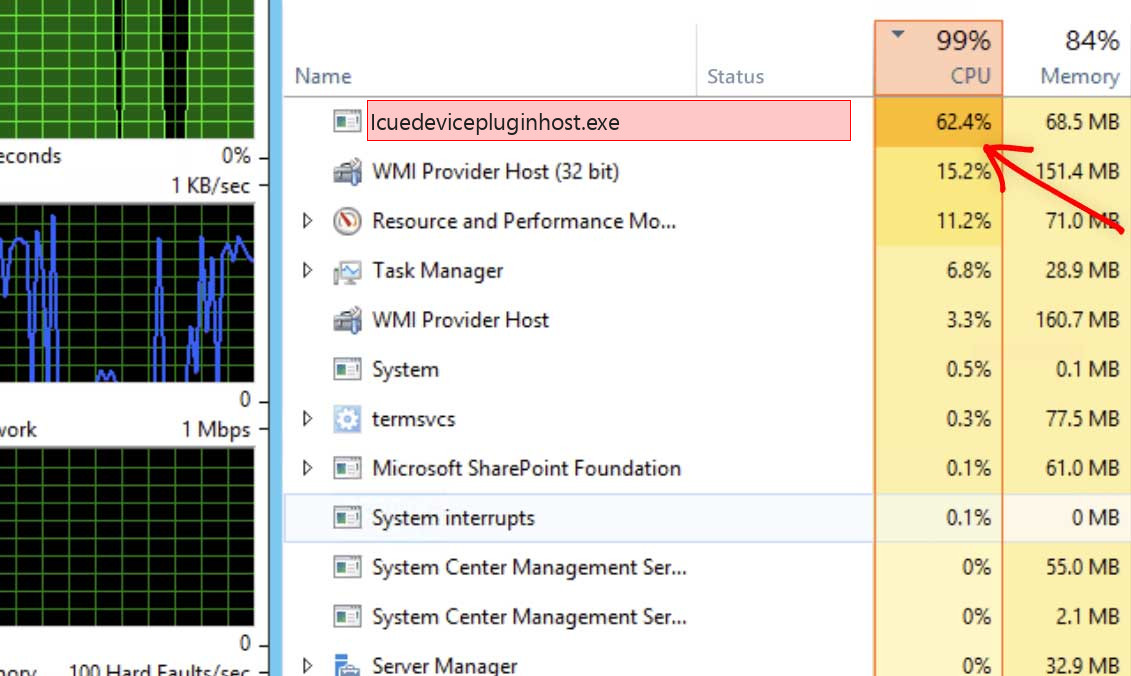
What is iCUEDevicePluginHost.exe?
The name describes its job: it hosts device plugins for Corsair iCUE. The main iCUE app does not directly handle every supported device in one monolithic process. Instead, plugin host components help load device-specific modules, detect hardware, apply profiles, and keep lighting or control features available.
This makes the process normal on PCs with Corsair hardware. It is suspicious only if the file path, publisher, or behavior does not match Corsair software.
Safe vs suspicious signs
| Usually legitimate | Suspicious |
| Installed inside the Corsair iCUE program folder. | Runs from AppData, Temp, Downloads, or another user-writable folder. |
| Appears together with iCUE.exe and Corsair services. | Runs even though iCUE is not installed. |
| Related to Corsair device detection, profiles, or firmware features. | Uses high CPU/GPU while idle and cannot be explained by Corsair devices. |
| Stops after iCUE is cleanly uninstalled. | Returns after uninstall through an unknown scheduled task or startup item. |
Why the plugin host can use CPU
High CPU can happen while iCUE detects devices, loads plugins, applies lighting profiles, reads sensors, or updates firmware. It can also happen when an iCUE plugin is broken, a device repeatedly disconnects/reconnects, or another RGB utility competes for the same hardware.
If the process is active only for a short time after login, that may be normal. If it stays high for a long time, the likely causes are a corrupted iCUE install, a broken profile, outdated firmware, or a conflict with other monitoring/RGB tools.
How to verify it
- Open Task Manager and choose Open file location.
- Confirm that the file is inside the Corsair iCUE installation directory.
- Check the file publisher/signature.
- Open iCUE and check whether any device is missing, reconnecting, or asking for firmware updates.
- Temporarily unplug Corsair devices one by one if the spike started after adding hardware.
How to fix high usage
- Update Corsair iCUE and device firmware.
- Restart iCUE services and reboot the PC.
- Switch to a simple static lighting profile for testing.
- Disable or uninstall overlapping RGB utilities.
- Export profiles, uninstall iCUE, reboot, and reinstall the latest version if the plugin host remains unstable.
When to scan for malware
Scan the file if it is outside the Corsair folder, unsigned, installed without iCUE, or connected to suspicious network activity. A fake copy can use a Corsair-like name, but the legitimate plugin host is part of the iCUE ecosystem.
Detailed troubleshooting path
Start by checking whether the plugin host spike is tied to one device. Unplug nonessential Corsair devices, wait a minute, and watch Task Manager. If usage drops after unplugging one device, update that device firmware, try another USB port, and check for repeated connect/disconnect events in Windows.
Then test iCUE profiles. Device plugin hosts can become busy when a profile calls sensors, macros, integrations, or lighting effects that do not load correctly. Create a new simple profile with static lighting and no integrations. If the process becomes quiet, rebuild the profile instead of removing iCUE.
Plugin host vs main iCUE process
iCUE.exe is the main application, while iCUEDevicePluginHost.exe handles device-specific pieces. Seeing both processes at once can be normal. A problem starts when the plugin host constantly restarts, uses high CPU for a long time, or runs from a folder that does not belong to Corsair.
Clean reinstall steps
- Export important iCUE profiles.
- Uninstall Corsair iCUE from Windows settings.
- Reboot before reinstalling.
- Install the latest iCUE version from Corsair.
- Test with default profiles before importing old settings.
- Import profiles one by one if the clean install behaves normally.
After removal or repair
Check that no unknown scheduled task launches iCUEDevicePluginHost.exe from a non-Corsair path. If you removed iCUE completely, the process should not remain active after reboot. If it does, the visible file may not be the legitimate Corsair component.
When the plugin host is safe to leave alone
If the file is inside the Corsair iCUE folder, signed by a trusted publisher, and uses resources only during login or device changes, it is usually safe to leave alone. In that case, focus on reducing overhead rather than removing the component: simplify lighting, update firmware, and avoid running several RGB suites together. Removing it manually may break keyboard macros, headset profiles, cooler control, and memory lighting.
When the plugin host needs removal
Remove or reinstall iCUE when the process remains busy for a long time, when profiles fail to load, or when the same plugin crashes repeatedly. If the process is outside the Corsair folder, treat it as a suspicious copy and scan the whole system before trusting it.
If several Corsair devices are connected through a hub, test a direct motherboard USB port as well. Unstable USB connections can make the plugin host reload devices repeatedly.
FAQ
Can I end the process?
You can end it temporarily, but iCUE device control may stop working until the service restarts.
Can I uninstall it separately?
Usually no. Remove or repair the full iCUE installation instead of deleting the plugin host manually.
Is it a coin miner?
The real Corsair process is not a coin miner. Treat it as suspicious only if the file path, signature, or behavior is wrong.



Leave a Comment