
iCUE.exe is not automatically a virus. On many gaming PCs it belongs to Corsair iCUE, the software used to manage Corsair keyboards, mice, headsets, cooling devices, memory lighting, fan curves, macros, and RGB profiles. Corsair describes iCUE as software for controlling and customizing supported Corsair devices, including lighting and system monitoring features.
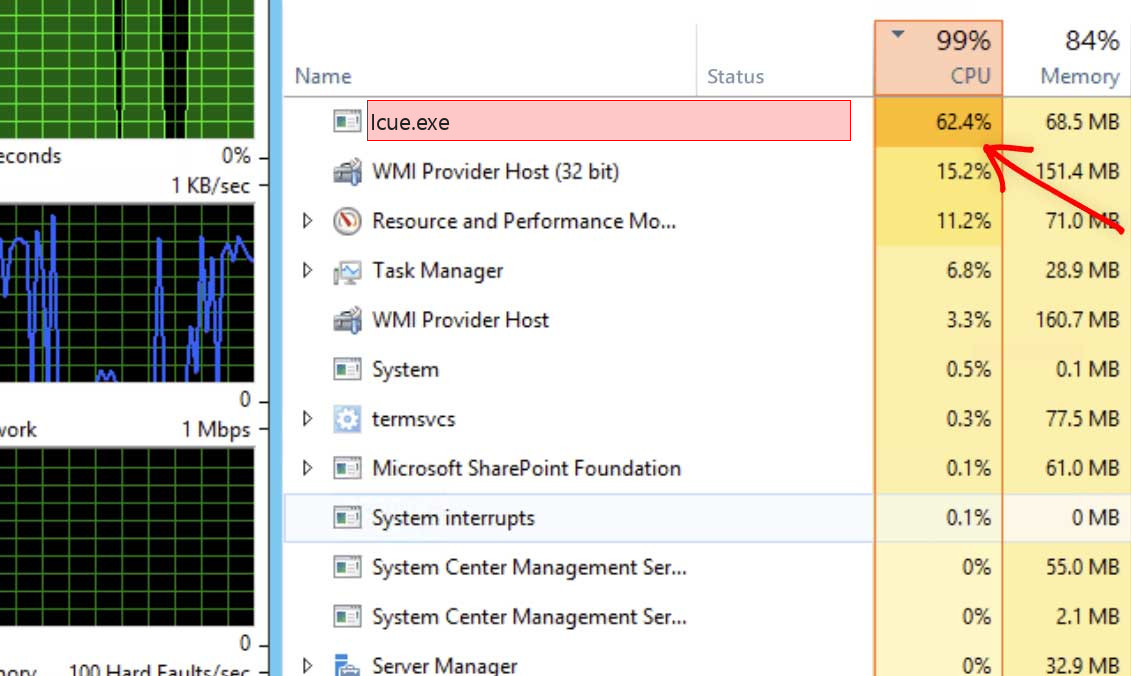
What is iCUE.exe?
iCUE.exe is the main executable for Corsair’s iCUE software. If you have Corsair peripherals or components, it can run in the background so your device profiles, lighting effects, macros, cooling settings, and dashboard sensors work after Windows starts.
That background role is the reason iCUE.exe may appear in Task Manager even when the iCUE window is closed. This is expected for many Corsair setups. The process becomes suspicious only when the file is in the wrong location, lacks a valid publisher, or behaves unlike the real Corsair utility.
Safe vs suspicious signs
| Usually legitimate | Suspicious |
| Located under a Corsair/iCUE folder in Program Files. | Runs from AppData, Temp, Downloads, Startup, or a random folder. |
| Installed together with Corsair iCUE and visible in Apps & Features. | No Corsair software or hardware is present. |
| Signed by Corsair or a trusted related publisher. | Unsigned file, unknown publisher, or invalid signature. |
| Uses resources during startup, profile sync, device detection, or firmware checks. | Constant high CPU/GPU, unknown network connections, or persistence after uninstall. |
Why iCUE.exe can use high CPU or memory
iCUE can poll device sensors, render lighting effects, synchronize profiles across devices, communicate with cooling controllers, and update firmware-related services. Short CPU spikes during startup are common. Constant high usage is not normal, especially if it continues while the PC is idle.
Common non-malware causes include corrupted profiles, conflicts with other RGB utilities, outdated iCUE builds, device firmware issues, or multiple monitoring tools polling the same sensors. Malware is more likely when the file is outside Corsair folders or appeared after unrelated freeware, cracks, or fake driver updaters.
How to verify iCUE.exe
- Open Task Manager, right-click iCUE.exe, and choose Open file location.
- Confirm that the path belongs to Corsair iCUE in Program Files.
- Open file properties and check the digital signature/publisher.
- Open Windows settings and confirm Corsair iCUE is installed.
- Disconnect nonessential Corsair devices temporarily if high CPU started after adding hardware.
- If the file is not in a Corsair folder, scan it before deleting.
How to fix high CPU or broken iCUE
- Update iCUE from Corsair’s official site or from inside the app.
- Update device firmware when iCUE offers a firmware update.
- Disable complex animated lighting profiles and test a static profile.
- Close other RGB or hardware-monitoring tools that may conflict with iCUE.
- Export important profiles, uninstall iCUE, reboot, and reinstall the latest version if the issue remains.
- If you do not use Corsair hardware anymore, uninstall iCUE cleanly instead of deleting iCUE.exe manually.
What not to do
Do not download a replacement iCUE.exe from random EXE sites. Do not delete the executable while Corsair services remain installed; this can create startup errors and broken device profiles. Also avoid assuming every high-CPU event is malware. Verify the path, signature, and install source first.
Detailed troubleshooting path
If iCUE.exe is using resources, test one variable at a time. First, restart Windows and wait several minutes after login. Then open iCUE and check whether any device is stuck on “detecting”, “updating”, or “unavailable”. A device that repeatedly reconnects can keep iCUE busy even when nothing is visibly happening.
Next, simplify the configuration. Switch all devices to a static lighting profile, disable dashboard widgets you do not use, and close other monitoring tools such as motherboard utilities, RGB controllers, or fan-control software. If CPU usage drops, the problem is probably a software conflict or a profile issue, not malware.
Where malware copies usually hide
A fake iCUE.exe is more likely to hide in user-writable folders because malware needs a place it can create files without administrator approval. Check AppData, Temp, Downloads, ProgramData with random folder names, and Startup folders. Also check scheduled tasks that launch files from those paths. The real Corsair utility should not need a random task in a user profile to start.
After reinstalling iCUE
After a clean reinstall, import profiles only after testing the default configuration. If the default install is quiet but CPU usage returns after importing profiles, one of the profiles or plugins is likely the trigger. If CPU usage returns even on a clean install, check device firmware, USB ports, and conflicting RGB tools.
When to scan anyway
Even if you have Corsair hardware, scan the file if the system also shows browser redirects, disabled security tools, unknown remote-access software, or new startup entries. Legitimate iCUE can coexist with malware, so the presence of a real Corsair process does not automatically explain every symptom on the machine.
FAQ
Is iCUE.exe required for Windows?
No. It is Corsair software, not a Windows core process. Windows can run without it, but Corsair device features may stop working.
Can iCUE.exe be malware?
A file with that name can be malicious if it is not the real Corsair-signed file. The filename alone is not proof.
Should I remove iCUE?
Remove it only if you do not use Corsair device control or if the installed copy is suspicious. Otherwise repair or update the software.



Leave a Comment