
The HackTool:Win64/Winexe.C notification means that your system has a problem. Allowing it to run may lead to really bad consequences. Unwanted apps are not as outright dangerous as regular malware, but is still able to create a mess in your system.
WinEXE unwanted program can not be called full-size malware. Nevertheless, it has plenty of signals to state that you will not like the changes this thing brings to your computer. PUAs like that may be just a pesky thing, either cause a dangerous influence on your system’s functionality. Additionally, there are a number of incidents when users mention that this application collects user information or other sensitive stuff.
HackTool:Win64/Winexe.C Detection Overview
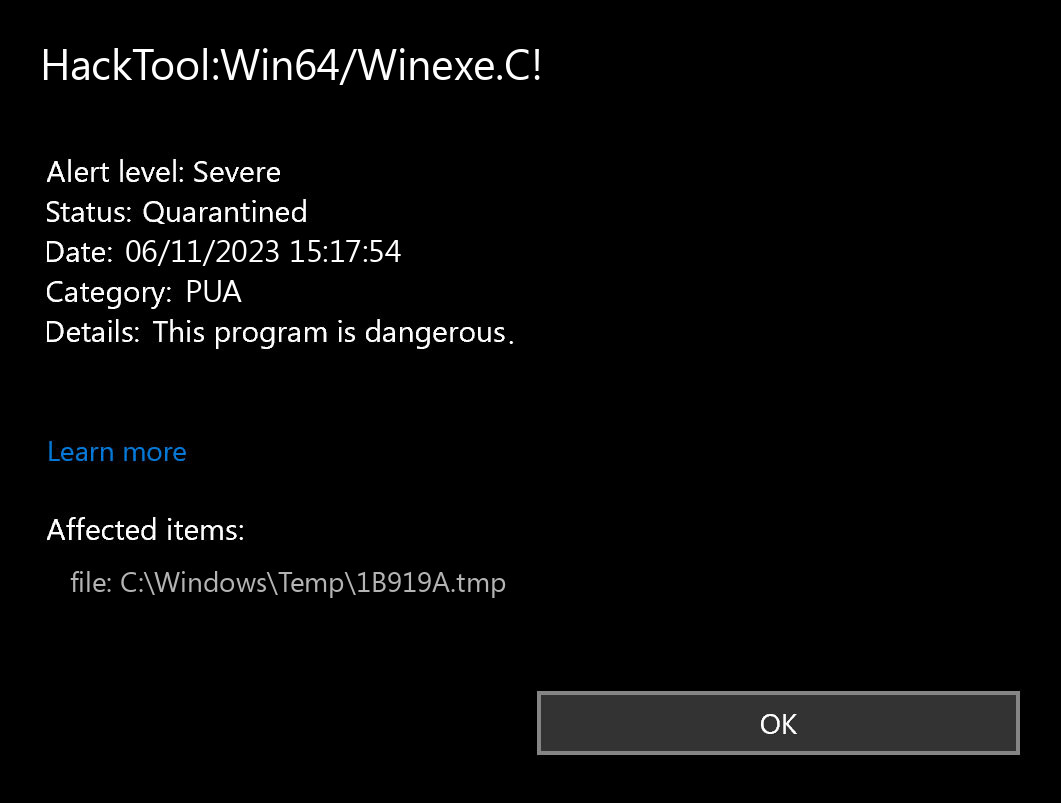
Microsoft Defender: “HackTool:Win64/Winexe.C”
HackTool:Win64/Winexe.C unwanted program is a typical example of PUA, which are quite common nowadays. Being free to use, it can give you “the extended features” for the additional money. Some instances of this program type can have no real functionality whatsoever – just the shell with the bright interface. You can see it advertised as a system optimization tool, driver updater or torrent downloadings tracker. This or another way it does not provide you any type of actual performance, exposing you to risk instead.
Unwanted Program Summary:
| Name | WinEXE PUA |
| Detection | HackTool:Win64/Winexe.C |
| Damage | WinEXE is at least useless, or can perform various malicious actions on your PC. |
| Fix Tool | See If Your System Has Been Affected by WinEXE exploit |
Is HackTool:Win64/Winexe.C dangerous?
I have actually mentioned that HackTool:Win64/Winexe.C PUA is not as harmless as it plays to be. The “legit and valuable” tool may suddenly uncover itself as a downloader trojan, spyware, backdoor, or coin miner malware. And you can never predict what to expect even from separate examples of WinEXE unwanted program. That still does not say that you need to panic – probably, this nasty thing has not succeeded to do bad things to your computer.
The exact harm to your system may be caused not only due to the malware injection. A significant share of questionable programs, like the WinEXE application is, is just badly programmed. Perhaps, their actions are fairly effective than useless if done on certain system setups, but not on each one. That’s how a basic system optimization tool can trigger mayhem with constant BSODs on your system. Any interruptions to the system registry are risky, and they are even more dangerous if done with such programs.


Leave a Comment