
Fenticoin.com should be treated as a high-risk cryptocurrency trading website. The domain is currently online and describes itself as a “trusted cryptocurrency trading platform” for spot trading, futures, and automated bots. That wording sounds reassuring, but it is not proof of legitimacy. Before sending money to any crypto platform, you need verifiable registration, company identity, withdrawal history, support transparency, and independent reputation.
Our verdict is simple: do not deposit funds into Fenticoin unless you can independently verify the operator and recoverability of your money. If you already deposited cryptocurrency and cannot withdraw, stop sending additional fees and start preserving evidence immediately.
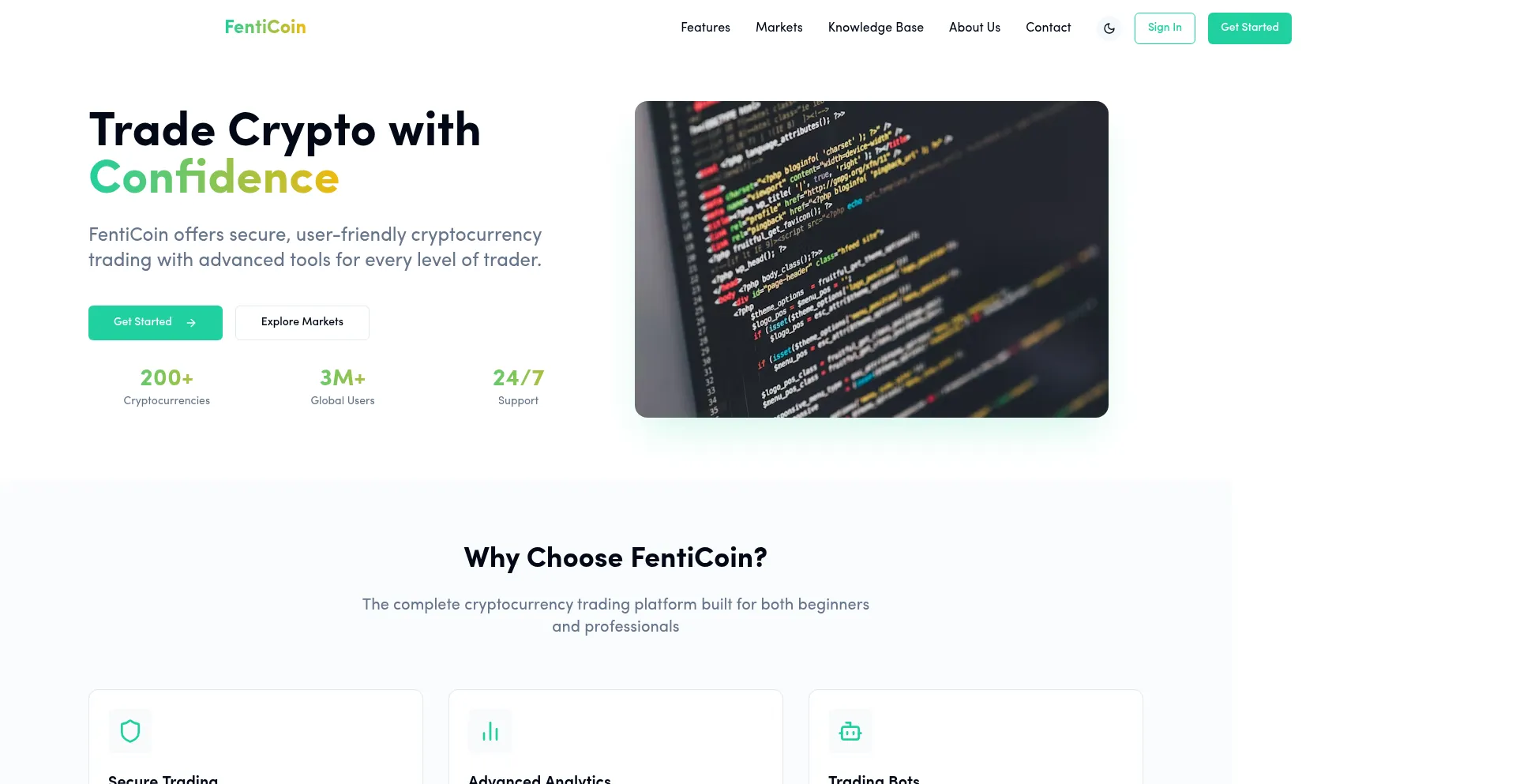
Fenticoin.com verdict
| Check | Finding | Why it matters |
|---|---|---|
| Current status | The site is online and presents itself as a crypto trading platform. | Being online does not prove that withdrawals are real or that the operator is regulated. |
| Main risk | Unverified crypto exchange / trading-bot claims. | Fraudulent platforms often show fake balances and block withdrawals later. |
| User intent | People search for “Fenticoin legit”, “Fenticoin app”, and “Fenticoin cryptocurrency legitimacy”. | Search behavior suggests users are already uncertain before or after depositing. |
| Recommendation | Avoid depositing. If you already paid, document everything and report quickly. | Crypto transactions are hard to reverse once funds leave your wallet. |
Why Fenticoin looks risky
The site uses broad trust language: secure platform, legitimate exchange, automated trading bots, and advanced trading features. Those claims are common in real crypto businesses, but they are also common in fake trading-platform scams. A real platform should make it easy to verify who operates it, where it is registered, what licenses apply, what fees exist, and how withdrawals work.
During our check, the public-facing homepage did not provide enough verifiable information to treat it like a known regulated exchange. The absence of clear, independently verifiable trust signals is especially important with crypto because once you send coins, a chargeback is usually not available.
Common fake crypto-platform pattern
Many crypto investment scams follow a similar sequence:
- You see an ad, social-media post, direct message, or referral link promoting a trading platform.
- The site shows a clean dashboard, trading charts, high returns, bots, bonuses, or VIP levels.
- You make a small deposit and may see fake profits or even a small early withdrawal.
- You are encouraged to deposit more to unlock higher returns.
- When you try to withdraw, the site demands taxes, insurance, verification fees, wallet activation fees, or another deposit.
- Support delays you until you either pay more or give up.
The CFTC and FBI both warn about fraudulent crypto trading websites that claim to trade digital assets while pressuring victims to transfer cryptocurrency to platforms they cannot independently verify.
Red flags to check on Fenticoin
- No clearly verifiable legal company behind the platform.
- No obvious regulator/license details that can be checked on an official registry.
- Marketing language about being trusted, secure, or legitimate without evidence.
- Trading-bot or high-return claims without risk disclosures.
- Pressure to deposit more before withdrawal.
- Requests for “tax”, “AML”, “unlock”, “verification”, or “insurance” payments before releasing funds.
- Support that only communicates through chat apps, social media, or generic email.
- Referral or invitation pressure from someone you met online.
If you have not deposited yet
Do not use the platform as a test with a small amount. Fake platforms often allow small actions at first to build confidence. Instead:
- Search for the legal company name, not only the domain name.
- Verify any claimed license on the regulator’s own website.
- Check whether the platform is listed by major app stores or only distributed through direct links.
- Look for independent withdrawal reports, not only promotional comments.
- Ask yourself why a stranger, influencer, or referral partner wants you to use this specific platform.
- Use a well-known exchange if your goal is simply to buy or trade cryptocurrency.
If you already deposited money
Time matters. Do not send additional cryptocurrency to “unlock” a withdrawal. Advance fees are a classic part of crypto investment scams.
- Stop depositing immediately, even if support promises that one more payment will release your balance.
- Save the website URL, account ID, chat logs, emails, wallet addresses, transaction hashes, screenshots, and names of anyone who referred you.
- Export exchange or wallet records showing where the funds were sent.
- Report the incident to your local law-enforcement cybercrime channel. In the US, the FBI asks crypto investment-fraud victims to report through IC3 with as much transaction information as possible.
- Report to the FTC or relevant consumer-protection agency if you are in the US.
- Warn your bank or exchange if you purchased crypto immediately before sending it to the platform.
- Ignore recovery agents who ask for upfront fees. The FBI and FTC both warn that recovery promises are often another scam.
What if the dashboard shows profit?
A displayed balance is not proof that real money exists. Fraudulent platforms can show arbitrary numbers in an account dashboard. The meaningful test is whether you can withdraw funds without paying new fees, sending more crypto, or giving more personal data.
If support says you must pay tax, verification, insurance, liquidity, or AML fees before withdrawal, treat that as a major red flag. Real taxes are not usually paid to a random trading platform through crypto transfers.
What about a Fenticoin app?
Search queries show that users look for a Fenticoin app or app download. Be very cautious with direct APK files, mobile configuration profiles, browser extensions, or downloads sent through chat. A fake trading app can steal credentials, replace wallet addresses, or push you into more deposits.
Only install finance apps from official app stores, and verify the developer name, reviews, permissions, and official website. If the site asks you to install an app outside the normal app-store flow, that is another risk signal.

Security check after using Fenticoin
If you only visited the website, malware infection is unlikely. Take additional steps if you downloaded an app, installed a browser extension, allowed notifications, or entered the same password you use elsewhere.
Official reporting and guidance
- FBI: Cryptocurrency Investment Fraud
- CFTC: Watch out for fraudulent digital asset trading websites
- FTC: Refund and recovery scams
FAQ
Is Fenticoin legit?
We could not verify enough public trust signals to recommend it. The site is online and presents itself as a trading platform, but that is not the same as being regulated, reputable, or safe for deposits.
Can I withdraw money from Fenticoin?
If the platform asks for more crypto before withdrawal, treat that as a red flag. Do not pay additional “tax”, “verification”, “insurance”, or “unlock” fees to release a displayed balance.
What should I do if I sent crypto?
Stop sending more, save transaction hashes and chats, report to IC3 or your local cybercrime authority, and notify the exchange or wallet service you used to send funds.
Can a recovery service get my crypto back?
Be very careful. Recovery services that demand upfront payment are often secondary scams. Report quickly and provide transaction details to official channels instead.
Is visiting Fenticoin.com enough to infect my device?
Usually no, if your browser is updated. The bigger device risk comes from installing apps, extensions, or downloaded files promoted by the site or by someone referring you to it.
Bottom line: Fenticoin.com is a high-risk crypto trading site from a buyer-safety perspective. Do not deposit unless you can independently verify the operator and withdrawal legitimacy. If you already deposited and cannot withdraw, stop paying extra fees and report with transaction evidence.

