
Dllhost.exe is the Windows COM Surrogate process. It hosts COM objects outside the application that requested them, which helps Windows Explorer, thumbnails, media previews, legacy components, and shell extensions work without crashing the main app. Because the process name is technical, many old cleanup pages overstate the malware angle.
What is dllhost.exe?
COM Surrogate acts as a container. Windows and third-party programs can load thumbnail handlers, codecs, shell extensions, and other COM components inside dllhost.exe. If the component crashes, it is less likely to take the entire application with it.
The legitimate executable is C:\Windows\System32\dllhost.exe, with a Microsoft Windows signature. Several instances can be normal when File Explorer is generating previews, Photos is indexing media, or software is using COM components in the background.
Is dllhost.exe a virus?
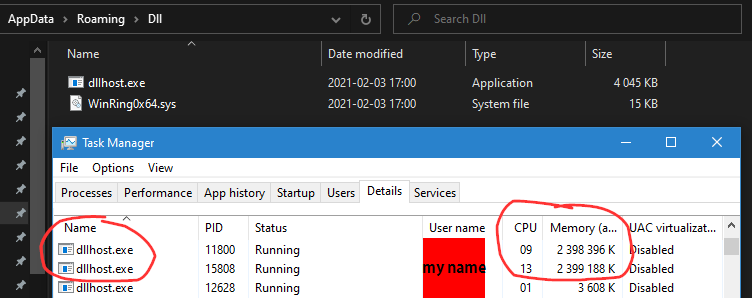
Dllhost.exe is not a virus by default. However, malicious COM objects or fake copies can abuse the name. The key is to check location, signature, command line, and the COM object being hosted.
A fake dllhost.exe in AppData, Temp, Downloads, or ProgramData is suspicious. A real dllhost.exe launched with strange parameters can also point to an unwanted COM registration or broken shell extension.
Why dllhost.exe can use CPU, GPU, memory, or disk
High CPU or memory usage by dllhost.exe often happens when Windows is processing media thumbnails or when a shell extension hangs.
- A folder contains many videos, images, PDFs, or corrupt media files being previewed.
- A codec pack or media extension is unstable.
- A third-party shell extension is crashing or looping.
- A COM object registered by unwanted software is loaded by the real dllhost.exe.
- A fake dllhost.exe copy is running from a non-Windows folder.
Signs that deserve investigation
Use these checks to separate ordinary COM activity from something that should be removed.
- The executable path is not C:\Windows\System32\dllhost.exe.
- Digital signature is missing or invalid.
- Usage spikes only when opening one folder with media previews.
- Command line references an unfamiliar COM object or suspicious path.
- The process returns after reboot together with an unknown startup entry.
How to check dllhost.exe safely
Dllhost.exe troubleshooting is most effective when you identify the hosted component rather than deleting the container.
- 1. Open file location
Confirm that the executable is the Microsoft-signed file in System32. - 2. Check what triggers it
Open and close File Explorer folders, media folders, or the app that starts the spike. - 3. Disable thumbnail previews for a test
If CPU drops when previews are disabled, a thumbnail handler or media file is likely involved. - 4. Review shell extensions
Use a shell extension manager or uninstall recent codec packs and preview tools. - 5. Check command line and COM registration
Process Explorer can show the command line and help reveal the hosted COM component. - 6. Scan suspicious files
If the executable path or COM registration points to a user-writable folder, scan and quarantine that component.
How to find the component behind COM Surrogate
The most useful clue is timing. If dllhost.exe spikes when you open a folder full of videos, images, archives, or PDFs, the cause is probably a preview handler or codec. If it spikes when a specific application opens or closes, that application may have registered a COM component that is failing.
For media-folder cases, switch File Explorer to a simple list view and disable thumbnails temporarily. If CPU usage drops, the Windows file is only hosting a thumbnail component. Update or remove recent codec packs, PDF preview extensions, archive tools, cloud-drive shell extensions, and media managers. These integrations are useful, but a single broken extension can make COM Surrogate look infected.
For persistent cases, inspect the command line with Process Explorer. Look for unusual CLSID references, paths into AppData, or a recently installed program. Record the CLSID or path before changing anything. This gives you a precise target instead of deleting dllhost.exe, which Windows will simply recreate because it is the host, not the root cause.
Repair path before removal
Do not delete the real dllhost.exe. Fix the codec, preview handler, shell extension, or COM registration that causes the problem.
If the spike happens in one folder, move suspicious media files to a temporary folder and reintroduce them in small groups. Corrupt thumbnails and broken media metadata often explain a loop that looks like malware at first glance.
Optional security check
Need a second opinion?
Optional recommendation. Do not remove a Windows component only because the name is dllhost.exe; confirm the path, signer, and behavior first.
FAQ
Why are there multiple dllhost.exe processes?
Windows can run multiple COM Surrogate containers for different components.
Can COM Surrogate be abused by malware?
Yes. Malware can register COM components or fake the filename, so path and command-line checks matter.
Should I end dllhost.exe?
You can end a stuck instance, but if the bad extension remains installed it may return.
Keep in mind that COM Surrogate is a container process. If you only terminate it, Windows may launch another instance as soon as Explorer or the same application requests the same component again. A lasting fix comes from repairing the extension, codec, preview handler, or unwanted COM registration behind it.
Conclusion
Dllhost.exe is a normal Windows host process. Investigate the hosted component, file path, and signature before deciding whether the case is malware or a broken preview/extension issue.



Leave a Comment