
CHXSmartScreen.exe is usually connected with Microsoft Defender SmartScreen, the Windows reputation system that checks apps, downloads, websites, and potentially unwanted software before users run them. The file name looks unusual, so many people search for it after seeing it in Task Manager, Event Viewer, or under a Runtime Broker / SmartScreen process group.
The short answer is: CHXSmartScreen.exe can be legitimate, but it should be verified by location and signature. The normal Windows copy is associated with the AppRep SmartScreen app package. A fake copy with the same name in a user folder, downloads folder, temporary folder, or startup entry should be treated as suspicious.
What is CHXSmartScreen.exe?
CHXSmartScreen.exe is a Windows executable used by the SmartScreen / App Reputation experience. Microsoft Defender SmartScreen is designed to warn about suspicious websites, phishing pages, malicious downloads, and applications with weak or unknown reputation. In Windows Security, the related controls live under App & browser control and Reputation-based protection.
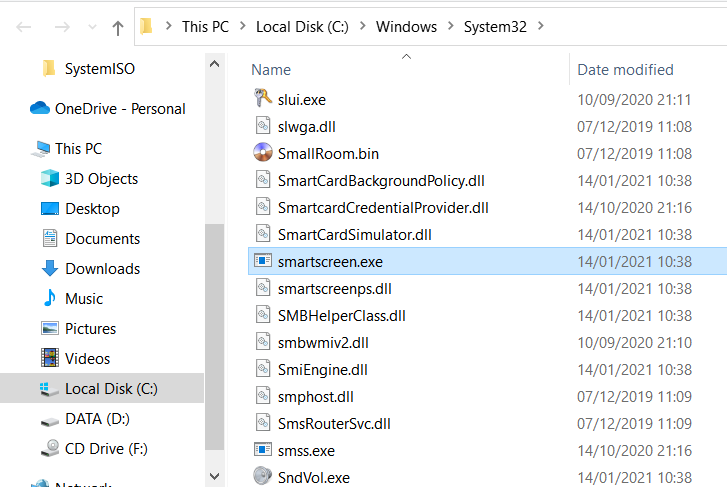
On normal Windows 10 and Windows 11 systems, the legitimate file is commonly found in a Windows app package path such as:
C:\Windows\SystemApps\Microsoft.Windows.AppRep.ChxApp_cw5n1h2txyewy\CHXSmartScreen.exeYou may also see copies in Windows servicing or component-store paths after updates. That does not automatically mean infection. The active process should still be Microsoft-signed and tied to Windows SmartScreen/AppRep behavior. If the path is in AppData, Temp, Downloads, a browser cache, or a random folder under ProgramData, the name alone should not be trusted.
Is CHXSmartScreen.exe a virus?
CHXSmartScreen.exe is not a virus when it is the Microsoft-signed Windows SmartScreen component in the expected SystemApps/AppRep location. It is part of the mechanism Windows uses to evaluate the reputation of apps and files downloaded from the web.
However, malware can copy almost any Windows-looking filename. A fake CHXSmartScreen.exe can exist outside the Windows folder, especially after a cracked installer, fake browser update, bundle installer, or suspicious download. The safe approach is not “delete it” or “ignore it”; the safe approach is to verify the file.
Normal vs suspicious signs
| Looks normal | Looks suspicious |
|---|---|
| Located in a Windows SystemApps/AppRep package folder | Runs from AppData, Temp, Downloads, Startup, or a random folder |
| Signed by Microsoft Windows / Microsoft Corporation | Unsigned, invalid signature, or unknown publisher |
| Appears while checking a download, app launch, or SmartScreen prompt | Runs constantly at login with no download or security prompt |
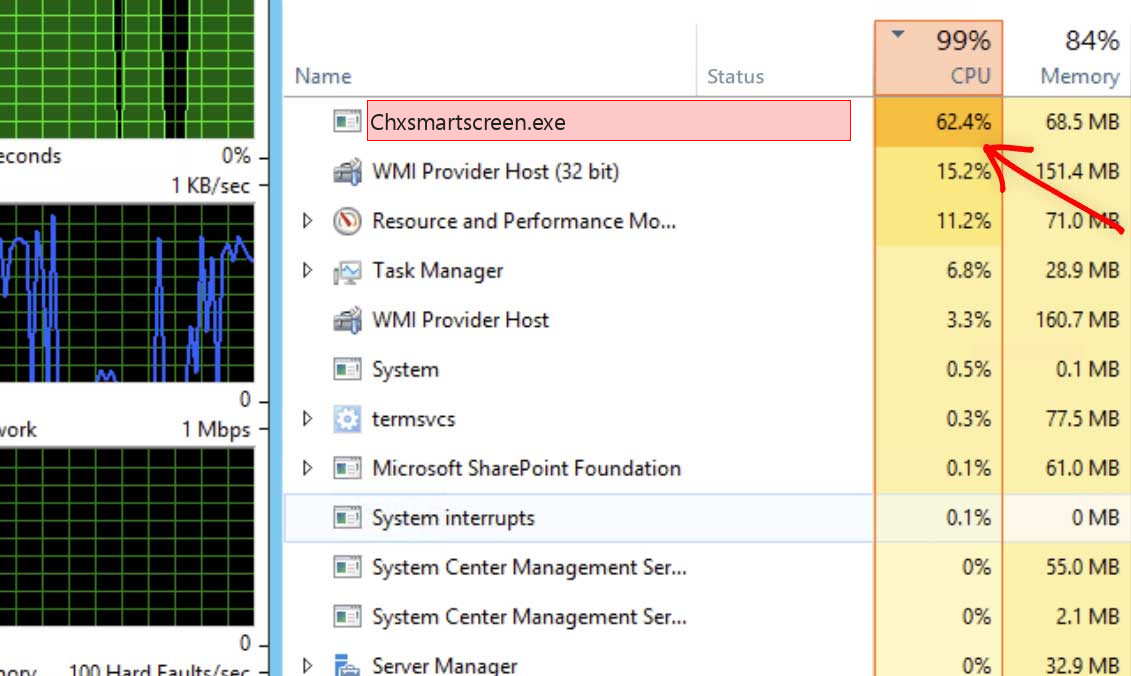
| Low or short-lived CPU usage | Constant CPU/GPU/network activity while the system is idle |
| Parent process is related to Windows SmartScreen, Runtime Broker, or a Windows app package | Parent process is a random executable in a user-writable folder |
Why CHXSmartScreen.exe can appear suspended
Some users notice CHXSmartScreen.exe in Task Manager as “suspended.” That is not automatically a problem. Windows app-package processes can be suspended when they are not actively doing work. If SmartScreen is waiting, idle, or the related UI is closed, the process may remain in a suspended state until Windows needs it again.
A suspended state becomes interesting only when it is paired with real symptoms: SmartScreen cannot be reached for every download, Windows Security settings do not open, Event Viewer shows repeated CHXSmartScreen.exe crashes, or the process is running from the wrong location. In those cases, troubleshoot Windows Security and the file path rather than deleting the executable.
Why CHXSmartScreen.exe may use CPU or network
SmartScreen performs reputation checks. That means it can briefly use CPU, memory, or network access when Windows evaluates a download, installer, website, or app reputation. This is expected behavior. Microsoft documents SmartScreen as a reputation-based protection layer that checks downloaded apps, file signatures, websites, and known malicious sources.
High usage is more suspicious when it continues while the computer is idle, no new downloads are being opened, and no Windows Security or Edge SmartScreen prompt is active. Even then, the first question is still whether the file is the real Microsoft component.
How to verify CHXSmartScreen.exe manually
- Open Task Manager.
Find CHXSmartScreen.exe, right-click it, and choose Open file location. If the option is unavailable, use Process Explorer or check Event Viewer details for the path. - Check the folder.
A normal copy should be under Windows, commonly inC:\Windows\SystemApps\Microsoft.Windows.AppRep.ChxApp_cw5n1h2txyewyor a Windows servicing/component location. A copy in a user-writable folder is suspicious. - Verify the digital signature.
Open Properties → Digital Signatures. The signer should be Microsoft Windows or Microsoft Corporation. If there is no signature, do not trust the file. - Check the parent process.
Use Process Explorer if possible. A SmartScreen/AppRep/Runtime Broker relationship is plausible. A parent process from a random download folder is not. - Review recent downloads and installs.
If the file appeared after a crack, “driver updater,” browser extension bundle, or fake update prompt, scan the system and remove the parent application. - Check Windows Security settings.
Open Windows Security → App & browser control → Reputation-based protection. If these pages fail to load or crash repeatedly, repair Windows Security components instead of deleting CHXSmartScreen.exe.
How to fix CHXSmartScreen.exe errors or crashes
If Event Viewer shows CHXSmartScreen.exe crashes but the file is Microsoft-signed and in the expected location, treat it as a Windows component issue. Start with Windows Update and Microsoft Defender updates. SmartScreen behavior is tied to Windows Security components, reputation services, and policy settings, so outdated or damaged system components can cause errors.
Next, run system repair commands from an elevated Command Prompt:
DISM /Online /Cleanup-Image /RestoreHealth
sfc /scannow
If SmartScreen cannot be reached for newly downloaded files, also check whether a firewall, DNS filter, proxy, VPN, or enterprise policy is blocking Microsoft reputation services. On managed devices, administrators may configure SmartScreen behavior through policy, so the user may not be able to change all settings locally.
Should you disable SmartScreen?
Disabling SmartScreen is usually the wrong fix. SmartScreen is meant to warn about phishing pages, malicious sites, suspicious downloads, and apps with weak reputation. Turning it off may hide the symptom, but it also removes a useful safety layer.
A better approach is to find out why the process is visible or noisy. If you are dealing with a legitimate app that receives a SmartScreen warning, verify the publisher and download source. If you are a developer, sign releases consistently and understand that a newly built file can still show a warning until reputation builds. If you are dealing with an unknown file in a user folder, scan and quarantine it instead of changing SmartScreen settings.
When a scan is worth running
Run a full scan when the file is unsigned, outside the Windows directory, launched by a startup entry, or tied to suspicious downloads. Also scan if CHXSmartScreen.exe returns after deletion from a user folder, because that means another launcher is recreating it.
Do not scan only the visible file. Check the parent folder, scheduled tasks, startup entries, browser downloads, and recently installed applications. Fake Windows filenames often return because the loader remains installed.
Optional security check
Need a second opinion?
Optional recommendation. Do not remove a Windows SmartScreen component only because Task Manager shows CHXSmartScreen.exe; first confirm the path, signer, and parent process.
FAQ
Is CHXSmartScreen.exe a Microsoft file?
It can be. A legitimate copy is associated with Microsoft Defender SmartScreen / Windows App Reputation and should be located under Windows system/app package paths with a Microsoft signature.
Why is CHXSmartScreen.exe in Task Manager?
Windows may start it when SmartScreen evaluates a download, application launch, website, or reputation-based protection event. It may also appear under app-package or Runtime Broker related process groups.
Is a suspended CHXSmartScreen.exe process bad?
No. A suspended state can be normal for Windows app-package components. Investigate only if there are crashes, failed SmartScreen checks, wrong file location, or suspicious startup behavior.
Can I delete CHXSmartScreen.exe?
Do not delete the Microsoft-signed Windows copy. If you find a fake copy in a user folder or temporary location, remove the startup mechanism and quarantine the suspicious file.
Why does SmartScreen warn about a signed file?
SmartScreen uses publisher reputation and file-hash reputation. A newly released file can still show a warning until enough clean reputation has accumulated.
Conclusion
CHXSmartScreen.exe is usually a Windows SmartScreen/App Reputation component, not an automatic sign of infection. The article should be judged by evidence: path, Microsoft signature, parent process, timing, and startup behavior. If it is the Microsoft-signed SystemApps/AppRep copy, repair SmartScreen or Windows Security if errors occur. If it is an unsigned copy in a user-writable folder, treat it as suspicious and scan the system.



Leave a Comment