
You ever land on a crypto site and get that weird déjà vu feeling, like you’ve seen it before but can’t place where? That’s Cestwin. Another fraudulent crypto betting platform that surfaced recently. One of hundreds such scams floating around right now. You might find it through viral social media content featuring fabricated advertisements. They guarantee enormous promotional credits with no actual obligations, and once you think you’ve scored big, they hit you with the classic twist: to withdraw, you need to “unlock” with a deposit. That’s where the trap snaps shut. It’s not about gambling, it’s really about making you forget that all they’ve given you till now is promises, while you’re going to send them cold hard cash. Cestwin is just one of many, and that’s exactly why you need to know how they all work.
| Target Site | Cestwin.com |
| Web Host | AS13335 Cloudflare, Inc. Server location: United States, San Francisco |
| Network Address | 172.67.220.72 |
| Risk Level | VERIFIED SCAM |
| Primary Risk | Bogus Digital Casino Website |
| Attack Strategy | Fake crypto gaming rewards |
| Discovery Date | Ongoing reports since 2026-05-10 |
| Impact Scale | Growing number of victims documented |
| Current Status | ACTIVE – Presently targeting gamblers |
| Total Damage | Continuous economic damage to users |
What is the Cestwin Scam?
Cestwin.com is a complex casino fraud that targets unsuspecting crypto gamblers. It features false games activities and works purely to steal crypto. While it counts on fake payouts and false payout processes.
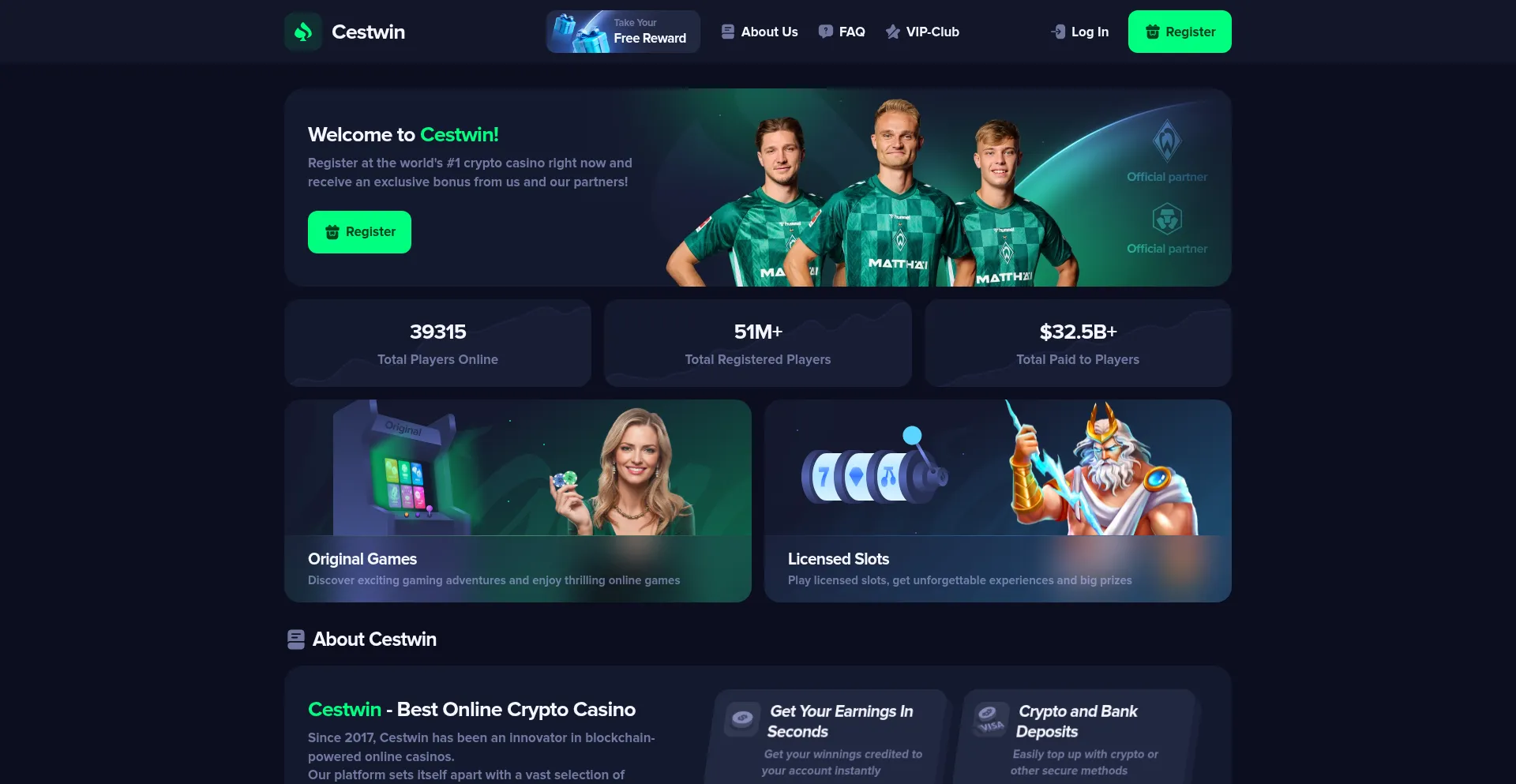
Cestwin Casino Scam
The Cestwin scam starts with enticing advertisements across social media platforms. Users are led to a professionally designed website boasting crypto-themed games like slots, Plinko, and Crash. Once users sign up, they see false promotional credits intended to create the illusion of guaranteed play. These credits are programmed to create artificial winning streaks.
Once emotionally hooked, users attempt to withdraw winnings – only to face deceptive withdrawal procedures. Cestwin asks for detailed personal data and identity papers. These are harvested mainly for personal data theft purposes and traded on dark web platforms.
The next phase requires real cryptocurrency deposits to activate withdrawals. Each payment is followed with new requirements: penalty obligations, VIP upgrades, platform issues, or security validation. Victims, now emotionally and financially invested, may continue paying in hopes of reclaiming their winnings.
Ultimately, Cestwin disappears with all deposited funds. The site may then relaunch under a new domain with identical features. This allows the scam to continue indefinitely under new identities.
What to Do if You’ve been scammed by Cestwin?
If you’ve fallen for the Cestwin casino, your first priority is to secure your digital assets and accounts. Your top priority is protecting all compromised credentials – cryptocurrency addresses, platform logins, email accounts, and financial accounts. Do not attempt to recover funds by responding to any follow-up messages from Cestwin or similar sites. The money is probably lost and seeking it may open you to further fraud. Focus on damage control: remove exposure, secure credentials, and limit personal data leaks. Avoid desperate choices; fraudsters benefit on panic. Once you’re entirely secure, you can carefully consider legitimate reporting options, but only after establishing a stable and protected digital environment.
Damage Control:
After falling victim to Cestwin, the first move is to lock down all your accounts. Whether or not your wallet was directly connected to the scam, it’s essential to move remaining assets to new, uncompromised wallets. Be cautious with any tools or services you used during the incident. Change all relevant passwords, especially for email and exchanges. Do not send more crypto in hopes of recovery. Accept the loss for now and avoid emotional decisions. Many victims get scammed a second time by chasing refunds. The best course is damage limitation, not re-engagement. You can explore recovery possibilities later – safely.
Tips for Damage Control :
- Immediately transfer any cryptocurrency from the affected wallet to a fresh wallet address you control completely.
- Modify every login credentials, particularly those associated with crypto services, messaging services, or services you connected on Cestwin.
- Turn on two-factor authentication (dual authentication) on each critical profiles to stop fraudulent entry.
- Keep screenshots, transaction details, and any communications from the fraudsters for future investigation.
- Avoid clicking further links from scam messages or downloading anything.
- Preserve everything: screenshots of the Cestwin website, crypto addresses, and transaction hashes.
- Place a credit freeze, if available in your country, to prevent new credit lines being opened using your stolen identity.
If you’ve given Cestwin sensitive information, your danger of identity theft is significant. Stay vigilant and monitor accounts for suspicious activity. Avoid think it’s done because messages has ceased – these scams often come back with different methods or identities. Stay vigilant, monitor accounts, and be skeptical of any “recovery” services offering help.
What Are the Usual Cestwin Red Flags?
Crypto casino scams like Cestwin display glaring warning signs that victims often overlook. These are created to fool gamblers with promises of simple digital earnings. Recognizing red flags early helps avoid financial loss. Once emotions take control, logical judgment collapses – and that’s exactly when Cestwin attacks.
The site seems authentic but doesn’t have proper gaming authorization or legal details. These absences often are missed because users are distracted by flashy gaming and fake chat interaction.
Cestwin offers massive signup bonuses – sometimes up to $10,000 – for no real effort. No legitimate gambling platform offers such perks without strict terms, which are conspicuously absent here.
Players “earn” unrealistic amounts right after registration. This is completely false and designed to create false trust.
The website adds hidden fees and verification steps when victims try to withdraw. Each payment leads to additional demands and requirements.
The platform uses fake user testimonials and bot-generated social activity. Real testimonials are impossible to verify, and no third-party reviews exist.
Tips to Stay Protected From Casino Crypto Scams Like Cestwin
Prevention is always better than attempting recovery from crypto casino scams. With basic awareness and attention to detail, most users can steer clear of these traps entirely. Crypto-based gambling scams depend on misinformation and impulse. Following these guidelines will protect you from similar fraudulent operations.
- Check domain registration age using WHOIS tools. Sites like Cestwin are typically under a year old and frequently switch names.
- Verify gambling licenses and regulatory compliance before depositing any funds.
- Be skeptical of oversized bonuses. Legitimate platforms do not hand out $5,000–$10,000 in crypto without significant restrictions.
- Don’t deposit crypto to enable accounts or unlock payouts from gambling services.
- Disregard influencer promotions unless they are verified. Cestwin utilizes false images, synthetic media, or mimicry to seem trustworthy.
- Test user support. Frauds like Cestwin depend on bots or generic responses. Legitimate gaming sites give active, quick assistance with real people.
- Do not provide identity documents unless you’ve separately validated the platform’s legitimacy. Cestwin weaponizes KYC to perform personal data theft.
- Study platforms completely using third-party sources and user testimonials.
These practices will protect you from the majority of crypto casino scams. Keeping watchful and educated is your strongest protection against these schemes. Cestwin only succeeds when users ignore the warning signs.

