
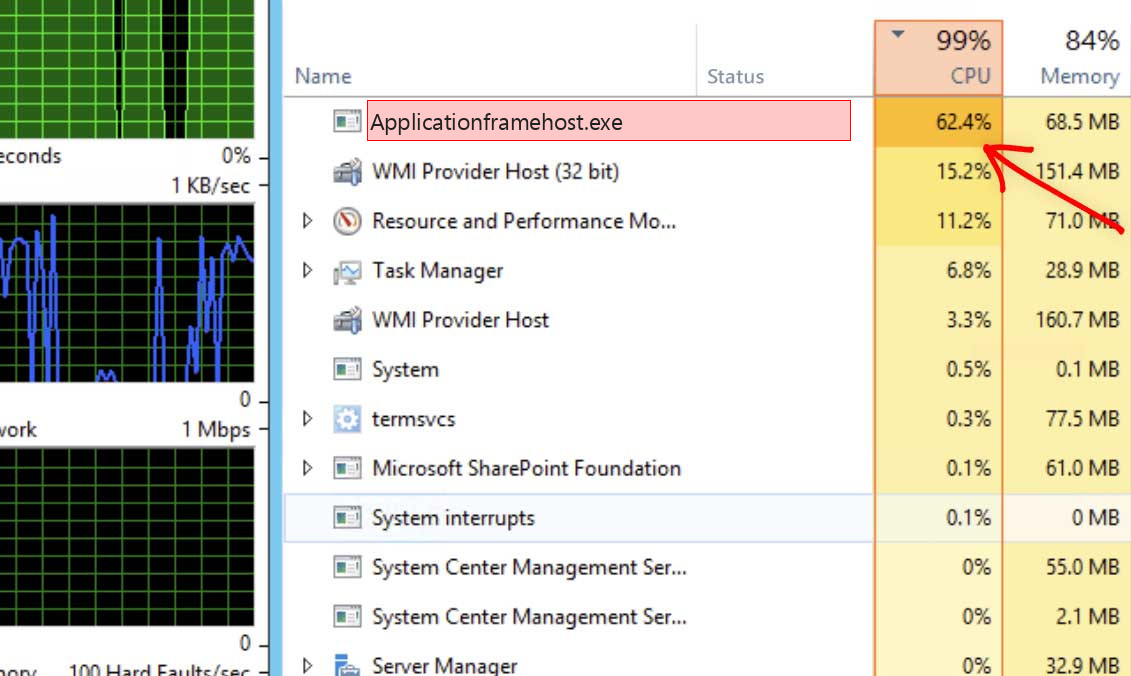
ApplicationFrameHost.exe is a Windows process used for the frame and window handling of modern Microsoft Store and Universal Windows Platform apps. It can appear when Settings, Photos, Calculator, Mail, Xbox, Microsoft Store, or other packaged apps are open.
What is ApplicationFrameHost.exe?
The process helps present modern app windows inside the desktop shell. It provides a frame around packaged apps and participates in window management for apps that are not classic Win32 desktop programs.
A legitimate ApplicationFrameHost.exe is a Microsoft Windows component, usually found in the Windows System32 directory and signed by Microsoft. It may start when a Store app opens and stop after related apps close.
Is ApplicationFrameHost.exe a virus?
ApplicationFrameHost.exe is not automatically malware. It becomes suspicious when the file is unsigned, runs from a non-Windows folder, or stays active because an unknown program launches it repeatedly.
A fake copy in AppData, Temp, Downloads, or ProgramData should be scanned. Modern app problems are common, but wrong path plus persistence is a real warning sign.
Why ApplicationFrameHost.exe can use CPU, GPU, memory, or disk
High CPU or memory usage is usually tied to a Store app, graphics acceleration, corrupted app cache, or a shell issue after a Windows update.
- A modern Windows app is stuck loading content or thumbnails.
- Photos, Store, Xbox, or Settings is open in the background.
- A packaged app cache or user profile component is corrupted.
- Graphics acceleration or display driver behavior triggers repeated redraws.
- An imitation executable is running from a user-writable folder.
Signs that deserve investigation
Use app context and authenticity checks together. A Store app bug and a fake process need different fixes.
- Open file location points outside Windows system folders.
- The digital signature is missing or not Microsoft.
- High CPU begins when a specific Store app opens.
- The issue follows one Windows user profile but not another.
- Unknown scheduled tasks or startup entries reference the filename.
How to check ApplicationFrameHost.exe safely
Start by closing and repairing modern apps, then verify the executable if behavior remains unusual.
- 1. Close Store apps
Close Settings, Photos, Store, Xbox, Mail, and other modern apps, then check whether the process exits. - 2. Verify file location
Open file location and confirm the Windows system path and Microsoft signature. - 3. Repair the related app
Use Settings > Apps to repair or reset the app that triggers the spike. - 4. Update Windows and Store apps
Install Windows updates and Microsoft Store app updates before deeper cleanup. - 5. Test another user profile
If the issue is profile-specific, app cache or profile data is likely involved. - 6. Scan suspicious copies
If the executable is outside the Windows path, scan the file and remove its launcher.
When a modern Windows app is the real trigger
ApplicationFrameHost.exe often looks like the offender because Task Manager groups modern app frame work under that host. The real trigger may be Photos loading a large library, Microsoft Store updating apps, Xbox components syncing, Settings hanging on a device page, or another packaged app repeatedly refreshing content.
Test by closing all Store apps, then open them one by one. If the spike returns with Photos, reset Photos or clear its media indexing issue. If it returns with Microsoft Store, update Store components and app packages. If it returns with Settings, check whether a device, account, or Windows Update page is stuck loading.
Also consider user profile damage. Modern app packages keep per-user state, so a process can behave badly in one profile and normally in another. A quick test with a temporary local user account helps decide whether to repair system files or focus on the current profile’s app cache and package registrations.
Repair path before removal
Do not delete the legitimate host process. Repair or reset the app that triggers it, update Windows components, and check graphics drivers if redraws are involved.
If the process stays busy after every reboot with no modern apps open, compare behavior in a clean boot. Re-enable Store apps, overlays, and shell tools one at a time to identify the trigger.
Optional security check
Need a second opinion?
Optional recommendation. Do not remove a Windows component only because the name is ApplicationFrameHost.exe; confirm the path, signer, and behavior first.
FAQ
Why does ApplicationFrameHost.exe appear when I open Settings?
Settings is a modern Windows app, so the frame host may be used to present it.
Can I end it?
Yes, but it may close or disrupt modern app windows. If the app is broken, the process can return.
Is it safe in System32?
A Microsoft-signed copy in a Windows system folder is expected; a copy in a user folder is not.
If you use many Microsoft Store apps, avoid resetting all of them at once. Reset the app that matches the timing of the spike, then reboot and retest. This keeps the repair focused and avoids losing app preferences unnecessarily.
For persistent cases, check Reliability Monitor as well. If a packaged app is crashing repeatedly, it may leave a timeline of failures that points to the exact app behind the host process.
Conclusion
ApplicationFrameHost.exe is normally a Windows app-frame process. Troubleshoot the related modern app first and investigate malware only when path, signature, or startup behavior looks wrong.



Leave a Comment