
Amdfendrsr.exe is normally associated with AMD Crash Defender Service, a component installed with AMD Radeon / AMD Software driver packages. Users usually notice it in Task Manager, Services, Event Viewer, Reliability Monitor, or after a graphics driver crash. The name can look suspicious, but on systems with AMD graphics or AMD driver software it is often legitimate.
The useful question is not “is every Amdfendrsr.exe a virus?” The useful question is whether the file on your computer is the AMD-signed driver component in the expected location, or a fake copy using the same name from a user-writable folder.
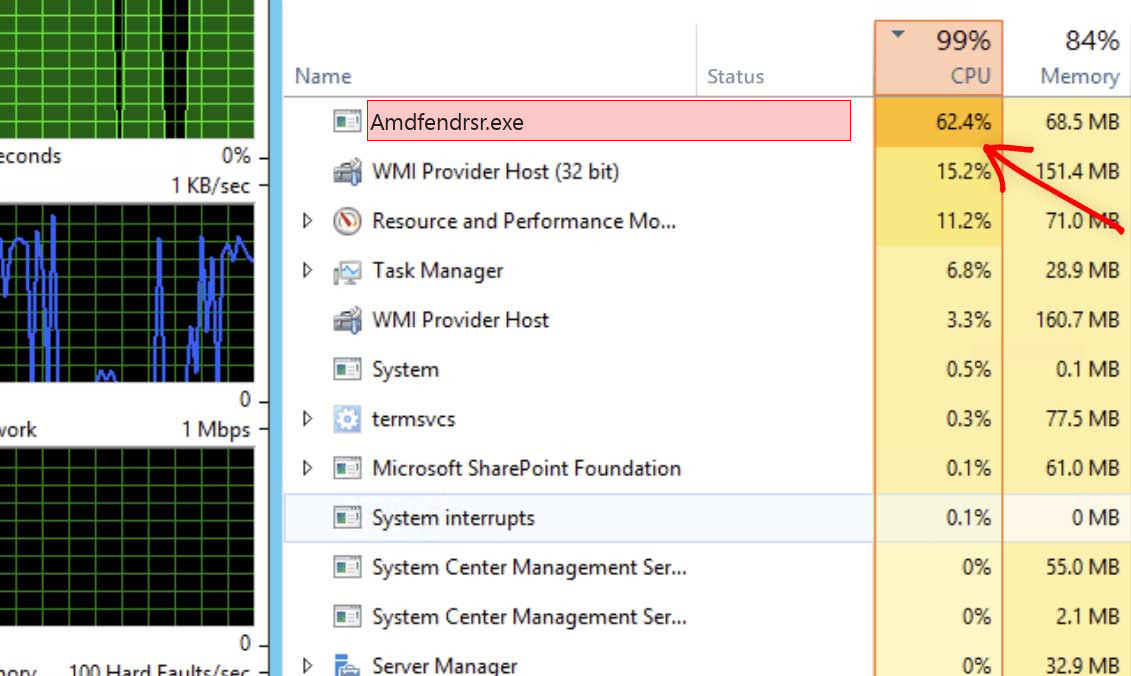
What is Amdfendrsr.exe?
Amdfendrsr.exe is commonly reported as the executable behind AMD Crash Defender Service. It belongs to AMD graphics driver/software components and is intended to participate in crash handling, driver stability, or recovery behavior around AMD graphics software. It is not a Windows core process, but it can be a normal part of a PC that uses AMD Radeon graphics or AMD Software: Adrenalin Edition.
Legitimate copies are often found in AMD/Windows driver locations such as:
C:\Windows\System32\amdfendrsr.exe
C:\Windows\System32\DriverStore\FileRepository\amdfendr.inf_amd64_...
Exact folders can vary by AMD driver version and Windows installation. A valid file should be digitally signed by AMD / Advanced Micro Devices or a trusted Windows hardware publisher. If the executable is in AppData, Temp, Downloads, a browser cache, or a random ProgramData folder, treat it as suspicious until proven otherwise.
Is Amdfendrsr.exe a virus?
Amdfendrsr.exe is not a virus when it is the legitimate AMD Crash Defender Service installed by AMD drivers. It may start automatically with Windows, and it may appear in Services even if you do not open AMD Software manually.
However, the filename can be abused. Malware often imitates vendor or driver names because they look technical and users hesitate to touch them. A fake Amdfendrsr.exe may appear after a cracked game, fake driver updater, GPU “optimizer,” bundle installer, or suspicious download. The filename alone is not enough evidence either way.
Normal vs suspicious signs
| Looks normal | Looks suspicious |
|---|---|
| System has AMD GPU/APU or AMD Radeon software installed | No AMD hardware/software is present, but the process still runs |
| Located in System32 or DriverStore AMD driver folders | Runs from AppData, Temp, Downloads, Startup, or a random folder |
| Signed by AMD / Advanced Micro Devices or trusted Windows hardware publisher | Unsigned, unknown publisher, invalid signature, or recently created file |
| Appears together with AMD Software, driver events, or crash recovery | Starts through an unknown scheduled task or Run entry |
| Low idle resource use, with activity around graphics events | Constant high CPU/GPU/network activity while the system is idle |
Why Amdfendrsr.exe can show high CPU or errors
High CPU from Amdfendrsr.exe is not common during normal idle use, but it can happen when the AMD driver stack is unhealthy. The process may become visible around driver recovery, black-screen events, Radeon Software crashes, sleep/wake problems, overclock/undervolt instability, or repeated graphics reset attempts.
Users also report Amdfendrsr.exe in Event Viewer or Reliability Monitor messages such as AMD Crash Defender Service not starting, stopping unexpectedly, or being involved around LiveKernelEvent / display driver recovery entries. That does not automatically mean the service caused the crash. It may be the component that noticed or handled a graphics driver problem.
How to check Amdfendrsr.exe manually
- Open file location.
In Task Manager, right-click Amdfendrsr.exe and choose Open file location. If you are checking it from Services, open the service properties and inspect the path to executable. - Check the path.
Legitimate AMD driver copies commonly live inC:\Windows\System32orC:\Windows\System32\DriverStore\FileRepository\amdfendr.inf_amd64_.... A path under a user profile is a warning sign. - Verify the signature.
Open Properties → Digital Signatures. Look for AMD / Advanced Micro Devices or a trusted Windows hardware publisher. No signature is a strong reason to scan. - Confirm AMD software is installed.
Check Apps & Features for AMD Software, AMD chipset software, or Radeon driver packages. If the machine has no AMD hardware, be more skeptical. - Check Event Viewer and Reliability Monitor.
Look for AMD driver crashes, LiveKernelEvent entries, display driver resets, or repeated service start failures near the same time. - Review startup entries.
Use Task Manager Startup, Task Scheduler, Services, and Autoruns-style tools to confirm the service is coming from AMD driver registration, not a random launcher.
How to fix AMD Crash Defender Service problems
If the file is legitimate and the issue is high CPU, service errors, Radeon Software crash loops, or black-screen recovery events, treat it as an AMD driver stack problem first.
- Update AMD Software.
Install the current recommended AMD driver for your GPU/APU from AMD or your PC manufacturer. Avoid mixing OEM and generic drivers unless you know why. - Reboot after driver changes.
AMD driver services may not stabilize until after a full restart, especially after Windows Update or GPU driver replacement. - Reset tuning settings.
Return overclock, undervolt, Radeon tuning, AFMF/RSR features, and third-party GPU tools to default while testing crashes. - Check sleep/wake behavior.
If crashes happen after hibernation or wake, test with Fast Startup disabled and install chipset/BIOS updates from the device vendor. - Clean reinstall AMD graphics drivers.
If normal reinstall does not help, AMD provides AMD Cleanup Utility to remove previously installed AMD graphics/audio drivers and prepare for a fresh driver install. - Use Safe Mode cleanup carefully.
AMD notes that the cleanup utility is recommended in Windows Safe Mode for best results. Create a restore point or have rollback options before major driver cleanup.
Should you disable Amdfendrsr.exe?
Disabling AMD Crash Defender Service is not the first fix. Some users disable it while troubleshooting, but that can hide a symptom rather than solve the driver instability underneath. If the system is crashing, freezing, or showing black screens, focus on driver version, chipset/BIOS updates, unstable tuning, and hardware/thermal conditions first.
If you temporarily disable the service for testing, write down the original startup type and re-enable it after the test. Do not leave a legitimate driver service disabled permanently unless you understand the tradeoff and have confirmed it is not needed on that specific system.
When it may really be malware
Run a full security check if the file is outside AMD/Windows driver locations, unsigned, launched by a strange scheduled task, or present on a machine without AMD hardware/software. Also scan if it appeared after installing a crack, “driver booster,” mining tool, game mod, or unknown GPU utility.
Do not scan only the visible executable. Check the parent folder, startup entry, scheduled task, downloaded installer, and recently installed programs. Fake driver-named files often come back after reboot because a separate launcher restores them.
Optional security check
Need a second opinion?
Optional recommendation. Do not remove the legitimate AMD Crash Defender Service only because it appears in Task Manager or Services.
FAQ
Is Amdfendrsr.exe part of AMD?
It commonly belongs to AMD Crash Defender Service, installed with AMD graphics/driver software. Verify this by checking the path and digital signature.
Where should Amdfendrsr.exe be located?
Legitimate copies are commonly found in Windows System32 or DriverStore AMD driver folders. A copy in AppData, Temp, Downloads, or a random folder should be investigated.
Can Amdfendrsr.exe cause crashes?
It is often seen around AMD driver crash/recovery events, but it may be reporting or handling the problem rather than causing it. Driver version, tuning settings, BIOS/chipset state, and GPU stability should also be checked.
Can I remove AMD Crash Defender Service?
Do not remove the legitimate AMD component as a first step. Update or reinstall AMD drivers first. Remove only a confirmed fake copy or a suspicious launcher outside AMD/Windows driver paths.
What is the best first check?
Open file location and verify the digital signature. Those two checks quickly separate the legitimate AMD driver component from a suspicious imitation.
Conclusion
Amdfendrsr.exe is usually AMD Crash Defender Service, not an automatic virus. A safe copy should be tied to AMD driver software, located in System32 or DriverStore AMD paths, and signed by AMD or a trusted Windows hardware publisher. If the file is legitimate, troubleshoot AMD drivers and stability. If it is unsigned or running from a user-writable folder, treat it as suspicious and scan the system.



Leave a Comment