
2023_TROJAN virus, password_SPY, AdSwitcher detected

The push notification “2023_TROJAN virus, password_SPY, AdSwitcher detected” is an alert that tricks users by displaying fake alerts claiming that their device is under attack or infected, with the intention of enticing them to click on it.

What is the “2023_TROJAN virus, password_SPY, AdSwitcher detected” pop-up?

When the “2023_TROJAN virus, password_SPY, AdSwitcher detected” pop-up ad appears in your browser, it displays the following message:

TROJAN_2023 and other viruses detected (5).
Scan results: 2023_TROJAN virus, password_SPY, AdSwitcher detected
– TROJAN found on this PC will most likely copy and delete all data from hard drives.
– Spyware will attempt to collect logins, passwords and banking details.
– Adware usually replaces search results with false and scammy websites.
It is highly recommended to use an antivirus immediately!
Proceed
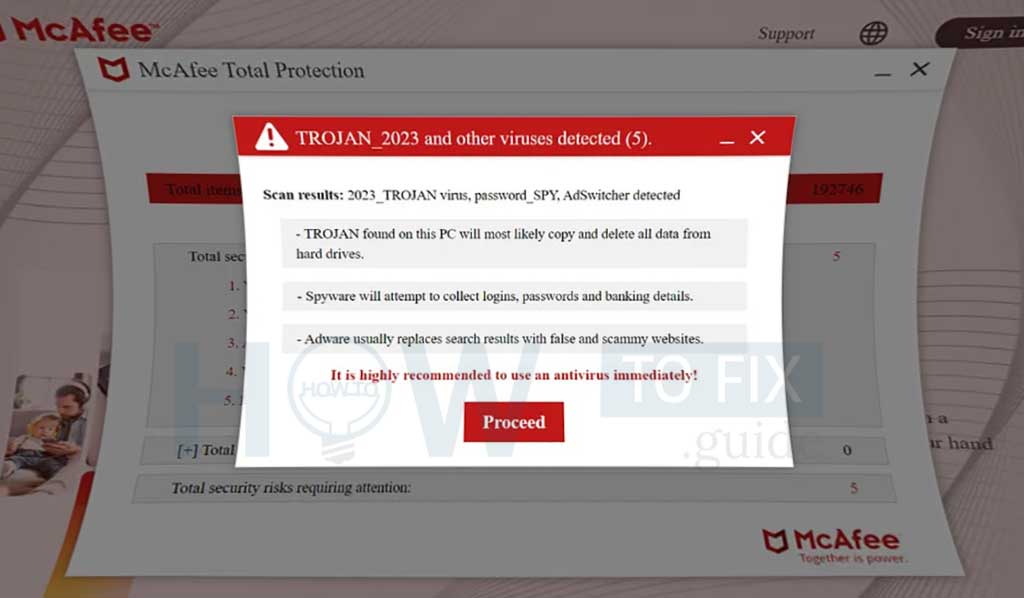
2023_TROJAN virus, password_SPY, AdSwitcher detected scam

“2023_TROJAN virus, password_SPY, AdSwitcher detected” Scam Pop-up

Undoubtedly, the “2023_TROJAN virus, password_SPY, AdSwitcher detected” pop-up is a scam, and all the information it provides is false. If you encounter the “2023_TROJAN virus, password_SPY, AdSwitcher detected” ads and are redirected, we strongly advise closing the page and refraining from entering any personal information.

Why am I seeing the “2023_TROJAN virus, password_SPY, AdSwitcher detected” pop-up ads?

The reason you are encountering the “2023_TROJAN virus, password_SPY, AdSwitcher detected” pop-up ads is that you have granted permission to a malicious website to send push notifications to your browser.

To perform a free check on your device for adware, browser hijackers, or other malicious programs and remove them, please refer to the guide below.


How to remove the 2023_TROJAN from my PC?

Frequently Asked Questions (FAQ)

What is the “2023_TROJAN virus, password_SPY, AdSwitcher detected” pop-up?
The “2023_TROJAN virus, password_SPY, AdSwitcher detected” pop-up is a deceptive notification that falsely claims your device is under attack or infected with viruses. It is designed to trick users into clicking on it.
Is the “2023_TROJAN virus” pop-up genuine?
No, it is not genuine. The pop-up is a scam, and any information it presents is false. It is important to be aware that it is a malicious attempt to deceive and potentially harm users.
How does the “2023_TROJAN virus” pop-up work?
The pop-up typically appears when visiting certain websites or clicking on suspicious links. It masquerades as a legitimate alert, often claiming to be from reputable antivirus software, such as McAfee. Its purpose is to create a sense of urgency and fear in users, leading them to click on the notification.
What happens if I click on the “2023_TROJAN virus, password_SPY, AdSwitcher detected” pop-up?
Clicking on the pop-up can have various consequences. It may redirect you to malicious websites that can further compromise your device’s security. Additionally, it could prompt the download of potentially harmful software or attempt to collect your personal information.
What should I do if I encounter such pop-up?
It is advised to close the page or browser tab immediately. Do not interact with the notification or provide any personal information. If you suspect your device may be compromised, run a thorough scan using your antivirus software and consider seeking professional assistance if necessary.
Can I trust antivirus alerts from sources other than my installed antivirus software?
It is generally recommended to rely on alerts and notifications from your trusted antivirus software. Be cautious of any unexpected or unsolicited alerts, especially if they come from unknown sources or websites. If in doubt, verify the information with your installed antivirus software or contact their official support channels for guidance.

About the author

Daniel Zimmerman

Cybersecurity writer focused on scam websites, phishing pages, and suspicious online services. Daniel checks domain behavior, user-risk signals, and practical next steps before publishing scam reports.

Leave a Comment